
General Atomics

RAF Typhoons deploying APKWS in Middle East

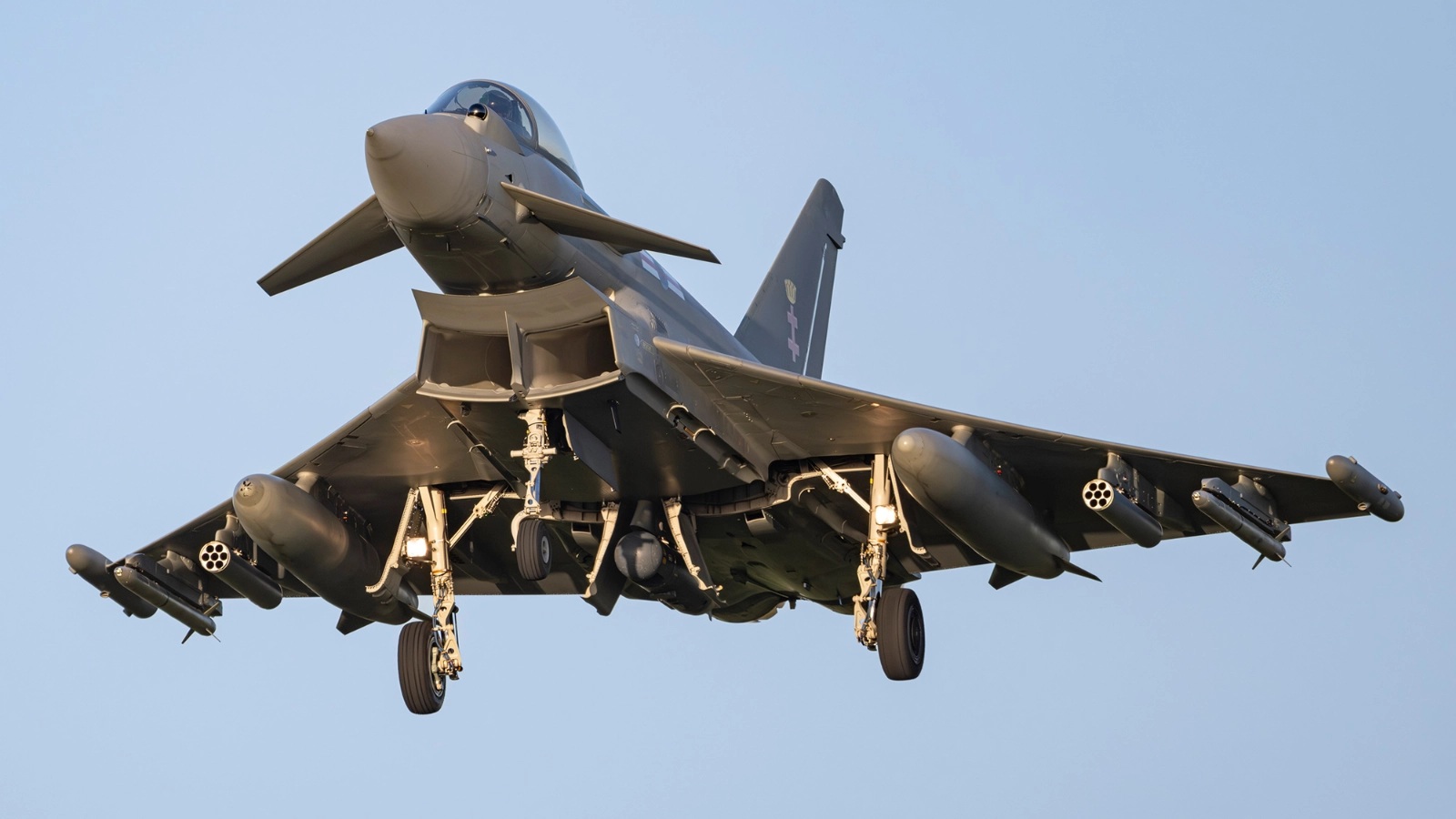
A new Advanced Precision Kill Weapon System (APKWS) is being fitted to RAF Typhoons on operations in the Middle East, providing a low-cost anti-drone weapon to precisely destroy targets for a fraction of the price of missiles currently used.


Above:
Typhoons with APKWS.
Courtesy BAE Systems

Rapid procurement and testing work by the Ministry of Defence and industry partners BAE Systems and QinetiQ has enabled the system to move from testing to deployment on operations in less than two months.

March saw a successful test strike on a ground-based target and RAF Typhoon pilots from 41 Test and Evaluation Squadron conducted successful air-to-air firing in April, demonstrating the system’s ability to defend against drone attacks.

The system has now been deployed on operations in the Middle East with sorties flown by 9 Squadron RAF Typhoon fighter jets as part of the missions to defend British people, interests and partners from threats.

Minister for Defence Readiness and Industry Luke Pollard MP said: "This has been a superb effort working with industry to test and deploy this system in a matter of months, which will help the RAF shoot down many more drones at a much lower cost.

"Our Typhoon fleet is the backbone of UK and NATO air defence, with the RAF protecting European’s Eastern flank from Russian drone incursions and defending our partners across the Middle East."

The APKWS uses a laser targeting system which turns unguided missiles into low-cost precision weapons able to take down enemy drones and other threats. Developing low-cost systems provides a more effective and sustainable means of countering the increasing threat of drones to UK forces and partners.

Simon Barnes, Group Managing Director BAE Systems Air sector, said: "Our priority is to ensure the Royal Air Force and its allies have the advanced technologies they need today and into the future, to keep them ahead of evolving threats. This capability demonstrates Typhoon’s exceptional versatility and underlines its continued role as the backbone of combat air across Europe and the Middle East."

Steve Wadey, Group Chief Executive Officer, QinetiQ, said: "From engineering expertise to live trials, our teams are providing the fundamental support needed by our armed forces, to deliver the urgent capabilities that ensure the UK and its allies remain safe and warfighting ready."

UK aircraft continue to operate across the Middle East and are ready to defend British people, interest and partners from threats. Pilots and aircrew have surpassed 2,500 flying hours since the conflict in the region began, equivalent to over three months of continuous flying on defensive missions.

Air Commodore Donal McGurk, Air 11 Group Deputy Director Operations: "We welcome the speed of development and meticulous testing behind the deployment of these missile systems for use on our Typhoons. They are a valuable addition to the air defence package we are already employing with agility across the Middle East."

UK ground-based and helicopter-based air defence assets are also deployed at very high readiness to support Gulf partners, including the Sky Sabre system in Saudi Arabia, the Lightweight Multirole Missile in Bahrain and the Rapid Sentry and ORCUS systems in Kuwait.

Today’s news comes just weeks after the Ministry of Defence signed a multimillion-pound contract with to buy Skyhammer interceptor missiles for the UK Armed Forces designed to counter Shahed-style attack drones. In January, the Ministry of Defence committed over £650 million to upgrade the RAF’s Typhoon fighter jet fleet, securing over 1,500 jobs across the UK and ensuring the fleet will continue protecting British skies until at least the 2040s.

This Government is backing UK Armed Forces with the largest sustained increase in defence spending since the end of the Cold War – hitting 2.6% of GDP from 2027.

Related

Edgewing opens engineering hub in Italy with UK site to follow
The GCAP fighter jet
Edgewing opens engineering hub in Italy with UK site to follow
The first of three engineering hubs designed to support the development of the future GCAP fighter has opening, with similar sites in the UK and Japan coming soon.
Aerospace Defence

9 Oct 2026

Marshall Aerospace begins new chapter as Aurelius acquisition completes
Marshall Aerospace C-130s
Marshall Aerospace begins new chapter as Aurelius acquisition completes
The completion of AURELIUS' acquisition of Marshall Aerospace marks a new chapter in the company's illustrious history, which spans more than a century of engineering excellence, innovation and service.
UK and Germany back SaxaVord in new European space launch deal
SaxaVord Spaceport, Shetland
UK and Germany back SaxaVord in new European space launch deal
The UK and Germany have agreed to deepen space launch cooperation, with Scotland's SaxaVord Spaceport securing European access to orbit.
Aerospace Defence Space

9 Oct 2026

RAF Marham runway repairs strengthen its operational resilience
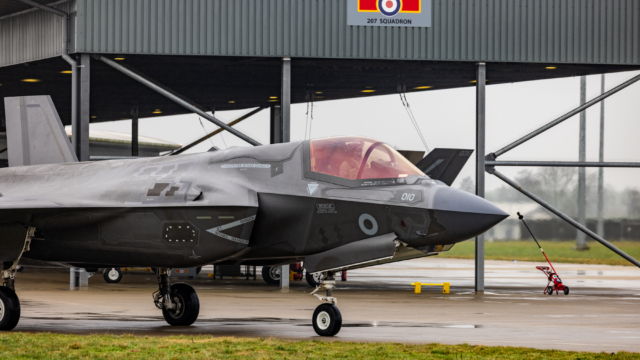
RAF F-35B 207 sqdrn
RAF Marham runway repairs strengthen its operational resilience
The resilience of RAF Marham’s airfield infrastructure has been reinforced following the completion of vital runway repairs, whilst maintaining support for Lightning Force operations.
Defence Member News

11 Oct 2026

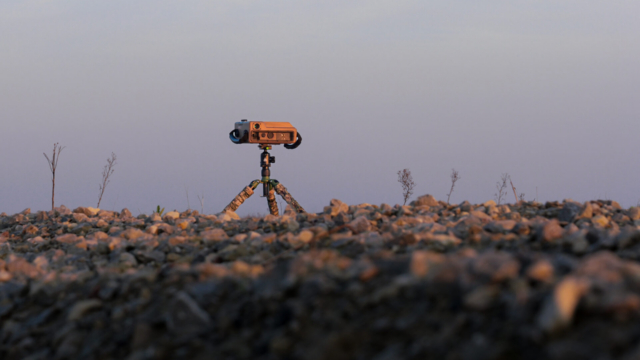
Sentinel Photonics brings multiple laser detection sensors into one hub
Sentinel Photonics' LASARD MAX Connect
Sentinel Photonics brings multiple laser detection sensors into one hub
With one single hub that joins up laser detection sensors, operators can now see, share and act on laser threats across a wide area in real time.
AI to help SMEs win defence contracts: Inside Strategical’s solution
Aerospace SME using AI to win defence contracts
AI to help SMEs win defence contracts: Inside Strategical’s solution
Smaller suppliers can struggle to turn technical capability into defence orders. Strategical is using AI to make specialist bidding expertise more accessible and help businesses focus on work they can realistically secure.
Defence Member News

10 Oct 2026

UK and Germany back SaxaVord in new European space launch deal
SaxaVord Spaceport, Shetland
UK and Germany back SaxaVord in new European space launch deal
The UK and Germany have agreed to deepen space launch cooperation, with Scotland's SaxaVord Spaceport securing European access to orbit.
Aerospace Defence Space

9 Oct 2026

Excelerate Technology to build UK CNI robotic security solution
Satellite in Earth orbit
Excelerate Technology to build UK CNI robotic security solution
In a project co-funded by the European Space Agency Business Applications and Space Solutions (ESA BASS) and supported by the UK Space Agency, Excelerate Technology will build and demonstrate how space-enabled assets can provide innovative safety and security solutions, including protection of Critical National Infrastructure (CNI) at a site in the UK.
World Space Week: How British technology will help ESA return to the Moon
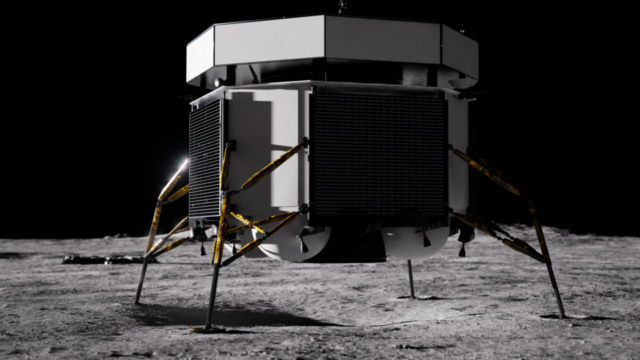
ESA Argonaut
World Space Week: How British technology will help ESA return to the Moon
As Europe prepares to return to the Moon, British-developed LEIA LiDAR technology will help ESA's Argonaut lander autonomously identify safe touchdown zones on the lunar surface.
Space

5 Oct 2026

Sentinel Photonics brings multiple laser detection sensors into one hub
Sentinel Photonics' LASARD MAX Connect
Sentinel Photonics brings multiple laser detection sensors into one hub
With one single hub that joins up laser detection sensors, operators can now see, share and act on laser threats across a wide area in real time.
Big cargo drones complete first BVLOS delivery to North Sea wind farm
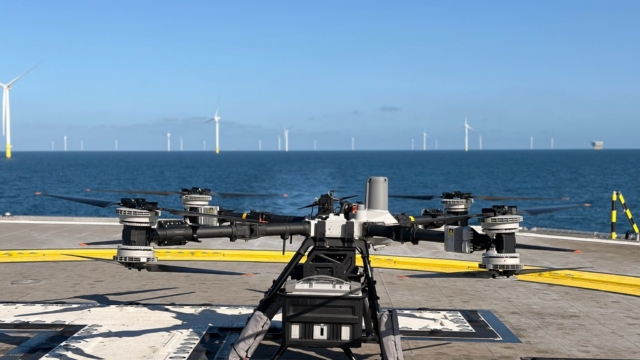
Skyports and Ørsted North Sea wind farm cargo drone trial
Big cargo drones complete first BVLOS delivery to North Sea wind farm
Skyports and Ørsted conducted a complex North Sea cargo drone trial, illustrating how heavy loads can safely and efficiently be delivered offshore beyond visual line of sight (BVLOS).
Aerospace Security

9 Oct 2026

UK Government and UKRI invest £54m to prevent future disease outbreaks
Poultry facility
UK Government and UKRI invest £54m to prevent future disease outbreaks
The UK Government and UKRI are investing £54 million in biosecurity research to tackle antimicrobial resistance, improve disease outbreak preparedness, develop next-generation vaccines and strengthen protection against emerging biological threats.
Security

8 Oct 2026