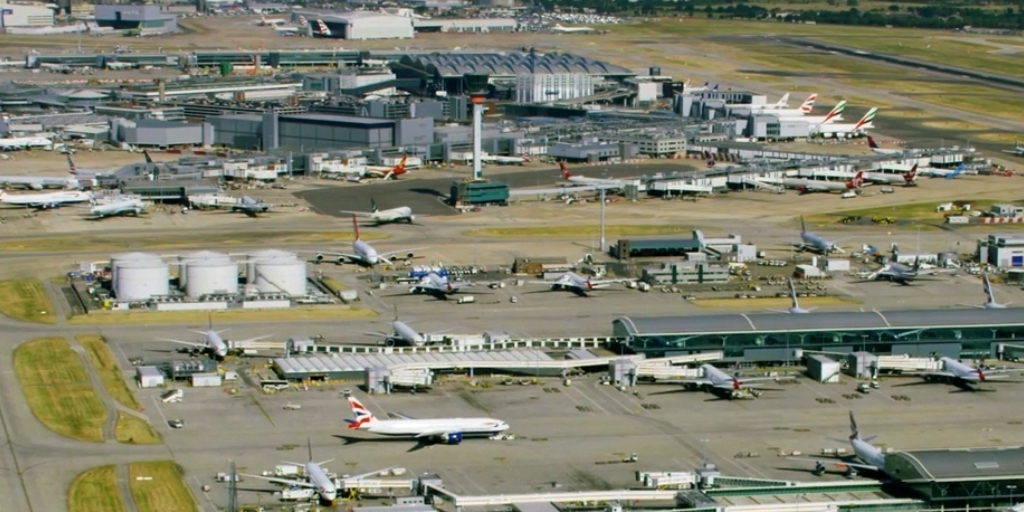
Redesigned flight paths to reduce aviation’s climate change impacts

Image by Alexander Supertramp / copyright Shutterstock
Holiday-makers will enjoy quicker flights and fewer delays as part of new laws set out today to open up new and more direct routes, propel airport expansion and boost growth.
The changes laid in Parliament today will enable the largest redesign of UK airspace since it was first formed in the 1950s, when there were only around 200,000 flights per year, compared to 2.7 million in 2024. The new UK Airspace Design Service (UKADS) will be fully operational by the end of 2025 and will be run by NATS (En Route) plc (NERL).

Modernising the airspace will open up capacity, supporting growth and thousands of jobs in the aviation and tourism sectors, as well as reducing delays and emissions per flight resulting from planes circling in the sky while waiting to land.
Redesigned ‘skyways’ could also allow planes to climb quicker during take-off and descend more smoothly, reducing noise and air pollution for residents who live along flight routes.
The UKADS’ initial focus will be on redesigning London’s airspace, with expansion at Heathrow alone expected to create over 100,000 extra jobs, turbocharge economic growth, strengthen the UK’s status as a global hub and deliver major benefits for airlines and passengers.
Over a longer timeframe, the UKADS could design routes that support flight paths for new and emerging technologies such as drones and flying taxis, spurring British innovation and delivering highly skilled jobs in the tech space.
The Department for Transport will continue working with the Civil Aviation Authority (CAA) to ensure the swift delivery of these new and improved routes, as well as to ensure independent oversight of the UKADS roll-out.
Aviation Minister, Mike Kane, said: "Redesigned ‘skyways’ will turbocharge growth in the aviation industry, not least by boosting airport expansion plans and supporting job creation, driving millions into the UK economy as part of the Plan for Change.
"Modernising our airspace is also one of the simplest ways to help reduce pollution from flying and will set the industry up for a long-term, sustainable future."
The measures will help secure the long-term future of the sector and make it more resilient to disruption. The plans come as global forecasts show a near doubling of passengers and cargo in the next 20 years.
One modernisation measure in the south west of England has already been estimated to save 12,000 tonnes a year, enough to power seven trips around the world, with further modernisation plans expected to deliver even greater results.
Rob Bishton, Chief Executive of the UK Civil Aviation Authority, said: "Modernising our airspace infrastructure is key to enabling the growth of the sector and helping mitigate its impacts.
"Our work with government and stakeholders on the creation of the UK Airspace Design Service is another important step in the journey to streamline and improve confidence in the ability to deliver airspace change decisions."
Martin Rolfe, CEO of NATS, said: "The UK’s airspace network is one of the busiest and most complex in the world. We handle a quarter of Europe’s traffic despite having only 11% of its airspace, with one of the best safety and delay records anywhere. However, we have to modernise airspace if we are to maintain this level of performance as traffic grows towards three million flights per year.
"The government’s announcement to create a UK Airspace Design Service is a crucial step, building on the work we’ve already completed in other parts of the UK. We look forward to working with the government and the CAA to finalise the details regarding the best way to implement the plan and the processes required to ensure UKADS is successful."
Karen Dee, Chief Executive of AirportsUK, the trade association for UK airports, said: "The UK’s airspace is a critical piece of our national infrastructure and these proposals will help modernise it, bringing forward new technologies and routing methods that will make it more efficient, cleaner and provide passengers with a better experience.
"Our airspace is some of the most complex in the world and we welcome the new UK Airspace Design Service (UKADS) that will bring together all the parties involved to help overcome some of the challenges this creates.
"Airports have led the calls for this approach to be adopted and we are pleased that government is fast-tracking it for implementation by the end of the year. Our members, firstly in the London area and then perhaps more widely across the UK, look forward to getting to work with UKADS to deliver the changes that will make our airspace fit for the 21st century."
Tim Alderslade, CEO of Airlines UK, said: "Modernising UK airspace is long overdue and these changes will help to speed up a programme that will provide tangible reforms, from a reduction in delays, improved resilience and lower carbon emissions.
"This is a major priority for airlines and we look forward to working with Ministers and all parts of UK aviation to complete a once in a generation infrastructure programme as quickly as possible and ideally by the end of the decade, so we can continue delivering for passengers and cargo customers whilst meeting our commitment to net zero."
Alison FitzGerald, Chief Executive Officer of London City Airport, said: "We welcome the government’s support for airport growth and the recognition of the economic and societal benefits that air travel brings to the UK. London and the South East has some of the most complex airspace in the world, and this announcement will help create the conditions for a more modern, efficient and sustainable airspace system.
"Modernising our airspace is essential to unlocking future growth, reducing delays, cutting emissions and improving the passenger experience. We look forward to working closely with government, industry partners and local communities to deliver these vital changes."
Heathrow’s Chief Operating Officer, Javier Echave, said: "This is an important step to making UK aviation more modern, efficient and reliable for the millions of people and businesses who rely on available airspace capacity. As the UK’s gateway to growth, we are committed to continue working with the government to unlock the economic benefits of an expanded UK airspace, while cutting carbon and noise impacts."