Advancing UK Aerospace, Defence, Security & Space Solutions Worldwide
  • Home
  • /
  • Space
  • /
  • Rivada secures UK market access license

Space

Rivada secures UK market access license

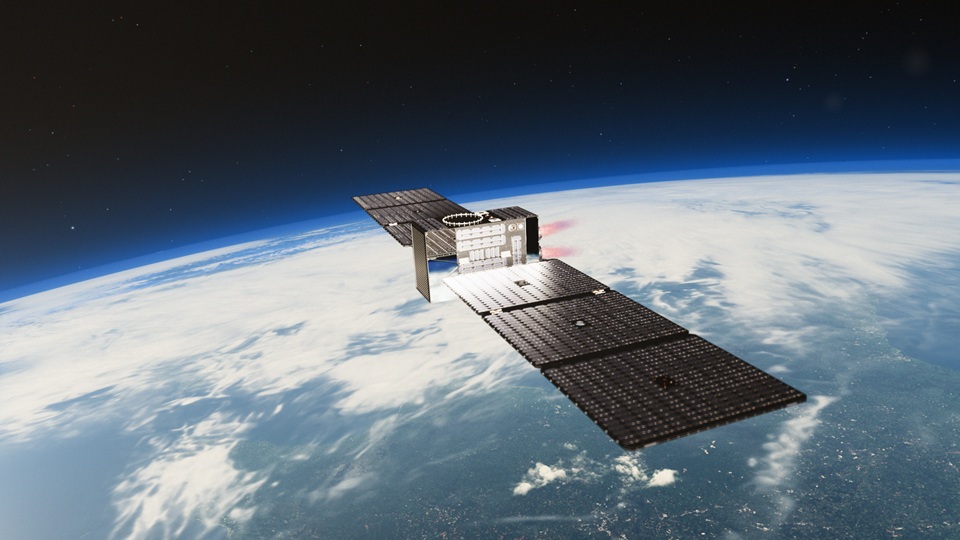
The UK's independent communications regulator Ofcom, has granted Rivada a license that enables it to provide satellite communications services in Britain.

Image courtesy Rivada

Rivada is launching a constellation of low-earth orbit satellites to provide government communications, maritime and aviation connectivity, enterprise networking and backhaul services for telecommunications networks.

Ofcom stated: "In October, Ofcom consulted on Rivada's license application and having assessed responses, concluded that Rivada's system is capable of coexisting with other services.  We also believe that granting the license will not create a material risk to competition and that Rivada's planned services would benefit UK consumers and businesses."

Advertisement
ODU RT

The network license allows Rivada to use spectrum and deploy user terminals in the UK, which are dishes and antennas used by customers to connect to its satellite network. These can be used on a building, in the air or at sea.

Professor David Hendon, CBE, Senior Vice President at Rivada and former CEO of Ofcom's predecessor, the Radio Communications Agency, commented: "Ofcom is well known in the regulatory world for its painstaking due diligence and great legal caution, so this marks an impressive milestone for Rivada, in which one of the world's leading regulatory bodies has approved the roll out of a unique new network, the OuterNET, for communications services in the UK."

Advertisement
ODU RT

Declan Ganley, CEO, Rivada Space Networks, said: "This is a significant step for Rivada in terms of market access. We are now on an exciting path to ensure that the OuterNET is available globally to solve essential connectivity and networking challenges and open up new business opportunities."

The OuterNET is the first unified global communications network. Rivada's global low-latency point-to-point network of 600 low earth orbit (LEO) satellites is a unique next-generation constellation combining inter-satellite laser links with advanced onboard processing and routing to create a ubiquitous optical mesh network in space. The first satellite launch is set for 2025, with global service available in 2026.

Advertisement
FIA2026 animated banner
SOLAR-1 becomes operational

Space

SOLAR-1 becomes operational

16 June 2026

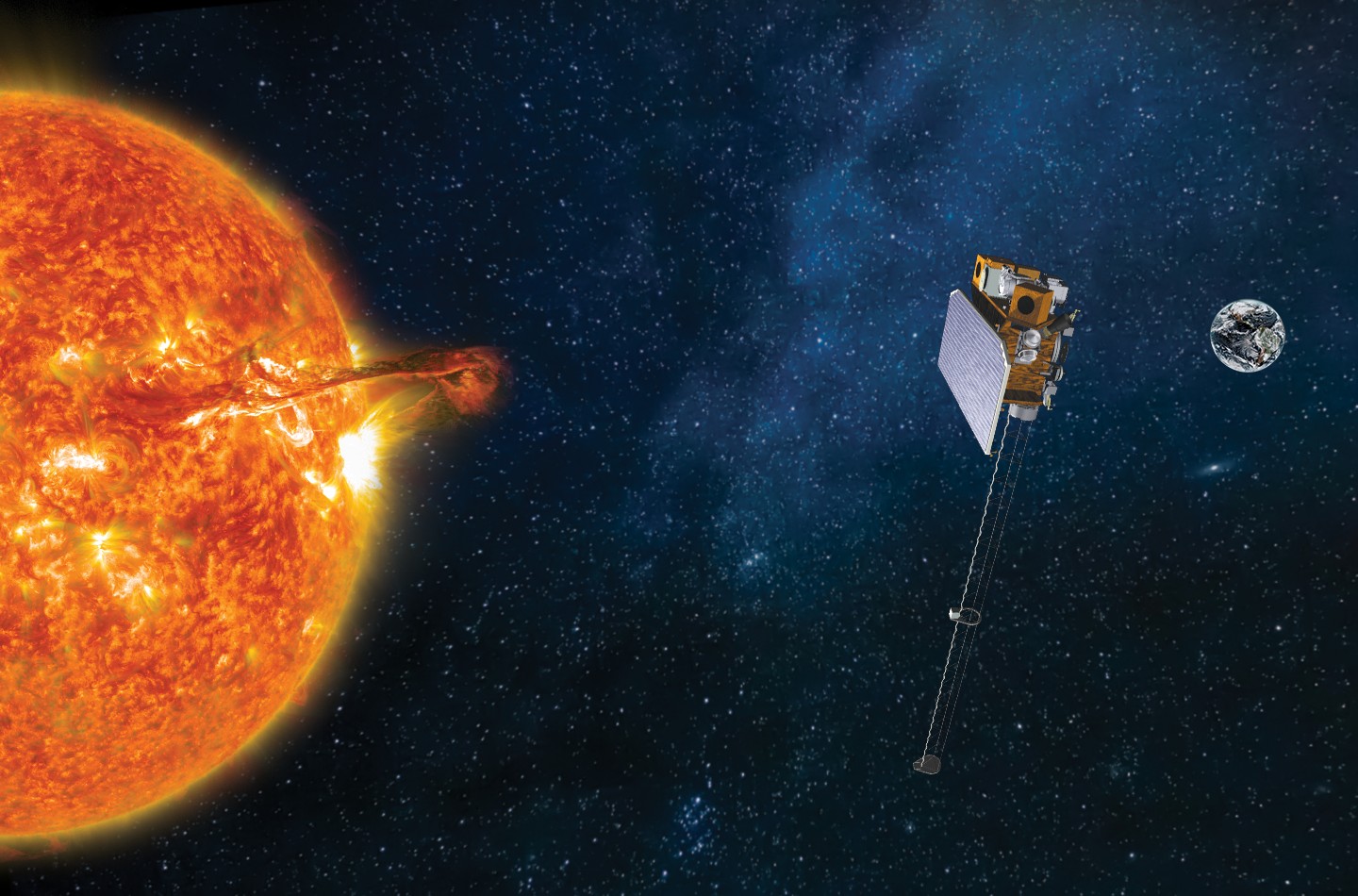
Global space weather forecasting is getting a step-change in capability as the National Oceanic and Atmospheric Administration’s (NOAA) SOLAR-1 satellite becomes operational.

Optera funding fuels UK hub for space domain awareness

Defence Security Space

Optera funding fuels UK hub for space domain awareness

15 June 2026

Optera, a neuromorphic sensing company delivering next-generation space domain awareness (SDA), has raised £3 million to establish and scale its UK headquarters and engineering team.

ESA officially adopts ARRAKIHS as F2 Mission

Space

ESA officially adopts ARRAKIHS as F2 Mission

12 June 2026

The European Space Agency (ESA) has officially adopted ARRAKIHS as its second FAST-class (F2) scientific mission, with the University of Surrey leading the UK’s role in the project to uncover the hidden history of galaxies ahead of a confirmed target launch date of 2030.

UK funding boosts breakthrough space tech

Space

UK funding boosts breakthrough space tech

11 June 2026

At London Tech Week, UK Space Minister Liz Lloyd unveiled more than £19 million to support British companies developing next-generation space technologies.

Advertisement
ODU RT
Tekever and Sapient Perception to explore airborne ISR sensing integration

Aerospace Security Space

Tekever and Sapient Perception to explore airborne ISR sensing integration

9 June 2026

Tekever and Sapient Perception have signed a Memorandum of Understanding to explore the integration and evaluation of Sapient Perception’s 10K camera system on Tekever uncrewed aerial systems.

NewOrbit to open Earth’s last empty orbit

Space

NewOrbit to open Earth’s last empty orbit

8 June 2026

Between commercial aircraft at 10 km and conventional satellites at 500 km lies a band of near-Earth space, called very low earth orbit (or VLEO), which until now, has not been accessible for commercial space flight.

Advertisement
ODU RT
Advertisement
General Atomics LB