Royal Marines rehearse chemical attack response

Above:
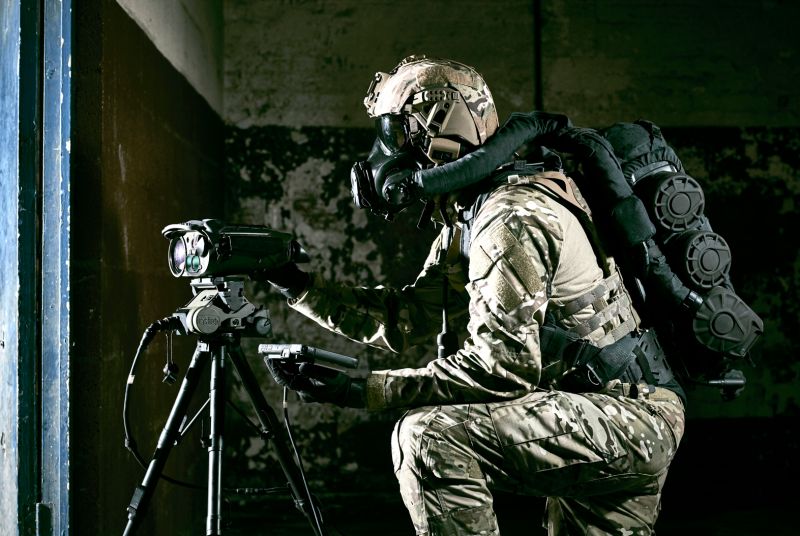
Royal Marines taking part in Exercise Toxic Dagger.
Courtesy Royal Navy
Zulu Company from 45 Commando, based at Arbroath, will now be the first men on the ground should the marines be called on to deal with a chemical, biological, radiological or nuclear (CBRN) incident at home or abroad.

Due to the heightened threat following last year’s incident in Salisbury, the commandos refreshed their skills at the UK’s specialist training centre preparing troops for such forms of chemical warfare.
Military and civilian specialists from the Defence Chemical Biological Radiological Nuclear Centre at Westdown Camp on Salisbury Plain – just 15 miles from the site of the fatal Novichok attack – helped the Scottish-based marines perfect their skills.

Above:
Working to take over a suspect chemical factory.
Courtesy Royal Navy
After a week in the classroom learning about the latest threats and how to deal with them both practically and in planning a co-ordinated response, the marines moved on to a week of practical training – called Exercise Toxic Dagger – which culminated in an all-out attack on Imber village, testing all they had learned.
“The recent attack on British soil highlighted the importance of this capability and it is more important than ever for us to be able to operate effectively in this environment should the need arise,” said Sergeant Ben Fail from the Defence Chemical Biological Radiological Nuclear Centre.
The village was cleared of its inhabitants back in 1943 to allow American troops to train for the liberation of Europe and has since been developed with the addition of modern housing to prepare for 21st-century urban combat.
The final assault incorporated pyrotechnic and electronic battle simulators to make the experience as real as possible, allowing Zulu Company – wearing protective gas masks – to gain a huge amount of training benefit and vital CBRN experience.
“The Royal Marines are high readiness troops who need to be able to react to all threats at short notice anywhere in the world,” said Lieutenant Oliver Crow of Zulu Company.
“This is a very important skill for us to maintain in view of the current threat.”
Toxic Dagger is the second major chemical and nuclear warfare workout for the Royal Marines inside 12 months.

Above:
A Merlin returning to base after deploying Royal Marines as part of Exercise Toxic Dagger.
Courtesy Royal Navy
Not only are Zulu Company now the Corps’ experts in CBRN warfare and the first called upon in the event of an incident or attack, but they will share their knowledge across the rest of 3 Commando Brigade to enhance the Royal Marines’ ability to deal with these particular forms of warfare.