Advancing UK Aerospace, Defence, Security & Space Solutions Worldwide
  • Home
  • /
  • Space
  • /
  • SaxaVord supports Lunasonde satellite launch

Space

SaxaVord supports Lunasonde satellite launch

SaxaVord UK Spaceport has teamed up with satellite operator Lunasonde to support its first launch today.
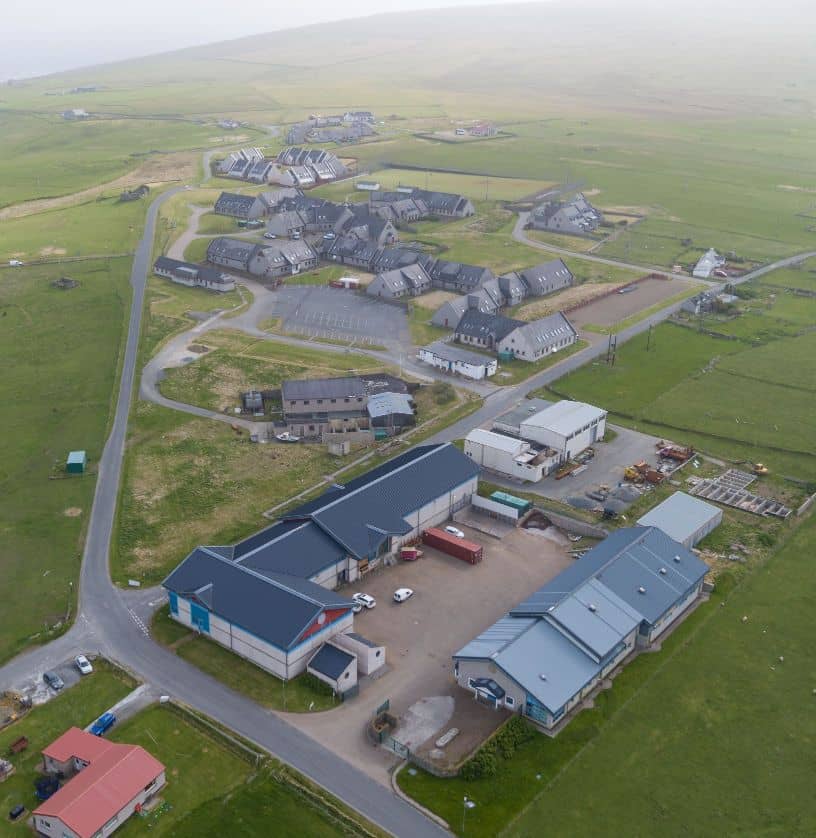
Above: SaxaVord on Unst.
Courtesy SaxaVord

 
The Unst-based spaceport’s ground station will provide launch and early operation support for Gossamer Piccolomini, which will be on board a Falcon 9 rocket for the SpaceX Transporter 3 rideshare mission taking off from Cape Canaveral in Florida.
 
SaxaVord has signed a contract with Lunasonde, which has created and developed a revolutionary low-frequency radar system using pioneering subsurface imaging for detecting and monitoring exploitable resources.

Advertisement
ODU RT

 
When Gossamer Piccolomini has reached its low earth orbit, the ground station will continue to support it by downlinking satellite data and new mission updates.
 
Lunasonde has named all the satellites it will create after craters on the moon since the name of the company means “moon probe”.
 
Jacques Meheut, SaxaVord Ground Station Network Manager, said: “Last year was a busy year, with the installation of the first ground station supporting space-related activities in Shetland amid the challenges posed by COVID restrictions.  
Advertisement
ODU RT

 
“And we kick off 2022 as we mean to go forward, with the Lunasonde contract a tremendous achievement for the team here.”
 
Jeremiah Pate, Chief Executive officer of Lunasonde, said: “We are very excited to work with SaxaVord UK Spaceport to support our first satellite. The SaxaVord ground station is invaluable to collecting our first data from orbit.”

 

Advertisement
General Atomics LB
BAE Systems delivers US Space Force missile warning sensor system

Defence Space

BAE Systems delivers US Space Force missile warning sensor system

18 May 2026

BAE Systems has delivered the sensor subassembly and sensor system controller components for the Next Generation Overhead Persistent Infrared Polar (NGP) programme, providing advanced missile warning, technical intelligence and battlespace characterisation mission capabilities, for the US Space Force.

Iridium to acquire Aireon

Aerospace Space

Iridium to acquire Aireon

15 May 2026

Iridium Communications Inc. has entered into a definitive agreement to acquire Aireon LLC, operator of the world's only space-based Automatic Dependent Surveillance-Broadcast (ADS-B) air traffic surveillance system, with the transaction unifying the world's only space-based air traffic surveillance system with the satellite network it was ...

Tim Peake returns to National Space Centre

Space Events

Tim Peake returns to National Space Centre

13 May 2026

Ten years to the day since Tim Peake’s dramatic return to Earth, Britain’s most renowned astronaut will be returning to the National Space Centre to celebrate not only the milestone but also the continuation of his inspirational legacy.

Space mission to study alien worlds clears test milestone

Space

Space mission to study alien worlds clears test milestone

12 May 2026

The Ariel payload has cleared a major test milestone, paving the way for the mission that will uncover the secrets of over 1,000 alien worlds.

Advertisement
ODU RT
CSpO meets to advance operational efforts

Defence Space

CSpO meets to advance operational efforts

12 May 2026

The Combined Space Operations (CSpO) Initiative Principals’ Board convened in Colorado Springs, Colorado, where senior representatives from Australia, Canada, France, Germany, Italy, Japan, New Zealand, Norway, the UK and USA, addressed the rapidly evolving security dynamics of the space domain.

Surrey Space Centre delivers analysis of space weather radiation storm

Space

Surrey Space Centre delivers analysis of space weather radiation storm

11 May 2026

A spike in atmospheric radiation from a major solar flare in November 2025 was picked up by a global network of soil moisture sensors and a new rapid-response research project led by the University of Surrey will now analyse the data, offering fresh insight into how the impact of solar radiation storms varies across the Earth’s surface.

Advertisement
ODU RT
Advertisement
Hexagon leaderboard