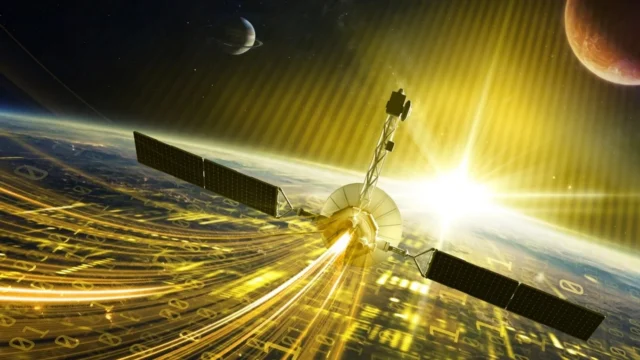


Securing trademark protection for success in space



Image courtesy Withers & Rogers
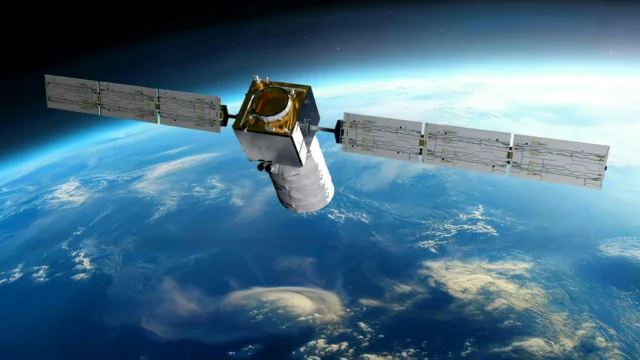
Low Earth Orbit is becoming crowded, not only with satellites but with companies competing for position in a rapidly expanding industry. As new entrants bring similar technologies, similar missions and often similar-sounding names, distinct branding has become a mission-critical asset. For space companies seeking contracts, partnerships, and investment, trade marks are now the key to commercial success in space.
Evolution of the global space sector
The global space sector has changed dramatically since 1957, when the USSR launched Sputnik and ignited the ‘Space Race’ with the United States. What began as a geopolitical rivalry has evolved into a diverse international industry. More than a dozen nations – including China, India, Japan, Australia and the European Space Agency (ESA) – now have independent launch capability, underlining the strategic and technological significance of space in modern society.
Yet state-level capability is only one part of the picture. The most significant development in recent decades has been the rise of commercial space activity. Companies such as SpaceX, Blue Origin and Virgin Galactic, alongside hundreds of satellite operators and in-orbit service providers, have demonstrated that space is no longer the preserve of governments.
A PwC report produced with the UK Space Agency values the global space sector at over $469 billion, with 77% driven by the commercial market. As private operators take on more prominent roles, the legal and commercial considerations surrounding space activity are beginning to expand accordingly.
Intellectual property beyond patents
For decades, legal discussions in the space sector centred on physical property, control of spacecraft and questions of jurisdiction. These are topics that dominate UN treaties and academic writing. Yet as the industry commercialises, intellectual property rights have broadened in importance and trade marks provide essential economic benefits.
Space companies no longer compete solely on engineering excellence. They compete on identity, trust and visibility. Given the risk, investment and international cooperation inherent in space projects, investors, procurement bodies and global partners rely on strong brands as indicators of capability and long-term stability.
A trade mark functions as a badge of origin, protecting names, logos, slogans, shapes, colours or sounds that distinguish one undertaking from another. Trade mark protection is territorial and must be secured country by country. For space companies operating across borders (a launch provider operating from the US, serving customers in Europe and regulated partly by ITU coordination), this creates unique challenges.
Furthermore, space actors operate across multiple sectors simultaneously: telecommunications, defence, Earth observation, climate tech, data analytics, launch services, robotics and advanced manufacturing. This means space companies often require trade mark protection across a wide range of Nice classes, making strategic drafting and clearance work essential.
Understanding the Nice Classification
Trade mark applicants must specify the goods and services they want protection for. To standardise this globally, most countries use the Nice Classification, which organises all goods and services into 45 classes. Because space-sector companies operate across such diverse activities, choosing the correct classes is an early and critical step.
Examples of space-related goods and services include:
- Class 9: Satellites for scientific purposes, navigation instruments, on-board computers, downloadable mission-control software.
- Class 12: Spacecraft, space launch vehicles.
- Class 37: Installation, maintenance and repair of satellite and ground-station equipment.
- Class 38: Satellite-based telecommunications services, data transmissions via satellite.
- Class 42: Aerospace engineering services, mission planning and design services, scientific analysis of satellite data.
Branding challenges in the space sector
1. Similar naming conventions
Descriptive terms such as Space, Orbit, Sky appear frequently in missions, spacecraft and startups. This increases the risk of overlap, consumer confusion and trade mark conflict – particularly where well-known operators already dominate the linguistic landscape. A clear example is the dispute in Japan between SpaceX and NDR Tech Co., where SpaceX successfully invalidated NDR’s attempt to register SPACEX for apparel and accessories.
Although the goods in question were not space-related, the case illustrates a critical point for the sector: major space companies enforce their brands aggressively across a wide range of classes, including merchandising, outreach and investor-facing activities. As a result, newer entrants that rely on common space-themed terminology face an elevated risk of conflict, even in markets far removed from launch services or satellite operations. This demonstrates how quickly descriptive names can become legally constraining once established players emerge.
The World Intellectual Property Organisation (WIPO) has warned that space risks becoming a legal ‘no man’s land’ for trade marks, noting that the absence of a clear regime may create significant uncertainty as activity expands to the Moon, cislunar space and eventually Mars. Not anticipating these challenges can result in delays in regulatory approvals due to naming conflicts and failed partnerships because the brand may be unavailable in a key territory. Crucially, companies may find difficulty securing ESA/UKSA/NASA collaboration due to unclear ownership.
2. Mission and constellation naming
Constellations and recurring mission programmes require coherent and protectable naming structures. Often, constellations will contain hundreds of satellites, with each satellite’s stream interacting with Earth-based markets. Mission names themselves often outlast individual satellites. This means operators often need families of marks or series marks.
The International Trademark Association (INTA) has highlighted that existing IP frameworks have not fully contemplated how names and other commercial identifiers should be treated in off-world contexts. IP laws were not designed for extraterrestrial commerce and will need to evolve as activity increases.
3. International filing complexity
Territorial IP law sits uneasily with inherently transnational space activity. Launch sites, ground stations, customers and regulatory interactions often span continents. Space-related goods and services also cut across multiple Nice classifications (for example, 9, 12, 37, 38 and 42), creating additional complexity. As a result, companies must often adopt global filing strategies far earlier than in traditional industries to ensure visibility and protection outside individual territories.
Therefore, as commercial activity in space accelerates, private-sector organisations must be trade mark aware in anticipation of legal developments. For example, the UK government has announced that the UK Space Agency will be integrated into the Department for Science, Innovation and Technology by April 2026, aiming to streamline decision-making and reduce administrative barriers. This ties directly into a greater alignment between space policy and commercial strategy and an anticipated increase in public-private partnerships. This shift underscores the need for businesses to anticipate regulatory change and ensure their brand strategies are resilient.
Preparing for future IP developments
Complexity brings opportunity. Although national legal jurisdiction attaches to space objects via the Outer Space Treaty, trade mark rights themselves remain Earth-based and territorial. Moreover, commercial dealings on Earth, which are crucial to space operations, rely on recognisable branding. Importantly, future extra-terrestrial commerce will use Earth-based IP systems until new frameworks emerge.
Companies with well-structured branding and trade mark portfolios will be best placed to benefit from regulatory developments and to operate confidently in emerging markets.
Being ‘trade mark ready’ involves:
- Ensuring distinctive and non-conflicting naming practices.
- Building a coherent multinational filing strategy.
- Preventing ambiguous ownership through evidence, documentation and ownership clarity.
- Monitoring competitor activity early, including clearance searches for new names or series.
- Protecting constellation or programme names as series marks.
- Considering defensive filings in adjacent or emerging sectors.
- Staying alert to policy developments from WIPO, INTA, the UN and national authorities.
Companies that prioritise these steps will be better positioned to avoid disputes, strengthen investor confidence and adapt to new rules as the sector evolves.
The commercial value of trade marks in space
Strong branding delivers clear commercial advantages:
- Differentiation in a sector where technology offerings often appear similar.
- Investor confidence, signalling a well-structured and commercially mature organisation.
- Market positioning for customer-facing services such as launch and in-orbit servicing.
- Risk reduction, avoiding disputes, oppositions or rebranding costs.
- Global reputation: essential for winning procurement tenders or international contracts.
As regulatory frameworks shift and commercial participation accelerates, early investment in trade mark strategy is no longer optional. It is a strategic necessity for any organisation looking to thrive in the modern space sector, enabling them to navigate these evolving challenges and build the resilient brand protection strategies needed for long-term commercial success in the space sector.
Sign up for our newsletter and get our latest content in your inbox.
Similar Reads



Sign up for our newsletter. Select all sectors relevant to you.
Related