


Security professionals urged to tackle threat from state actors

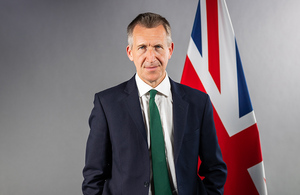
Image courtesy Home Office
His warning comes as new guidance Complying with the National Security Act 2023: security professionals is published by the Home Office to support professionals within the security industry when they are approached for work, to check they are not assisting state actors looking to undertake malign activity which would harm or threaten the safety or interests of the UK, and which may result in them committing a criminal offence themselves.
The guidance, which includes resources, scenarios and questions to consider, is designed to help security professionals understand the law and give them the tools and confidence to carry out necessary due diligence checks to ascertain if their client is a foreign state, or a body linked to a state, seeking to carry out damaging activity against the UK.
Without it, individuals risk committing an offence under the National Security Act 2023. Work security professionals could take on to assist a foreign power in carrying out activities against the UK may include activity intended to sow discord, manipulate public discourse, discredit the political system, bias the development of policy, and otherwise undermine the safety or interests of the UK.
Through the publication of this guidance the government is also sending a clear warning to those individuals who deliberately take on work for malicious state actors, that they are breaking the law and will be prosecuted.

Security Minister Dan Jarvis (above) said: "Working in private security is vital but foreign states are increasingly looking to the industry as a tool to carry out their dirty work – to degrade our security, undermine our values and damage our livelihoods.
"I urge security professionals to take caution to protect the UK and themselves by fully checking and understanding who they are working for. If they don’t, they seriously risk breaking the law and aiding states who seek nothing more than to harm this country and who have no concern for the individuals they employ.
"The threats malign actors pose to our country are expanding, in scale and scope. We must adapt with them and the private security sector has a pivotal role to play in shutting them out of the UK, to which I thank them."
Security professionals should also report any instance in which their due diligence checks have led them to suspect the involvement of a state when they have been approached, or if they realise only after taking on work. They should report to Counter Terrorism Policing in confidence on their Anti-Terrorism Hotline on 0800 789321 or report it online.
The National Security Act 2023 criminalised certain activities that could assist a foreign power to harm the UK’s safety or interests. Activities that could fall within these offences include working in the UK for a covert foreign intelligence service, including through second parties that are contracted by these organisations, accepting or agreeing to accept money or other benefits that originally come from a foreign intelligence service; sabotage, carrying out foreign interference activity for, or on behalf of, or intended to benefit a foreign power, such as sowing discord, undermining public safety, or threatening foreign dissidents and retaining or sharing protected information or trade secrets on behalf of a foreign power.
Workers in the security industry, including those who work in private investigation, close protection, or advise on corporate security and risk, are attractive targets for foreign powers to act as their proxies due to their specialist skillsets and their line of work often giving them access to valuable information or close proximity to individuals of interest.
The guidance suggests as part of their checks that individuals should ask themselves questions to establish where their client is based, if have they failed to provide sufficient information about their identity when specifically requested and if the tasks they are being assigned fall under a range of behaviours within scope of the National Security Act 2023, such as those which assist a foreign power, damages the UK, or undermines public safety.
By urging the sector to bring a careful, mindful and inquisitive approach to their work, these checks help the government build the strong foundations on which its Plan for Change will be delivered – protecting our national security by continuing to counter the enduring and evolving state-based security threats we face on a constant basis.
Threats from states who wish to undermine the UK’s security are increasing and their ability to connect with proxies has expanded through the use of online platforms, making it more challenging to detect when damaging activity is being carried out. In supporting the security sector to carry out these checks, threats from state actors will be foiled and minimised.
Sign up for our newsletter and get our latest content in your inbox.
Similar Reads





Sign up for our newsletter. Select all sectors relevant to you.
Related