Smith Myers expands ARTEMIS capability
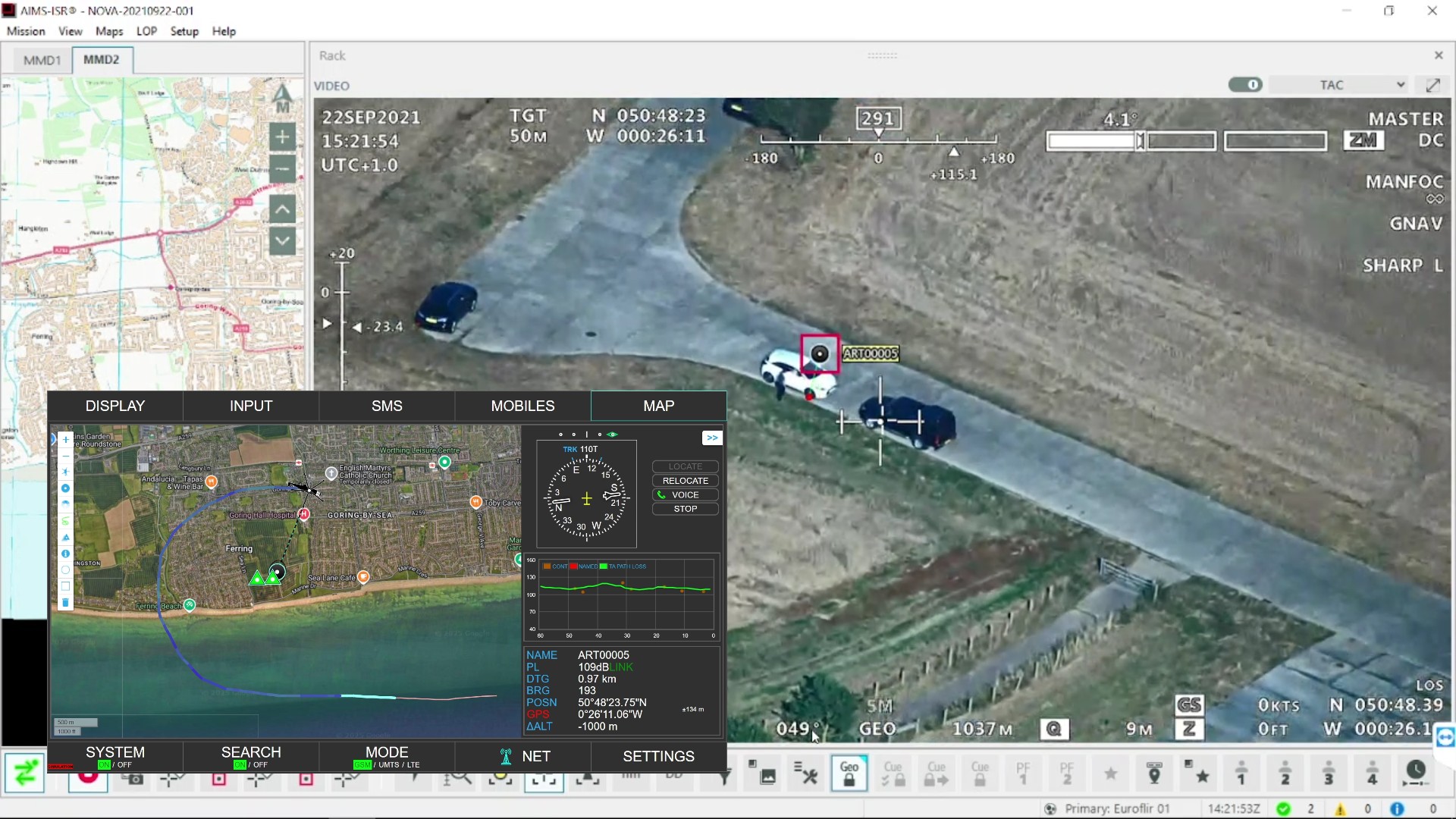
Image courtesy Smith Myers
With these latest advancements, ARTEMIS has redefined the capabilities of airborne and deployed mobile detection systems. The addition of passive Wi-Fi detection enables ARTEMIS to identify and geolocate devices associated with local wireless networks. This capability supports faster decision-making and improves responder safety in time-critical scenarios, particularly in aerial firefighting and disaster response situations.

Passive Bluetooth detection further extends operational reach, enabling ARTEMIS, in certain circumstances, to detect and geolocate devices even after a handset’s main battery has been depleted. Crucially, both new detection modes operate entirely passively.
The introduction of the ATAK Cursor-on-Target (CoT) command capability further enhances operational integration by enabling ARTEMIS to output precise geolocation data directly into CoT-enabled mission systems, allowing automatic cueing of EO/IR cameras and other networked sensors. This reduces operator workload, accelerates visual confirmation, and improves response times in time-critical missions.
Since pioneering airborne mobile phone detection, Smith Myers has delivered significant sector innovation. The company was the first to embed Maritime AIS and COSPAS-SARSAT capability directly into an airborne MPDLS platform, followed by the introduction of advanced operational features including Mass Mapping, Geofencing, SARLOC consent-based location sharing and Emergency Warning capability.
“By combining cellular, AIS, COSPAS-SARSAT, Wi-Fi, Bluetooth detection and CoT integration in a single system, ARTEMIS delivers multilayered device awareness and seamless sensor integration across complex operational environments,” said Andrew Munro, Managing Director at Smith Myers. “These new integrations reinforce our commitment to delivering innovative, life-saving technology to operators worldwide.”