Advancing UK Aerospace, Defence, Security & Space Solutions Worldwide
  • Home
  • /
  • Aerospace
  • /
  • Smiths Detection HI-SCAN 10080 EDX-2 algorithm auto detects lithium batteries

Aerospace Security

Smiths Detection HI-SCAN 10080 EDX-2 algorithm auto detects lithium batteries
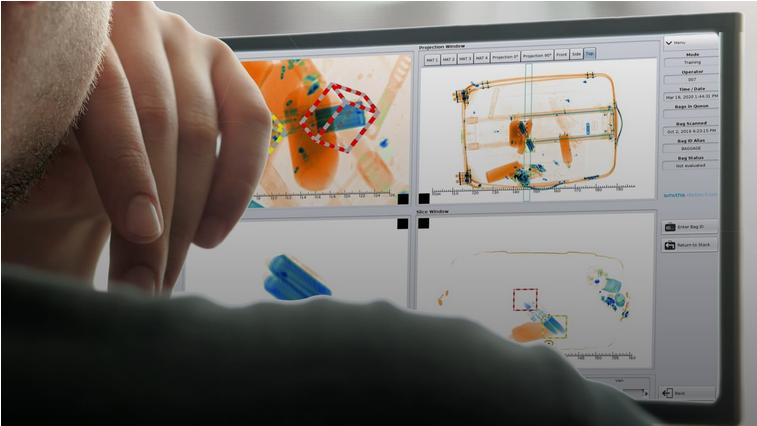
Smiths Detection today announced it has launched a new lithium batteries algorithm for the HI-SCAN 10080 EDX-2is, its dual-view air cargo and checked-baggage screening system.

Image courtesy Smiths Detection

The algorithm will provide automatic detection of lithium batteries in all freight and baggage screened for explosives by the HI-SCAN 10080 EDX-2is, reducing the burden on image analysts with very low false alarm rates.

Consumer demand for lithium batteries is growing exponentially, as these batteries are the primary power source for personal and portable electronic devices. Classified as dangerous goods because of the potential for these batteries to ignite, lithium batteries pose a significant safety threat. Since January 2006, a total of 310 incidents of smoke, heat, fire or explosion involving lithium batteries in air cargo or hold baggage has been recorded[1].

Advertisement
ODU RT

The lithium battery algorithm is part of Smiths Detection’s family of AI-algorithms, iCMORE, which provides powerful automatic detection of dangerous goods and weapons across its conventional x-ray and EDS technologies using deep learning and classical material discrimination, increasing the safety of passengers, staff, goods and aircrafts in a quick and efficient way. The iCMORE algorithms are complementary solutions to existing screening technology.

“We are continually striving to develop new technologies to ensure the safety of people globally” said Richard Thompson, Global Director Aviation for Smiths Detection. “Harnessing the power of deep learning is crucial in further developing object recognition algorithms. This new technology has been developed by working with our customers to capture thousands of X-ray images to then be analysed by the new algorithm so it can learn to detect lithium batteries based on shape. This algorithm will provide the powerful detection of lithium batteries while increasing efficiency and speed for users.”

In July 2020, Smiths Detection launched iCMORE detection algorithms for lithium batteries and dangerous goods for use by its HI-SCAN 10080 XCT scanner, becoming its first explosive-detection system (EDS) to offer these options.


Advertisement
ODU RT


Advertisement
FIA2026 animated banner
IFS launches IFS Zero

Aerospace Defence

IFS launches IFS Zero

10 June 2026

IFS has launched IFS Zero, an agentic AI Emissions Operating System designed for asset-intensive industries, such as aerospace and defence, where organisations face pressure to improve emissions reporting and supply chain transparency, with Scope 3 compliance now a contractual requirement.

Smith Detection

Aerospace Security

Smith Detection's SDX 10080 SCT receives UK DfT approval

10 June 2026

Smiths Detection announced today that its SDX 10080 SCT has received UK Department for Transport (DfT) approval for deployment across UK airports and cargo operators for hold baggage and air cargo screening.

Aston University secures £3.9m to boost aerospace and cybersecurity skills

Aerospace Security

Aston University secures £3.9m to boost aerospace and cybersecurity skills

10 June 2026

Aston University has secured almost £4 million in new funding to improve the UK’s aerospace engineering and cybersecurity skills.

Marshall Aerospace completes initial flight model for Horizon Aircraft’s Cavorite X7

Aerospace

Marshall Aerospace completes initial flight model for Horizon Aircraft’s Cavorite X7

10 June 2026

Marshall Aerospace has successfully completed a flight dynamics and control model to support Horizon Aircraft’s Cavorite X7, a revolutionary dual-use hybrid-electric vertical take-off and landing (VTOL) aircraft currently in prototype development.

Advertisement
ODU RT
NATS invests in carbon removals with CUR8

Aerospace

NATS invests in carbon removals with CUR8

9 June 2026

NATS has committed £500k to carbon removals through carbon removals intelligence provider CUR8, contributing to an initiative led by the UK Sustainable Aviation coalition, to stimulate the carbon removals market as part of a £2 million Advance Market Signal.

HutanBio partners with Wakud on scalable SAF feedstocks

Aerospace

HutanBio partners with Wakud on scalable SAF feedstocks

9 June 2026

Cambridge biotechnology company HutanBio, which is developing algae-derived oils for sustainable aviation fuel (SAF), has signed its first commercial offtake Memorandum of Understanding (MoU) with Oman's Wakud International, as the aviation industry searches for new feedstock sources capable of supporting future SAF demand.

Advertisement
ODU RT
Advertisement
General Atomics LB