Advancing UK Aerospace, Defence, Security & Space Solutions Worldwide
  • Home
  • /
  • Space
  • /
  • Solar Orbiter loaded with SPICE

Space

Solar Orbiter loaded with SPICE
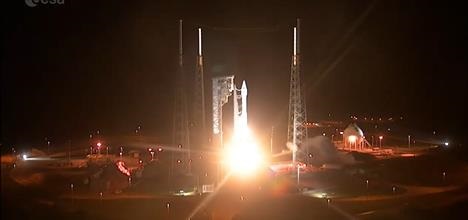
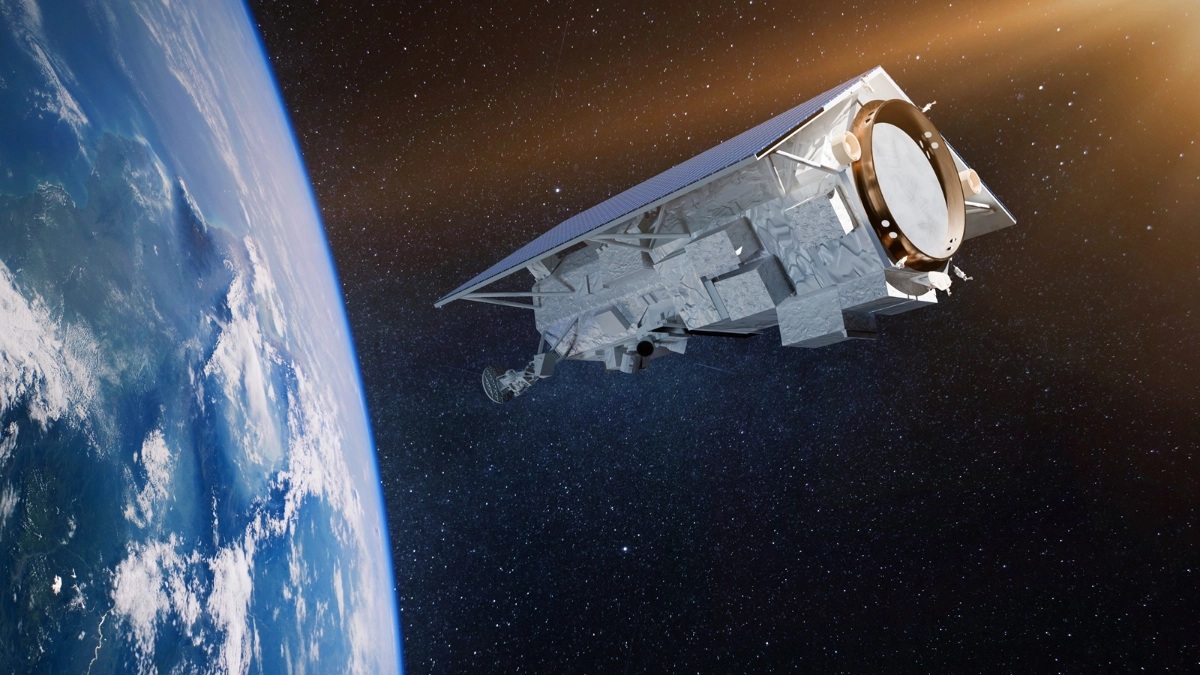
A state-of-the-art science instrument that was developed and built by a team of 80 people, led by Harwell-based scientists - the Spectral Investigation of the Coronal Environment (SPICE) - is on-board the Solar Orbiter spacecraft, launched yesterday from Cape Canaveral.

Above: Solar Orbiter launches from Cape Canaveral.
Courtesy of NASA / ESA

The Spectral Investigation of the Coronal Environment (SPICE) instrument was led from RAL Space, the UK’s national space laboratory located at Harwell Campus. SPICE will help trace solar wind structures measured at the spacecraft, to their sources at the poles inside dark, slightly cooler areas of the Sun known as coronal holes.

Advertisement
PTC rectangle

Dr Andrzej Fludra, the RAL Space scientist who led the international consortium for the SPICE instrument was at Cape Canaveral to witness the launch: “It was amazing to see Solar Orbiter launch, it feels like the crowning of the effort of our large team. The next exciting moment will be taking the first spectra of the Sun, and initial observations to check the instrument.” ​

Now at the start of a two-year journey towards the Sun this instrument, alongside nine others, will observe our nearest star close-up and study its polar regions for the first time, giving scientists on earth unprecedented insight into how our parent star works. Investigating the Sun-Earth connection the data gathered will help us to better understand and predict periods of stormy space weather.

Commenting on why this mission and the insights to be gained are important, Business Secretary Andrea Leadsom said, “Solar storms could cause major disruptions to technologies including our energy grid, mobile phone signal and navigation systems.”

The 10 state-of-the-art instruments on-board the Solar Orbiter include remote sensing payloads that will perform high-resolution imaging of the Sun’s atmosphere – the corona – as well as the solar disc. Other instruments will measure the solar wind and the solar magnetic fields in the vicinity of the orbiter. Three of these 10 science instruments have been developed by scientists from University College London, Imperial College London and STFC’s RAL Space, who led international teams on their design and build.

Advertisement
ODU RT

Collaboration is at the heart of this European Space Agency (ESA) mission. SPICE alone took five years to develop by a team of 80 people from across Europe and the US. The UK Space Agency invested £20 million in the development and build of the instruments and Airbus Defence and Space were the prime contractor for the satellite.

 

Advertisement
ECS leaderboard banner
Returning to STEM after career break becomes harder than ever

Aerospace Defence Security Space

Returning to STEM after career break becomes harder than ever

4 February 2026

Returning to STEM industries after a career break is now harder than ever, according to new research by STEM Returners, with bias against gender, age, ethnicity and a lack of recent experience penalising highly qualified people from getting a job.

UK-Japan partnerships advance quantum and future connectivity tech

Aerospace Defence Security Space

UK-Japan partnerships advance quantum and future connectivity tech

4 February 2026

Joint investments will advance quantum technology, boost digital connectivity and strengthen network resilience against cyber threats.

Investment in satellite timing infrastructure to strengthen UK resilience

Space

Investment in satellite timing infrastructure to strengthen UK resilience

3 February 2026

GMV are to lead the development of a secure Two-Way Satellite Time and Frequency Transfer system under the TOUCAN project - funded by the UK Space Agency through the European Space Agency's Navigation Innovation and Support Programme (ESA NAVISP) - which is an important part of the UK Government's Framework for Greater PNT Resilience.

Paul Bate to step down as UK Space Agency CEO

Space

Paul Bate to step down as UK Space Agency CEO

3 February 2026

Dr Paul Bate will be stepping down as Chief Executive of the UK Space Agency at the end of March 2026.

Advertisement
Security & Policing Rectangle
Viasat launches satellite service portfolio for government UAV ops

Defence Security Space

Viasat launches satellite service portfolio for government UAV ops

2 February 2026

Viasat today launched its next-generation satellite service portfolio, engineered to meet the evolving demands for government uncrewed aerial vehicle (UAV) operations worldwide, including intelligence surveillance and reconnaissance (ISR), emergency response and special operations.

Unlocking space for agriculture

Space

Unlocking space for agriculture

30 January 2026

Two innovative projects will use satellite data and digital tools to help farmers make more informed decisions, boost productivity and care for the environment.

Advertisement
ODU RT
Advertisement
General Atomics LB