SPONSOR FOCUS: COTS motors decrease A&D development time
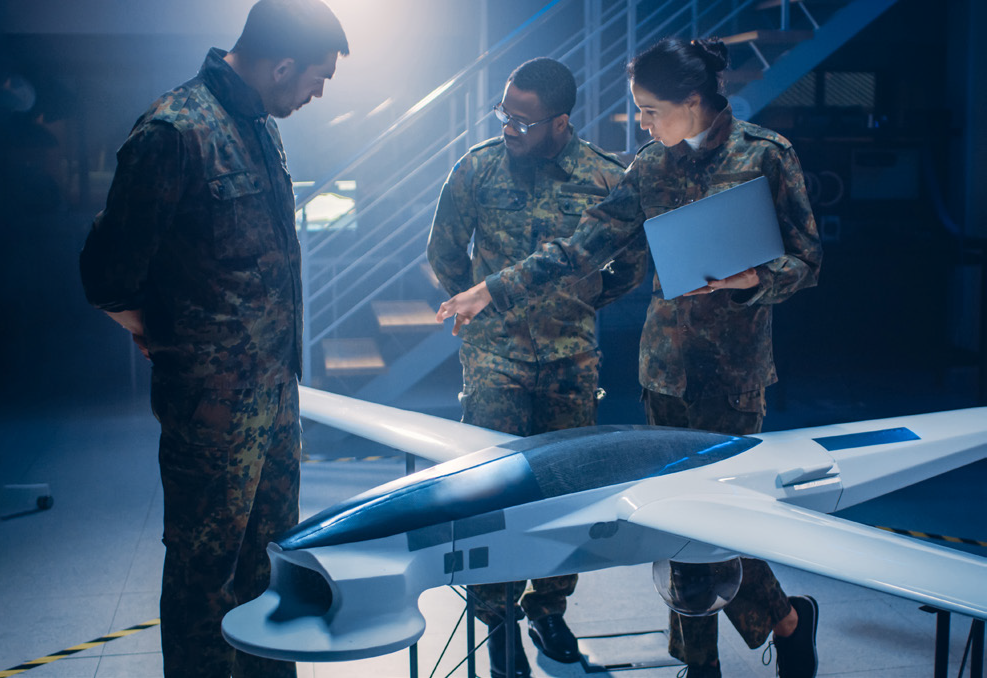
Image courtesy: Portescap / DMA Europa
A COTS motor solution in an A&D application is usually just a starting point to create a quick, initial prototype to validate a proof of concept. The design will then include several iterations of motor or drive modifications and extensive testing of validation for use. Military specifications include numerous requirements related to environmental conditions and pose critical manufacturing needs tied to ISO and quality system mandates. Even when considering these common challenges, the project cycle time can still be compressed using a COTS motor product as the base design.
An alternative to a COTS product is a design-from-scratch approach in which a defence company contracts with a motor manufacturer to design and develop a product to meet the desired specification. This method may take significantly more time to complete and at a substantial cost over a COTS approach. Additionally, it may also be challenging to find a manufacturer with the necessary motor design and A&D-related applications' experience.
A design from scratch approach includes the development of production-ready drawings and the creation of tooling and process documentation for manufacturing.
Documentation and tooling are already established in the off-the-shelf design. The tooling associated with a new motor design may take more than a year to complete, while the COTS product is already tooled. The time and expense associated with a COTS solution is focused on the modifications required to align it with the specification. Partnering with a seasoned manufacturer such as Portescap minimises the time expended to find solutions that meet the typical challenges of a mil-spec application. Portescap’s extensive product portfolio make it easy and efficient to customise an off-the-shelf solution and reduce overall development time.
SPECIFICATION CHALLENGES TO MEET AEROSPACE AND DEFENCE APPLICATION REQUIREMENTS
While most COTS motor designs can meet many basic mil-spec requirements with minimal modifications, there are common specifications that may require additional consideration:
- Shock and vibration
- Wide temperature range
- Pressure (vacuum)
Shock and vibration requirements typically involve the higher axial and radial forces the motor may be subject to in both operational and non-operational settings.Non-operational forces can arise while the machinery or equipment is transported from a storage facility to an active site. High shock and vibration forces, such as those that occur on a missile fin actuator, can come into play during a launch. In most cases, the shock and vibration specifications can be met by upgrading the standard bearing system with a more rugged solution that can tolerate the shock loads. Feedback elements also must be ruggedised by replacing encoder glass discs with less fragile solutions such as resolvers or magnetic scales.
Military specifications must accommodate wide temperature ranges since the equipment must operate in all types of extreme conditions. An aircraft fuel valve actuator is subject to temperature extremes as it transitions from take-off to high altitude operation.The rate of temperature change can be a concern since various motor materials may expand or contract at different rates, which could potentially damage the motor.

Standard motors can be modified to accommodate these variations, such as the adjustment of lubrication in bearings to meet the low or high temperature requirements, or the modification of the winding and insulation system materials to handle temperature extremes.
Various challenges need to be addressed in vacuum conditions. High altitude aircraft and space vehicles experience very low pressure and vacuum environments that affect the ability of the motor to dissipate heat. Nano satellite solar panel positioning actuators must function and be reliable as the satellite reaches its orbital altitude position.The standard brush materials in DC brush motors can fail at high altitudes or in vacuums. The outgassing of bearing lubrication can affect bearing life or contribute to the contamination of the vacuum environment with unwanted particulates. Each of these challenges can be met by substituting standard brush and commutator materials to those suitable for vacuum requirements, incorporating additional heat dissipation methods as part of the motor integration and selection of materials to address outgassing and MIL-spec lubricants.
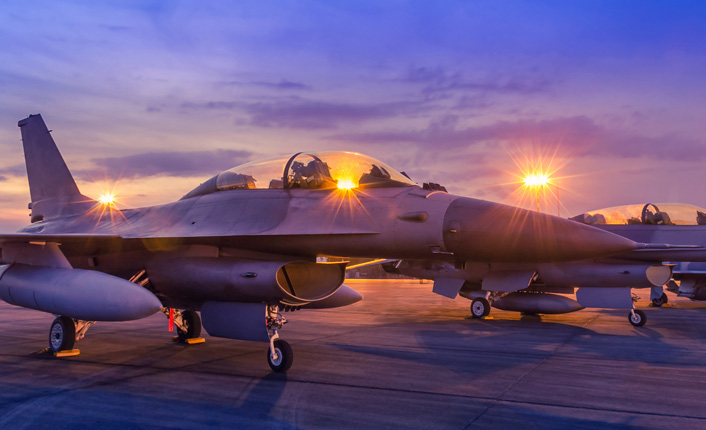
Image courtesy: Portescap / DMA Europa
COTS SOLUTIONS OFFER NUMEROUS ADVANTAGES TO THE A&D CONTRACTOR
The defence contractor can take advantage of existing designs and capitalise on the motor manufacturer’s experience to customise the solution – a 'same as except' approach that offer these advantages:
Competitively Priced
COTS motor designs are readily available in the market with competitive prices and short lead times and can be purchased directly through reputable manufacturers or a network of distributors.
Choice of Experienced Motor Manufacturers
Many manufacturers offer reliable motor solutions suitable for rugged industrial environments, have the experience in customisation for environmental demands and offer the ability to support application specific testing (either at the manufacturer internally or at external facilities, depending on requirements).
Development Times that Support the Customer Needs
Use of a COTS product to develop a quick prototype allows the designer to focus on the specific modifications required to meet critical specifications. This method can compress the entire design cycle and is reflected in reduced NRE costs.
Latest Technology and Optimised Performance
Manufacturers improve and expand designs based on the latest available technologies, which allow the defence contractors to take advantage of current advances in materials and manufacturing processes. Portescap draws from a collection of experiences to meet the numerous environmental challenges of A&D applications and to develop new motor capabilities that leverage the advancements in magnet technology and new motor manufacturing concepts. Utilising a commercially available product with wide usage also provides significant real-world reliability data versus a design from scratch solution.
CONCLUSION
The COTS approach to develop a solution for A&D applications is only possible with a cooperative and collaborative supplier strongly committed to support specific requirements. The optimal solution is created when design engineers engage with their motion solution provider early in the ideation process. Of particular importance to use COTS is the manufacturers’ ability to customise standard product for prototypes in small batches, which may be an iterative process with several steps before a final design is accepted. Many A&D applications require a commitment to product availability for a prolonged timeline that includes customisations for initial prototypes, qualification testing and final product acceptance before any significant revenue is generated. Portescap understands the demands of mil-spec applications and has a proven track record in the customisation of standard products to meet stringent requirements.
In summary, customisation of Commercial Off-The-Shelf (COTS) products is a time-saving solution for A&D applications to accelerate key programme development. Products can be modified to operate reliably in extreme environments without compromising innovation and speed to market.
To contact an engineer, click here