Staying ahead of laser tech


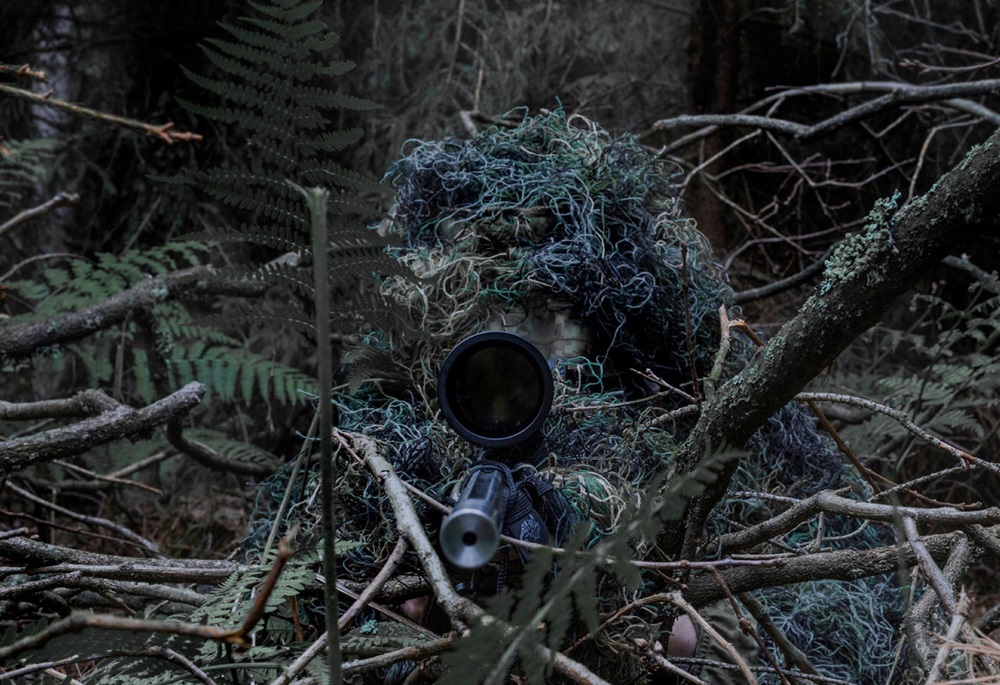
Image courtesy Sentinel Photonics
Lasers are no longer just everyday tools – such as pointers and CDs – they have evolved into powerful threats. With advances in power and wavelength diversity, lasers have increased in number and are now key in accurately guiding weaponry, gathering intelligence and disrupting critical operations.
However, adversaries – from civil annoyances to state-level actors – are weaponising lasers in increasingly harmful ways across the security, aviation and defence landscapes. Understanding these dangers and how to defend against them is more critical than ever.
Proliferating threats
Lasers are becoming more prolific. Here are just some examples of how they are used across different scenarios.
Laser pointers have long aggravated civil aviation, law enforcement helicopters and air ambulances. Pilots report attacks during takeoff and landing, as they hover, circle for surveillance, or gather intelligence. The stakes are high: pilots must decide whether to continue flying and risk permanent eye damage or abandon their mission – both costly.
Lasers have also been used extensively during protests or demonstrations. For instance, during Hong Kong’s pro-democracy protests (2019-2020), laser pointers disabled surveillance drones and facial recognition systems. More recently, in the US, Donald Trump’s would-be assassin likely used a laser rangefinder to measure precisely the distance to his target. In this instance, laser detectors could have identified and located the threat before a shot was taken.
In hybrid warfare, lasers have been weaponised in unexpected ways. For example, in a bid to destabilise the EU, Belarus recently sent refugees to Poland. In response, Poland increased its border guard to control the flow, whom Belarus targeted with handheld lasers to dazzle and cause harm. These short-range lasers cause eye damage, but the border guards could not know the level of risk they faced – or how to protect themselves.
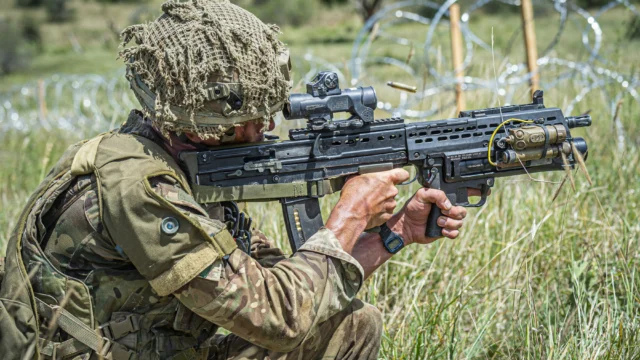
On the modern battlefield, invisible laser systems, such as sniper finders, rangefinders and designators, are not always used to cause direct harm to soldiers. Instead, they help adversaries locate hidden soldiers, improve targeting accuracy for artillery, guide munitions onto targets with pinpoint precision and gain information to build greater situational awareness.
In the case of artillery, lasers measure the distance to a target to ensure shots are accurate every time, increasing mission success. Since these lasers are invisible to the naked eye, users are unaware of their use, making detection and protection all the more challenging.
Lasers can also reveal the position of snipers, anti-tank teams, and even the most covert operators in full camouflage, or using thermal and glint management and signature management techniques. Adversaries can scan the battlefield for any sort of magnified optic – rifle optics, night vision goggles, thermal cameras, vehicle periscopes and binoculars – which bounces the laser back by retro reflection so the target can be easily seen.
Today, drones are common in modern warfare because they can get dangerously close to targets. Onboard laser designators can guide attacks with devastating accuracy. Drone swarms, which are more challenging to combat using traditional radio frequency methods, have driven the development of laser systems, like the UK’s Dragonfire system, to counter these threats by melting and disabling drones mid-flight.
In the security domain, Laser microphones can detect and measure vibrations in materials that can be recorded and analysed to recreate sound for eavesdropping and industrial espionage.
The list of laser uses by technically sophisticated adversaries continues to grow as laser technologies are exploited.
The urgent need for detection
In most of these scenarios, the laser systems remain undetectable, which means it is impossible to protect against them. Operators are left vulnerable without the ability to detect and identify these invisible threats in real time.
Knowing which laser type is used, when and where could mean the difference between life and death. That is why there is a growing need for better laser detection systems that keep up with the notorious uses of lasers across a wide spectrum.
Building intelligence and situational awareness
Detecting lasers is about more than protection, it is also about laser intelligence. The key lies in advanced laser detection systems that provide immediate alerts and precise data about the type of laser being used. The result: enhanced situational awareness, more informed decision-making, successful counterattacks – such as redirecting munitions or preventing friendly fire incidents – deterred future attacks, or even turning the tables on adversaries by feeding their signals back to them.
Detecting the undetectable
In today’s increasingly complex threat environment, staying ahead of laser technology is essential for ensuring the safety of defence personnel, law and security enforcement and civil society. The message is clear for organisations seeking to enhance their security posture: invest in detection to avoid being caught unaware.
Sign up for our newsletter and get our latest content in your inbox.
Similar Reads





Sign up for our newsletter. Select all sectors relevant to you.
Related