General Atomics

Teledyne passes 1,000 sensors in orbit with NASA Roman Telescope launch

The launch of NASA's Nancy Grace Roman Space Telescope marks a major milestone for Teledyne, whose detector technology will enable the mission to investigate dark energy, hunt for exoplanets and survey billions of galaxies.

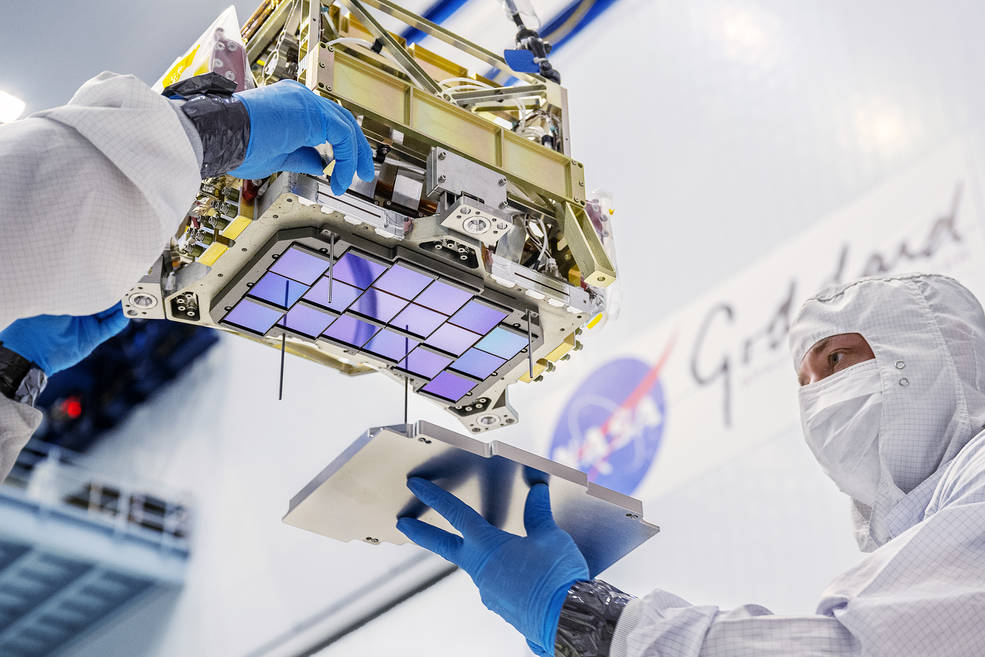
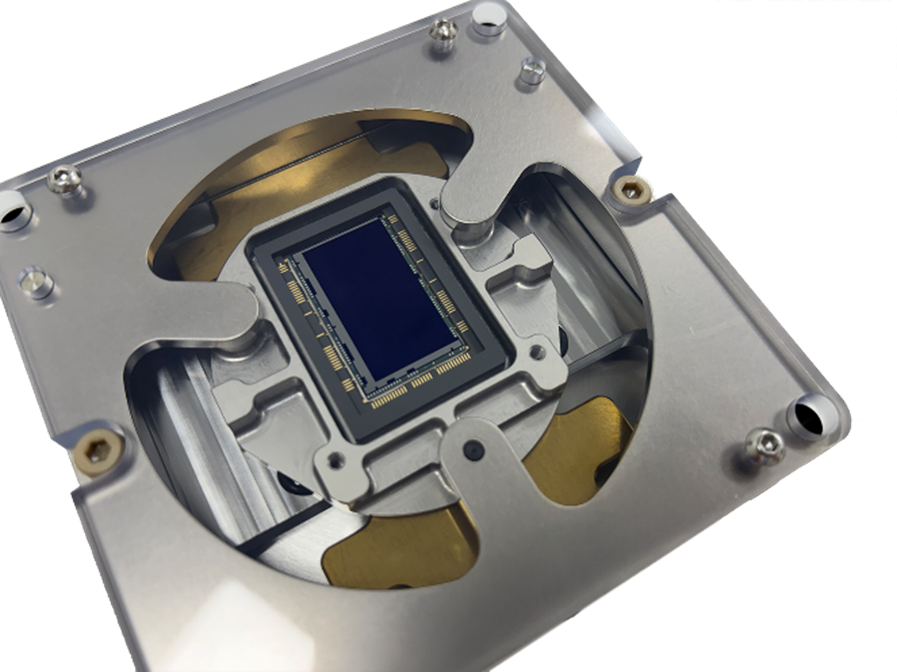
The infrared focal plane with H4RG-10 detector
Photo: Chris Gunn / © NASA

Teledyne Space Imaging, marked a major milestone following the successful launch of NASA‘s Nancy Grace Roman Space Telescope, which lifted off on 30 August aboard a SpaceX Falcon Heavy rocket from Kennedy Space Center in Florida.

With the launch of Roman, there are now more than 1,000 Teledyne scientific imaging sensors in space, including those aboard the Hubble and James Webb missions. The detector technologies supplied by Teledyne support both of Roman’s primary scientific instruments, enabling investigations into dark energy, exoplanets and a broad range of astrophysical phenomena, reinforcing the company’s position as a supplier of advanced detector technologies for scientific, commercial and governmental space missions.

In 2018, Teledyne was awarded a $23 million contract by NASA to provide 24 flight quality sensor chip assemblies for the Roman mission, later expanded to 28. Each delivered detector surpassed performance specifications for quantum efficiency, low noise and image persistence, while also enabling a 20% increase in the instrument’s spectral bandwidth.

Why infrared detector arrays will increase Roman’s field of view

For the mission’s Wide Field Instrument (WFI), Teledyne supplied the H4RG-10 infrared detector arrays that form Roman’s distinctive focal plane, the largest infrared focal plane ever flown in space. Each detector contains more than 16 million pixels arranged in a 4096 × 4096 format. Together, 18 H4RG-10 detectors create a mosaic of more than 300 million pixels, with a unique shape that inspired the iconic Roman mission logo selected by NASA.
Teledyne-CCD311-20 detector-01092026
Photo: Teledyne

Teledyne also supplied three CCD311-20 detectors for Roman’s Coronagraph Instrument, one of the most advanced high-contrast imaging systems ever flown in space. The Coronagraph Instrument combines precision coronagraph masks, deformable mirrors, wavefront sensing and control systems and electron-multiplying CCD technology to suppress starlight and directly observe much fainter planetary systems. The technology demonstration is expected to help pave the way for future missions capable of directly imaging Earth-like planets around nearby stars.

Teledyne’s imaging sensors support many of the world’s important scientific and Earth observation missions, including the Hubble Space Telescope, James Webb Space Telescope, Euclid Space Telescope, ESA’s Sentinel missions and NOAA’s and NASA’s GOES programme. Megan Tremer, President of Teledyne Space Imaging, said: “Reaching more than 1,000 scientific, space-qualified imaging sensors in orbit is a proud achievement for everyone at Teledyne. It reflects our long-standing commitment to advancing imaging technology and supporting the world’s most ambitious space missions. Roman is another important chapter in that story and we are excited to see how it expands our understanding of the Universe.”

How NASA plans to increase our understanding of the distant Universe

Roman is NASA’s latest flagship astrophysics observatory, designed to survey billions of galaxies and observe distant stellar explosions to help scientists investigate dark energy, the mysterious force driving the accelerating expansion of the Universe. The mission will also identify thousands of exoplanets beyond our solar system, including planetary systems that have never previously been studied on such a scale. It combines a field of view around 200 times larger than the Hubble Space Telescope’s infrared observations.

Beyond these primary objectives, Roman will support a broad range of astronomical research, from studying star formation in neighbouring galaxies and supermassive black holes in the distant Universe, to investigating the environments where stars and planetary systems are born. The observatory will also contribute to our understanding of objects within our own solar system.

Related

Syensqo powers NOEMI’s bid for the world’s first certified electric amphibious seaplane
NOEMI's all-electric amphibious seaplane.
Syensqo powers NOEMI’s bid for the world’s first certified electric amphibious seaplane
NOEMI Aerospace will use Syensqo advanced composites and adhesives to support the lightweight airframe of its pioneering all-electric amphibious aircraft.
Aerospace Member News

10 Sep 2026

Winter hydrogen trial at Exeter Airport strengthens case for lower-carbon ground operations
HyGPU trial Exeter Airport
Winter hydrogen trial at Exeter Airport strengthens case for lower-carbon ground operations
Exeter Airport’s latest hydrogen trial found a converted dual-fuel ground power unit could operate safely in winter, reducing diesel burn and carbon emissions.
Aerospace

10 Sep 2026

Ontic acquires compass specialist SIRS Navigation
SIRS Navigation compass
Ontic acquires compass specialist SIRS Navigation
The acquisition of the Kent-based precision magnetic compass manufacturer, adds a trusted brand to Ontic's expansive portfolio of critical aviation components.
Aerospace Member News

10 Sep 2026

Barbara Supplee appointed CEO of Serco North America
Barbara Supplee
Barbara Supplee appointed CEO of Serco North America
Drawing on her vast experience of supporting some of the United States' most important defence and national security missions, Barbara will lead Serco's delivery of mission-critical programmes in North America.
HMS Daring powers up Sampson radar ahead of Royal Navy return to sea
Type 45 destroyer HMS Daring
HMS Daring powers up Sampson radar ahead of Royal Navy return to sea
The Type 45 destroyer is in the finishing stages of completing her years long programme of regenerating to active service.
Defence

10 Sep 2026

UK helped foil Russian operation targeting vital Arctic subsea cables
HMS St Albans monitoring Admiral Levchenko
UK helped foil Russian operation targeting vital Arctic subsea cables
An exclusive Reuters report uncovers new details of a covert Arctic operation, with Russian subs allegedly "training to unleash a secret weapon".
Defence

10 Sep 2026

NewOrbit gains launch slot for first VLEO commercial mission
NEO1
NewOrbit gains launch slot for first VLEO commercial mission
Reading-based NewOrbit will conduct the first commercial mission on which any payload developer can fly, test and validate technology in Very Low Earth Orbit (VLEO), approximately 200-300km above the Earth.
Space

10 Sep 2026

Major General Tedman joins Seraphim Global Space Council
Satellite in orbit by uk space agency
Major General Tedman joins Seraphim Global Space Council
Seraphim Space has welcomed Major General Paul Tedman CBE - one of Europe’s most senior and military space leaders and until recently the Commander of UK Space Command - to its Global Space Futures Advisory Council.
Member News Space

10 Sep 2026

Filtronic strengthens access to India’s space and defence sectors
Filtronic and Spur Microwave MoU signing
Filtronic strengthens access to India’s space and defence sectors
Following the signing of an MoU with Spur Microwave, Sedgefield based high-frequency connectivity solutions provider Filtronic, aims to increased its access to space and defence opportunities in India.
Barbara Supplee appointed CEO of Serco North America
Barbara Supplee
Barbara Supplee appointed CEO of Serco North America
Drawing on her vast experience of supporting some of the United States' most important defence and national security missions, Barbara will lead Serco's delivery of mission-critical programmes in North America.
MBDA opens Poland missile facility as UK defence partnership deepens
MBDA facility Czosnow, Poland
MBDA opens Poland missile facility as UK defence partnership deepens
In an initiative that supports the UK’s commitment to reinforcing NATO’s eastern flank by bolstering Polish air defences, a new facility built with British expertise has been opened in Poland.
Chess introduces AI-enabled Low SWaP CHARM50
Low-SWaP-CHARM50
Chess introduces AI-enabled Low SWaP CHARM50
Chess Dynamics has expanded its Vision4ce CHARM portfolio with the introduction of its Low SWaP CHARM50, a new compact AI-enabled edge video processing module which supports growing demand for smart sensors, distributed sensing architectures and low-SWaP ISR applications.