Advancing UK Aerospace, Defence, Security & Space Solutions Worldwide
  • Home
  • /
  • Space
  • /
  • Teledyne Space Imaging partners with Starris Optimax Space Systems

Space Events

Teledyne Space Imaging partners with Starris Optimax Space Systems
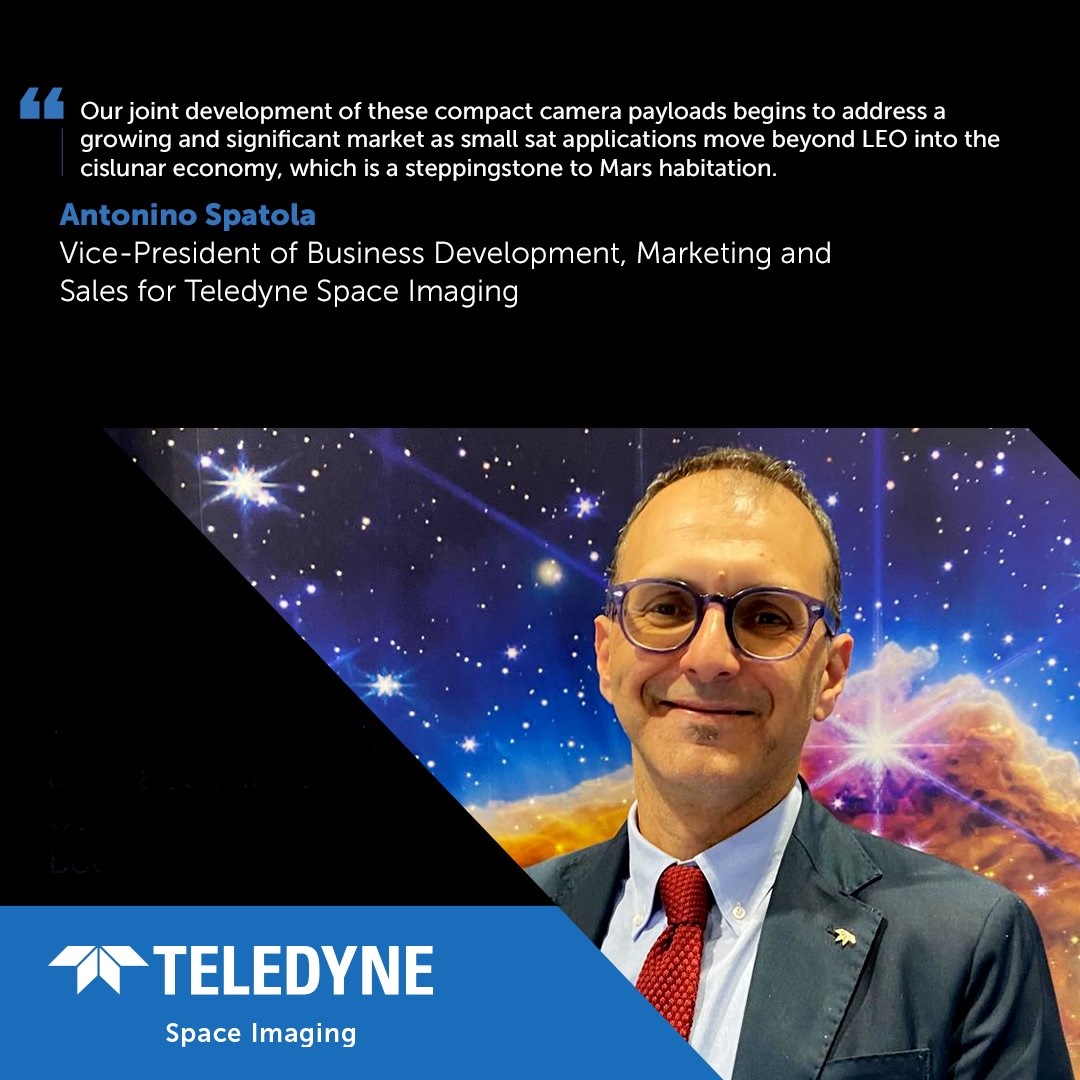
Teledyne Space Imaging is collaborating with Starris Optimax Space Systems in Ontario, New York, to develop space cameras for the small satellites and lunar ecosystems.

Image courtesy Teledyne

Teledyne Space Imaging has a long heritage of developing space qualified imaging sensors, focal plane arrays and instrument systems for the world's foremost space agencies. Since its first launch in 1958, it has partnered with leaders, including NASA, ESA, JAXA and KARI, collaborating with national research institutions and commercial organisations on over 250 space projects.

Advertisement
ODU RT

Starris integrates space-rated optics, sensors, and electronics into digital cameras and instruments using pre-engineered modular systems, which reduces risk, cost, and time in delivering custom optical-based payloads for space.

The collaboration will focus on applications that include earth observation, space navigation, in-orbit servicing, in-situ resource ultilisation, in-orbit manufacturing and space domain awareness.

Antonino Spatola (above), Vice-President of Business Development, Marketing and Sales for Teledyne Space Imaging said: “Our joint development of these compact camera payloads begins to address a growing and significant market as small sat applications move beyond LEO into the cislunar economy, which is a steppingstone to Mars habitation.”

Advertisement
ODU RT

Jack Mills, Head of Sales & Business Development for Americas, Teledyne Space Imaging, added: “This partnership recognises the synergies between Optimax and Teledyne Space Imaging, bringing our complementary expertise in optics and sensors together to deliver market-leading products to our global customers.”

The Teledyne Space Imaging team will be showcasing their latest sensor technology and the payload solutions at the Small Satellite Conference in Logan, Utah, on 3rd-8th August.

Advertisement
FIA2026 animated banner
Seraphim establishes Global Space Futures Advisory Council

Space

Seraphim establishes Global Space Futures Advisory Council

17 April 2026

London based space technology investment group, Seraphim Space, has announced the establishment of the Global Space Futures Advisory Council, created to address key strategic, commercial and geopolitical opportunities and challenges facing the space sector.

AccelerComm granted 56th patent as it advances 5G

Space

AccelerComm granted 56th patent as it advances 5G

16 April 2026

UK based provider of physical layer IP for 5G non-terrestrial networks (NTN), AccelerComm Ltd, today announced the grant of its 56th international patent, marking a significant milestone as the company completes its 10th year of operations.

DESI completes 3D map of the Universe

Space

DESI completes 3D map of the Universe

16 April 2026

The Dark Energy Spectroscopic Instrument (DESI) has completed the largest 3D map of the Universe.

BAE Systems introduces Ascent spacecraft

Defence Space

BAE Systems introduces Ascent spacecraft

15 April 2026

BAE Systems has introduced its Ascent spacecraft, a new addition to the company’s Elevation spacecraft line that supports superiority and exploration missions across the space domain.

Advertisement
ODU RT
Amazon to acquire Globalstar

Space

Amazon to acquire Globalstar

14 April 2026

Amazon.com, Inc. and Globalstar, Inc. have announced that they have entered into a definitive merger agreement under which Amazon will acquire Globalstar, enabling Amazon Leo to add direct-to-device (D2D) services to its low Earth orbit satellite network and extend cellular coverage to customers beyond the reach of terrestrial networks.

Northumbria University researchers awarded £4m to solve space radiation mystery

Space

Northumbria University researchers awarded £4m to solve space radiation mystery

14 April 2026

Researchers at Northumbria University have been awarded £4 million to unlock the secrets of Earth's radiation belts and why they behave so unpredictably – information which is crucial for protecting satellites and forecasting space weather.

Advertisement
ODU RT
Advertisement
FIA2026 animated banner