Tempest demonstrator in final assembly ahead of planned first flight in 2027


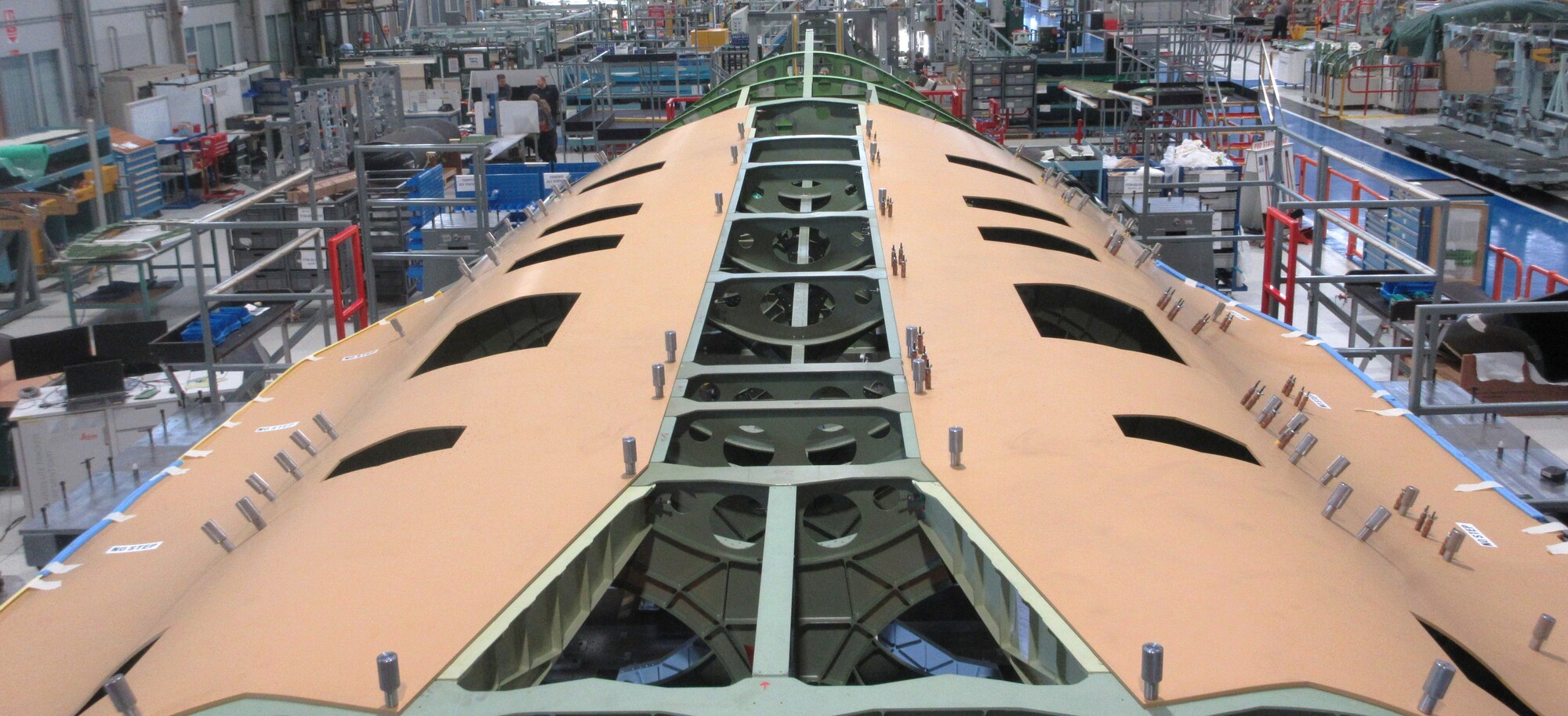
Final assembly of the UK’s Combat Air Flying Demonstrator (CAFD) – a crewed prototype that will soon spearhead development of the sixth-generation Tempest stealth fighter under the wider Global Combat Air Programme (GCAP) – has surpassed the halfway mark ahead of its planned rollout and first flight in 2027.
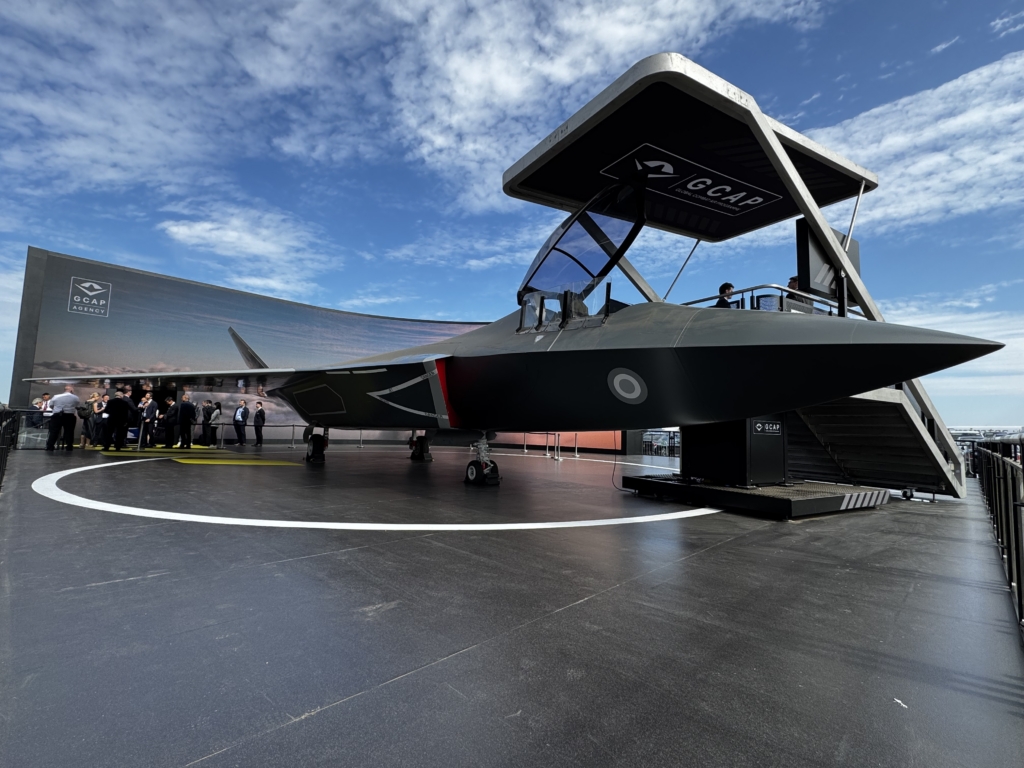
While BAE Systems unveiled its first digital rendering of the CAFD in 2025, the firm has now released the clearest official image yet of the new demonstrator under construction. This new image was released shortly after BAE Systems presented a new model of the CAFD platform during the Farnborough International Airshow (FIA) 2026.
Three milestones. One clear direction for the future of UK combat air.
— BAE Systems (@BAESystemsplc) July 22, 2026
With our Team Tempest partners, we're building the UK's next-generation combat air capability:
🎯 Half the Combat Air Demonstrator's main structure is in final assembly
🎯 Excalibur Flight Test Aircraft is… pic.twitter.com/kjp30fW9HJ
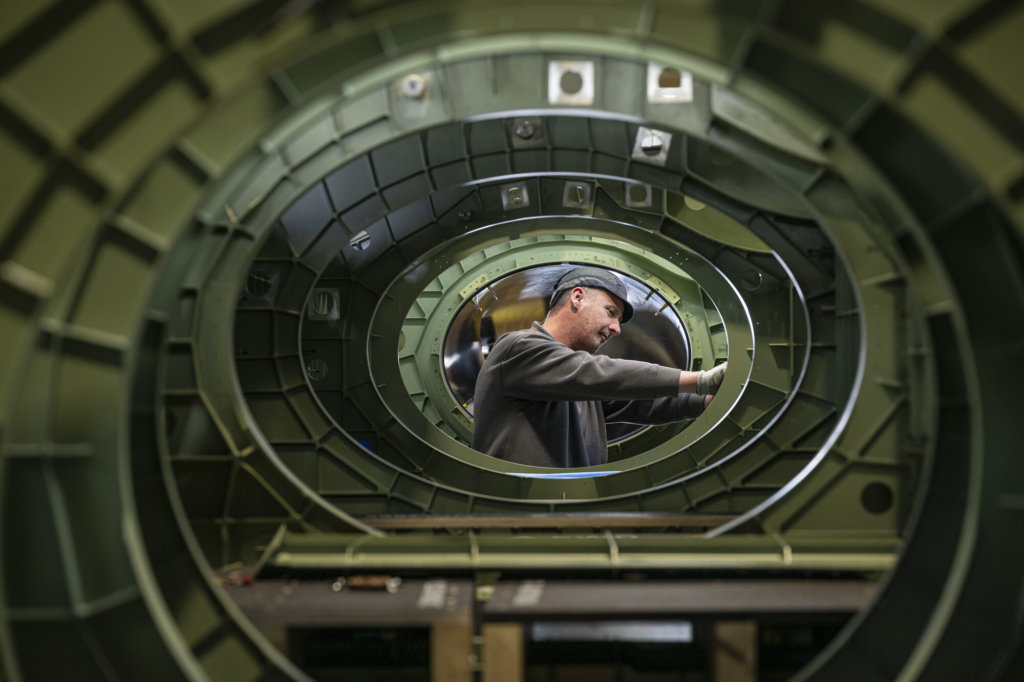
The recently released imagery shows the demonstrator’s large low-observable (LO) fuselage being built at BAE Systems’ Samlesbury facility in Lancashire. Current plans will see the platform’s front, centre and rear fuselage sections mated together into what the firm calls the ‘cigar tube’ before the end of this year.
Following its completion, the fuselage will be moved to the firm’s nearby Warton facility in Lancashire – where the aircraft’s wings and fins are now under construction – to complete the construction process and begin its rigorous ground/flight-test campaign. In all, three wings and three fins are currently being built at Warton, with each set to be subjected to structural testing in the second half of this year.
BAE Systems states that more than 11,500 CAFD-related parts have been designed and released to manufacture the demonstrator, accounting for roughly 90& of the aircraft’s overall weight. More than half of these have already been built and either installed in the prototype’s major units (i.e. fuselage sections and wings) or have been kitted out and readied for installation.
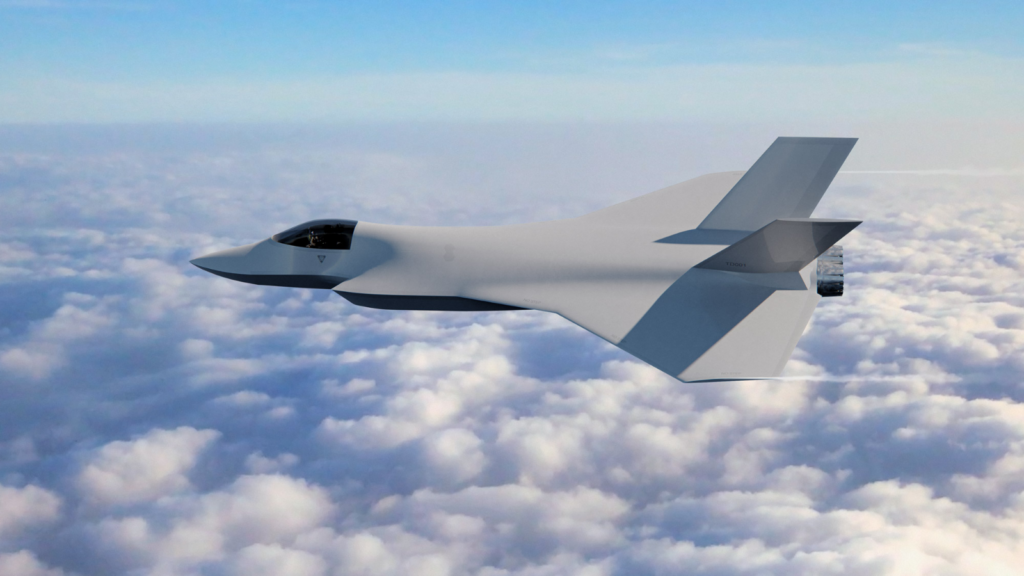
Construction of the CAFD prototype is progressing rapidly, with production set to conclude during the first half of 2027. Initial power-on testing is scheduled to take place by the middle of next year, followed by engine ground runs and taxi trials – as is typical for any new aircraft platform.
The demonstrator is expected to complete its maiden flight before the end of 2027, with the development team aiming to start achieving key test points and capability demonstrations in line with the wider GCAP requirements from early 2028.
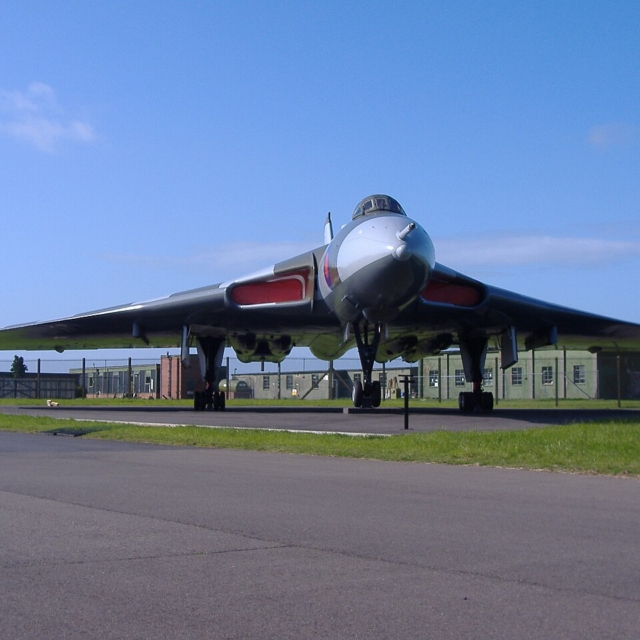
The ongoing production and development of the CAFD platform comes some 40 years after the last UK-built fighter demonstrator, the British Aerospace EAP, completed its maiden flight in 1986.
This British-designed demonstrator – which now resides at the Royal Air Force Museum Cosford in Shropshire – was used to test, de-risk and prove the key capabilities and technologies that were later fed into the multinational Eurofighter Typhoon programme.
Like how the EAP informed the Typhoon’s overall development, the CAFD will do the same for Tempest under the trinational GCAP effort, which aims to deliver the new sixth-generation fighter and its associated technologies to the air forces of Italy, Japan and the UK through the 2040s and beyond. The UK Ministry of Defence (MOD) plans for the first Tempest to enter service with the Royal Air Force (RAF) in 2035.
EJ200 aboard CAFD: A familiar powerplant?
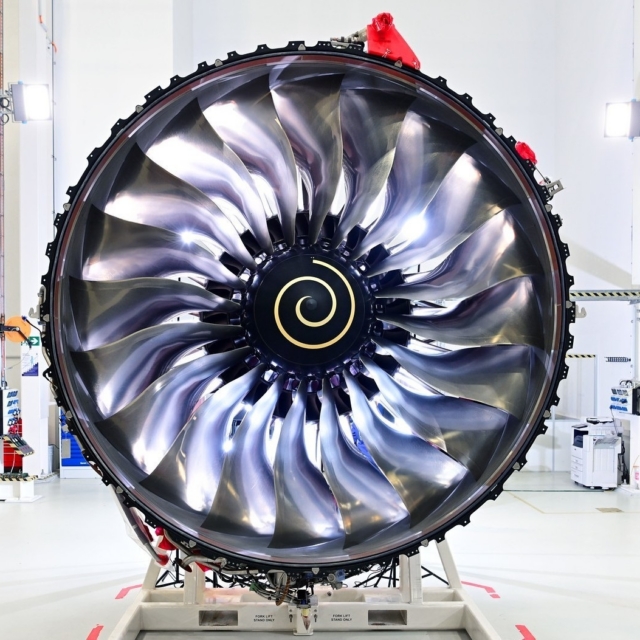
Rolls-Royce is actively developing a new engine for the production-standard Tempest aircraft, but this powerplant will not be used by the CAFD. Instead, the demonstrator will be driven by a pair of less-powerful Eurojet EJ200 low-bypass afterburning turbofans – the same powerplant that is employed by the Typhoon.
Despite the demonstrator’s larger overall size and the reduced thrust output of its two EJ200 engines compared to the powerplant that will eventually drive the Tempest, industry officials have said that the CAFD will still possess fighter-like handling capabilities.
Speaking during a briefing at FIA 2026, Phil Townley – Director of Future Programmes at Rolls-Royce – outlined how the firm plans to ‘fool’ the CAFD’s two EJ200s into thinking that they are in a Typhoon using advanced control system algorithms.
While the EJ200 face sits close to open air within the Typhoon’s design, they will be placed behind a long duct in the CAFD to facilitate the Tempest’s next-generation embedded engine design.
Ultimately, Tempest will employ a twin-spool power generation concept, with development having matured as sensor and effector power demands have grown clearer over time. The firm is also leveraging additive manufacturing to produce the engine’s combustor, making it lighter, smaller and allowing the engine to be more compact. To achieve this, Rolls-Royce has opened a new digital additive cell at its Bristol facility to print it.
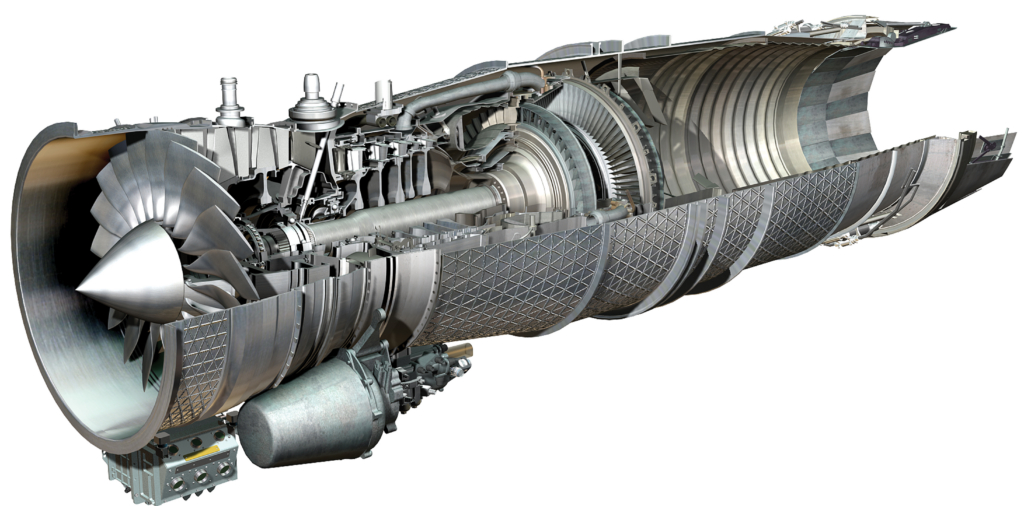
While Rolls-Royce has highlighted its success with the Orpheus powerplant, which was created for use by uncrewed platforms, as evidence of the quick pace of its modern engine development processes, the engine that will eventually drive the Tempest is being developed through a separate, trinational effort between the UK’s Rolls-Royce, Italy’s Avio Aero and Japan’s IHI Corporation.
During FIA 2026, the three firms said that design reviews had moved their centre line demonstrator for the powerplant closer to final approval following the completion of over 100 subscale component tests.
What does BAE Systems’ new CAFD scale model tell us?
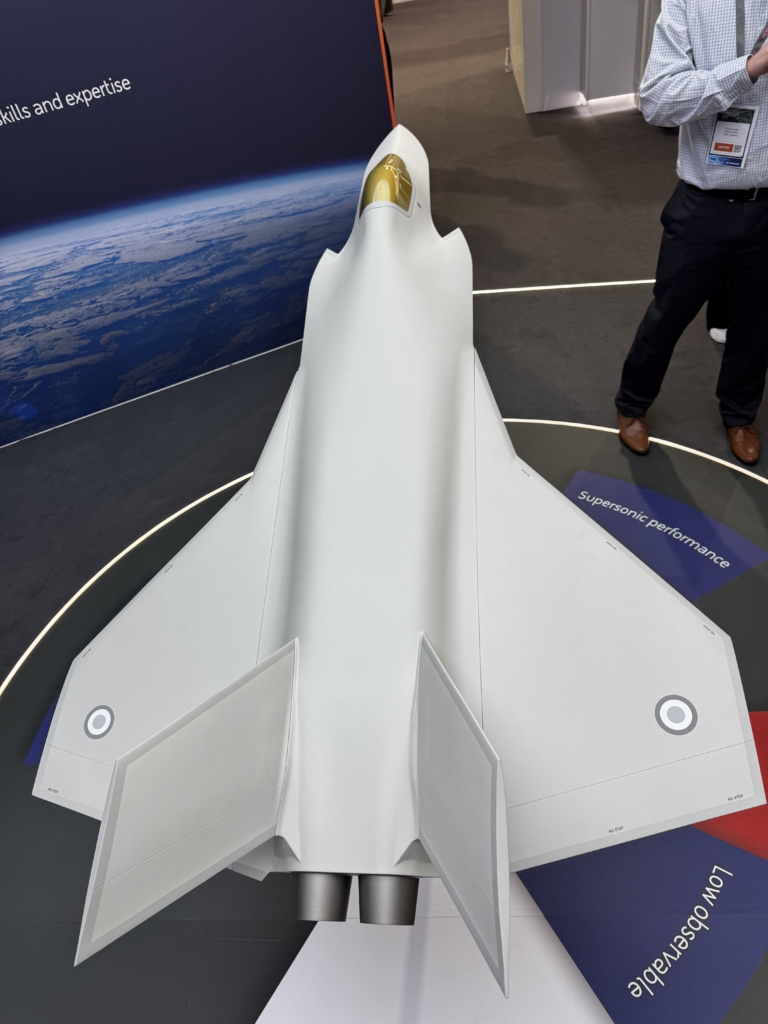
The new scale model of the CAFD demonstrator that was displayed by BAE Systems during FIA 2026 highlighted several key design features for the platform. It confirmed the platform will employ a long and broad serpentine fuselage, as well as trapezoidal outward-canted twin tailfins and no horizontal stabilisers.
While these design features largely mirror those shown in concept renderings and images of production-standard Tempest aircraft, they do have some key differences. For instance, the CAFD will employ a trapezoidal tailfin design, which differs from the five-sided tailfin design that has been frequently used in Tempest renderings and mock-ups.
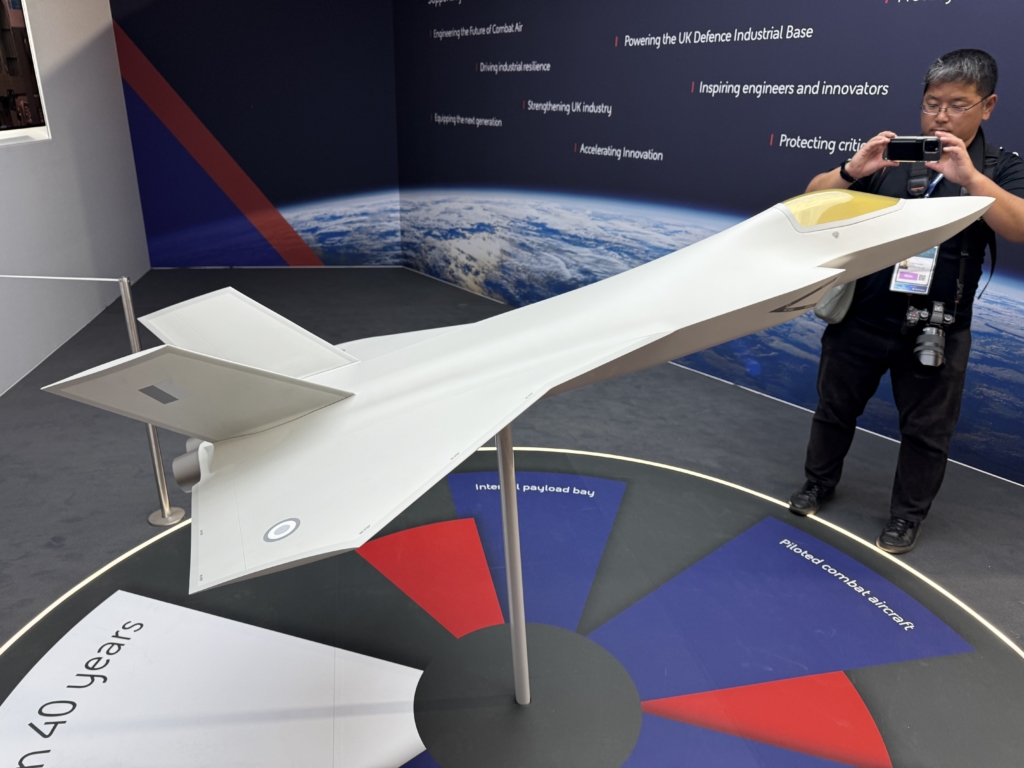
More key differences can be seen with the demonstrator’s wing design. While initial Tempest concept imagery suggested the platform would boast a lambda wing-shape design, more recent renderings have shown that the platform has now adopted a large-area delta-wing.
While the CAFD certainly leans into the design of the latter, it features some notable differences – namely incorporating some cranks on the inboard leading edge of the wings, along with cropped wingtips and a slight forward sweep on the wing’s trailing edge.
The image released by BAE Systems of the CAFD’s centre fuselage section also offers a unique view of the generous internal space that will be available inside the aircraft. Within this space will be the EJ200 engines and their intakes, which will be placed deep within the fuselage, as well as spaces for the internal weapons bays that will be incorporated into the demonstrator’s LO design.
However, it remains important to note that this platform will remain a technology demonstrator that serves to further inform, de-risk, test and develop the final configuration of the Tempest fighter. As current GCAP concept imagery suggests, the design of the fighter that will eventually enter operational service in the late-2030s will undoubtedly differ from the highly anticipated CAFD demonstrator suggests in a variety of areas.
Sign up for our newsletter and get our latest content in your inbox.
Similar Reads