Travel restrictions eased
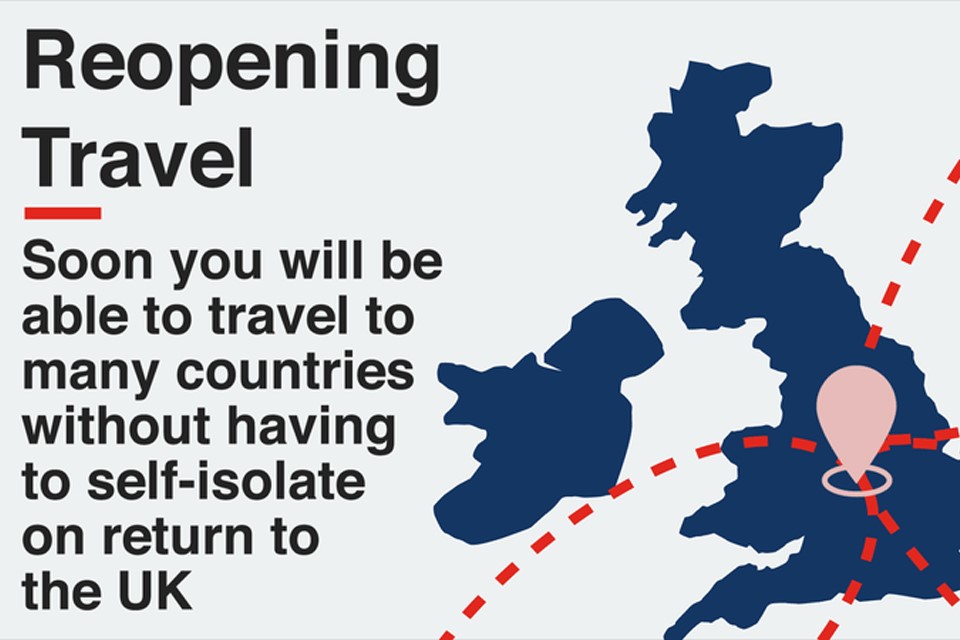
Image courtesy gov.uk
The new measures will come into force from 10th July 2020, meaning that people arriving from selected destinations will be able to enter England without needing to self-isolate, unless they have been in or transited through non-exempt countries in the preceding 14 days.
A risk assessment has been conducted by the Joint Biosecurity Centre, in close consultation with Public Health England and the Chief Medical Officer. The assessment draws on a range of factors including the prevalence of coronavirus, the numbers of new cases and potential trajectory of the disease in that destination.

The list of countries will be published later today. A number of countries will be exempted from the requirement for passengers arriving into England to self-isolate for 14 days. All passengers, except those on a small list of exemptions , will still be required to provide contact information on arrival in the UK.
The government’s expectation is that a number of the exempted countries will also not require arrivals from the UK to self-isolate. This will mean that holidaymakers travelling to and from certain destinations will not need to self-isolate on either leg of their journey.
The exempted countries and territories will be kept under constant review, so that if the health risks increase self-isolation measures can be re-introduced to help stop the spread of the disease into England.
The Foreign and Commonwealth Office (FCO) has also updated its global advisory against ‘all but essential’ international travel to exempt certain destinations that no longer pose an unacceptably high risk of COVID-19.
When planning holidays or overseas travel, people should therefore check the latest FCO travel advice on GOV.UK , including whether there are any self-isolation measures in place for their outbound or return journey.
If the country or territory they are visiting is exempt, they will not have to self-isolate on their return to England. Passengers should also stay alert to any changes to local public health measures while they are travelling, including by subscribing to FCO travel advice updates .
The government continues to work closely with international partners around the world to discuss arrangements for travellers arriving from the UK and will continue this engagement ahead of the changes coming into force.
Transport Secretary Grant Shapps said: "Today marks the next step in carefully reopening our great nation. Whether you are a holidaymaker ready to travel abroad or a business eager to open your doors again, this is good news for British people and great news for British businesses.
"The entire nation has worked tirelessly to get to this stage, therefore safety must remain our watch word and we will not hesitate to move quickly to protect ourselves if infection rates rise in countries we are reconnecting with."
The FCO’s travel advice is based on an assessment of a range of factors that could present risks to British nationals when abroad, using different criteria to the list of countries exempted from self-isolation measures. It is based on a range of factors including epidemiological risks, capacity of local healthcare systems, transport options and law and order. These FCO travel advice exemptions will come into effect on 4 July 2020 and will be kept under review.
All passengers, except those on a small list of exemptions , will still be required to provide contact information on arrival in the UK , including details of countries or territories they have been in or through during the previous 14 days. Existing public health advice on hand hygiene, face coverings and social distancing must also be followed.
The exemptions from self-isolation apply to all modes of international transport, including sea and international rail routes as well as flights.
The Devolved Administrations will set out their own approach to exemptions, and so passengers returning to Scotland, Wales and Northern Ireland should ensure they follow the laws and guidance which applies there.
Ahead of today’s release by the Government of the list of countries that will be exempt from quarantine from 10 July, ADS Chief Executive Paul Everitt said: “The reopening of our skies is an important milestone in the recovery of the UK aviation and aerospace sectors from this unprecedented crisis.
“International connectivity is essential to the UK’s prosperity and the easing of travel restrictions from 10 July to countries including some of our closest and most important trading partners is very welcome.
“We look forward to publication of the full list of destinations by the Government and urge them to keep remaining quarantine restrictions under constant review.”
Responding to the Government’s announcement of the end to quarantine measures in England, AOA Chief Executive Karen Dee said: “Airports have been calling for a risk-based approach to border controls, so today’s announcement is a welcome step forward for English airports. But it is imperative that a four-nation approach is adopted if we are to avoid putting further jobs at risk. We urge the devolved administrations to work with Government urgently to find a solution before the 10 July implementation date.
“This new system will enable passengers in England to book a summer holiday with confidence. Industry and Government have worked hard to put in place a package of health measures to manage the risks of COVID-19 which will help ensure that passengers can travel safely. It is essential that these benefits are extended to those living in the other three nations of the union.
“But this isn’t only about summer holidays - it’s about a successful restart of the trade and commerce that make this country prosperous and successful. Businesses need connections to key UK trade partners in order to restart, rebuild and renew. Before this crisis the UK had the third largest aviation market in the world, bringing in £1 billion to UK GDP every week and supporting countless jobs in communities across the country. Government must step up urgently to support a sector which will struggle to re-establish itself, especially after this highly damaging and unnecessary quarantine period.”
Charlie Cornish, Group CEO of MAG - which owns and operates Manchester, London Stansted and East Midlands Airports - said: ”These travel corridors will open up the chance for people to enjoy a well-earned break abroad and directly benefit the hundreds of thousands of people whose jobs depend on air travel for their livelihoods - whether they work in aviation or for the UK's tourism and hospitality businesses, which can now welcome the first overseas visitors we will have seen for months.
“We have made our airports safe for our passengers and staff, and our airports have already started limited operations to many of these countries. With the quarantine requirement now removed, we look forward to safely welcoming back many more passengers in the coming weeks.
“The Government should continue to take a risk-based approach to quarantine arrangements and, where possible, build more air bridges to key tourism and business destinations with low infection rates. Each one will help protect jobs and preserve billions of pounds worth of economic activity in the UK.”