Advancing UK Aerospace, Defence, Security & Space Solutions Worldwide

Defence Events

Tyron progresses in AWE 2020
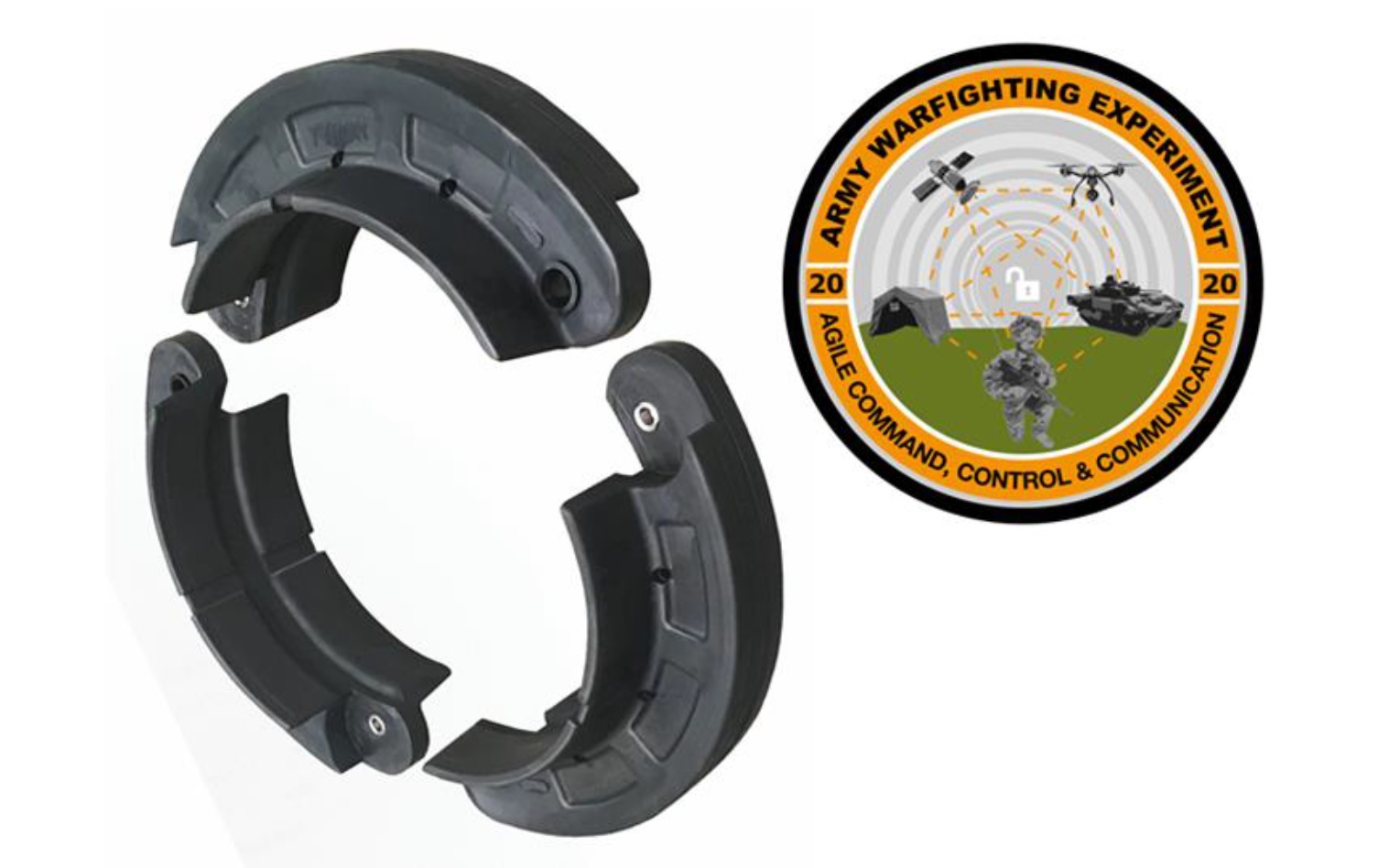
Tyron Runflat has progressed to the fourth stage of the British Army Warfighting Experiment (AWE) 2020, an event which acts as a capability spotlight to allow the army to explore emerging and innovative technologies that may be suitable for rapid exploitation to meet land force requirements and overcome the challenges of the modern battlefield.


Courtesy Tyron 

Tyron is one of around 80 submissions that have made it through an initial Dragon’s Den competition and two industry days with its market-disrupting multi-piece rubber runflat tyre solutions for military armoured vehicles, designed to keep a vehicle mobile in the event of a tyre strike caused by IED or ballistic attack.

Advertisement
Security & Policing Rectangle

As Tyron runflat systems are made from rubber, they offer military vehicles a number of practical benefits in the field; namely, rubber absorbs shock from impingement caused by curb strikes, potholes and operating in a hostile environment and drastically reduces the vibration and stresses that are transmitted through the runflat to the wheels, axles and drive shafts.

In addition, rubber is a compliant material and therefore prevents the damage caused to the tyre from impingement between the runflat and the inside of the tyre. As a result, rubber minimises the damage to the inner liner, body plies and/or bead areas of the tyre that can be caused by runflats made of rigid materials such as plastics/composites – damage that may eventually lead to the splitting, blistering, bulging and/or separation of tyre structural plies and pressure inflation loss or tyre failure.

“The advantages of rubber runflat solutions translate into a clearly-defined advantage on the modern battlefield, where the threat to armoured vehicles by IEDs and similar continues to be significant,” Peter Simson, Director at Tyron, said. “That advantage is simple – our technology keeps vehicles moving beyond defined military standards of 50km, preferably 75km with two or more tyres deflated and a minimum of two hours off-road negotiating hills and obstacles like curb strikes. In other words, we get vehicles and their crew back to base.”

With an eye to reducing the logistics footprint of the army, Tyron is also targeting the need for field serviceability and flexibility of use in service with its modular runflat systems that are field mountable and demountable, and don’t require a hydraulic press to squeeze the runflat into the tyre.

Peter Simson explained: “The reality is that military forces are still having to manage huge logistics tailbacks for their armoured vehicle tyres in theatre – including having to fly wheel structures to the nearest base to replace the tyre when it is damaged, because the equipment to replace the tyre is not mobile or transportable.

Advertisement
PTC rectangle

“That is why what we are demonstrating to the British Army at AWE20 is game-changing technology: rubber runflats that keep vehicles moving and can be replaced in the field with standard tooling and equipment.”

The next stage is 'AWE Summer 20' during which fit and function trials which will allow participants to demonstrate equipment for the army.



 

Advertisement
ECS leaderboard banner
Ultra Maritime secures £40m MoD sonobuoys

Defence

Ultra Maritime secures £40m MoD sonobuoys

3 February 2026

Ultra Maritime has secured a £40 million contract from the UK Ministry of Defence (MoD) to deliver sonobuoys for the Royal Navy’s Merlin Maritime Patrol Helicopter - significantly strengthening the UK’s undersea surveillance and deterrence posture at a time when British waters are under increasing threat from foreign actors.

Babcock and ASELSAN partner on training simulation

Defence

Babcock and ASELSAN partner on training simulation

3 February 2026

Babcock has signed a Memorandum of Understanding (MoU) with ASELSAN, to explore the Royal Air Force’s (RAF) requirement for a Surface Electronic Warfare Threat (SEWT) training system as part of the Next Generation Operational Training (NGOT) programme.

Defence personnel to gain greater powers to defeat drones

Defence Security

Defence personnel to gain greater powers to defeat drones

3 February 2026

The security of key military sites will be strengthened as Defence personnel will be given stronger powers to defeat drones near bases as part of new measures being introduced in the Armed Forces Bill.

Viasat launches satellite service portfolio for government UAV ops

Defence Security Space

Viasat launches satellite service portfolio for government UAV ops

2 February 2026

Viasat today launched its next-generation satellite service portfolio, engineered to meet the evolving demands for government uncrewed aerial vehicle (UAV) operations worldwide, including intelligence surveillance and reconnaissance (ISR), emergency response and special operations.

Advertisement
ODU RT
BAE Systems opens new office in Utah

Defence

BAE Systems opens new office in Utah

2 February 2026

BAE Systems has announced the opening of its new office in Utah, marking an expansion of the company’s local footprint and continued investment in the state’s workforce, economy and innovation ecosystem.

ABT sets framework for OEM battery development

Aerospace Defence Security

ABT sets framework for OEM battery development

2 February 2026

UK battery pack manufacturer Alexander Battery Technologies (ABT), has set out a clearer framework for how OEMs can approach battery development.

Advertisement
ODU RT
Advertisement
Babcock LB Babcock LB