UK airport and airspace development receives £5.5m support

Image copyright Shutterstock
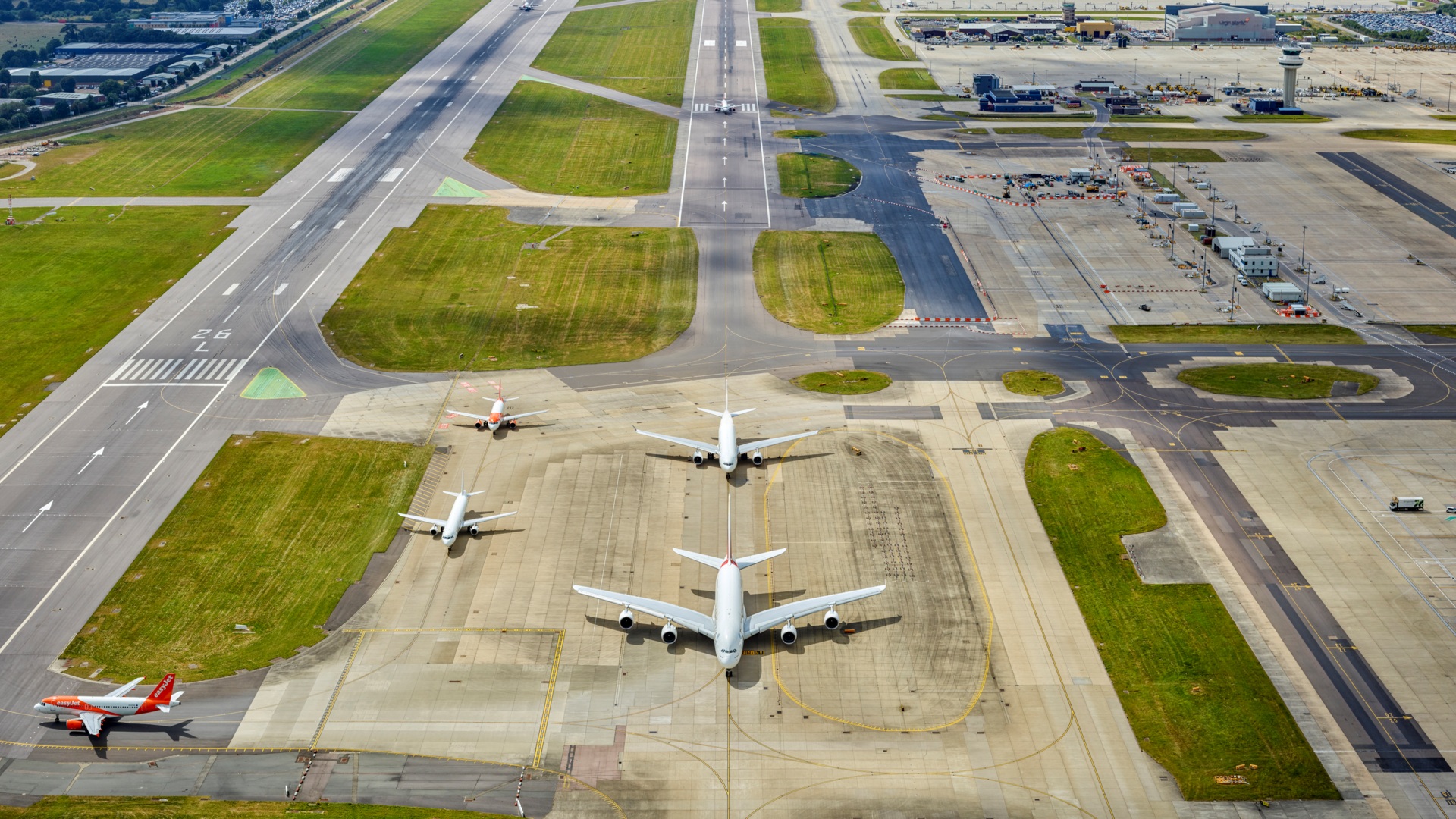
Before the coronavirus (COVID-19) pandemic, there were approximately 7,000 aircraft in UK airspace, dependent on a complex network of routes that allows planes to operate safely. However, since these flight paths were initially mapped out decades ago, growing numbers of routes and a surge in demand has resulted in an increase in delays, noise and pollution.

The £5.5 million fund announced today will support airports to develop and evaluate design options aimed at making journeys quicker, quieter and cleaner.
Although national lockdown restrictions remain in place, meaning everyone must stay at home unless travelling for a very limited set of reasons, this work will help the sector build back better and greener from the pandemic.
Aviation Minister Robert Courts said: "As an island nation, our airspace is vital in keeping us connected to the rest of the world.
"Modernising our ‘sky motorways’ could put an end to the days of circling the airport waiting for a landing slot, improving efficiency, and leading to flights that are quicker, quieter and greener than ever before."
Airport Operators Association Chief Executive Karen Dee said: “Airspace modernisation will be essential for aviation to build back better, so that a recovery of 2019 passenger levels does not come with 2019 noise impacts and carbon emissions.
“The funding announced today gives airports the necessary support to continue this crucial programme of upgrading the UK’s airspace and deliver quicker, quieter and cleaner journeys.
“The UK’s airspace is our invisible infrastructure in the sky, vital to the UK’s connectivity and to the delivery of government agendas like global Britain. We look forward to working with Government and the Airspace Change Organising Group to deliver modernisation and to help achieve aviation’s net zero by 2050 commitment.”
Mark Swan, Head of the Airspace Change Organising Group (ACOG), said: "We’re delighted that the government has reaffirmed the essential role that airspace modernisation will play in helping the aviation industry to build back better from the COVID-19 pandemic.
"We will continue to work with our partners across the industry to ensure this programme is one that delivers for all of the UK."
Creating more efficient and streamlined airspace, not only benefits airports and airlines but also the passengers and communities surrounding them, through reduced emissions, lower levels of noise pollution and fewer delays.
The investment has been made available to airports involved in the Airspace Modernisation Strategy to ensure this vital project remains on track, reflecting the government’s commitment to modernising the airways while supporting the aviation sector as we recover from the pandemic.
The UK Government has also put in place one of the most comprehensive packages of business support in the world, pledging around £7 billion for the aviation sector since the start of the pandemic while working to develop a framework for the restart of safe and sustainable international travel.
The Global Travel Taskforce will publish its recommendations next month, with international travel resuming from 17th May at the earliest.
Airspace Change Organising Group (ACOG): Modernising the UK’s skies
When the Government announced the creation of the Jet Zero Council in summer 2020, it highlighted its commitment to decarbonising aviation. This was reiterated in the Prime Minister’s 10 Point Plan with jet zero forming one of the 10 Government pledges to tackling climate change.
While there has been much focus on new technology and zero carbon flight, there is an existing plan in place that will work to cut emissions via modernising our airspace, meaning the skies above our heads.
Airspace is a crucial part of the UK’s transport infrastructure and, just like our roads and railways, it must be improved to keep people and goods moving as efficiently and reliably as possible.
The basic structure of the UK’s airspace was designed way back in the 1950s when there were fewer aircraft in the air and the tools used by air traffic controllers were much less sophisticated. It is now outdated and inefficient.
Over the last few years, around 20 airports and the main air traffic services provider, NATS, have embarked on a programme of modernising and upgrading the UK’s airspace, as laid out in the Government’s Airspace Modernisation Strategy published in 2018.
While 2020 has been catastrophic for the industry, in time passengers will fly again and flight numbers will return to pre-pandemic levels. This is an opportunity for the industry to recalibrate and build back better - and leaders from across the industry agree that airspace modernisation is one way in which this can happen.
The programme of airspace change was well underway until March 2020 when the pandemic hit. After discussions by ACOG with the Government, today they agreed to provide the short term funding that will enable the programme to continue and airports to complete the next phase of it. It means a number of benefits to the UK can be realised:
- More reliable flights with fewer delays: upgrading our airspace will improve its resilience, and create simpler, more direct routes preventing rising delays and resulting in less congestion
- Up to 20% reduction in aviation emissions by 2050: alongside industry efforts to develop more fuel-efficient engines and use cleaner fuels, upgrading UK airspace will play a central role in the decarbonisation of the aviation sector
- Opportunities to reduce the noise footprint on the ground by making it easier for today’s modern aircraft to fly more direct routes, with quicker climbs and later descents and less need for aircraft holding.
- A global edge: New technology and the desire to be more sustainable are driving airspace programmes across the world. The UK needs to keep pace with these changes to maintain a seamless global system.
- Sports and leisure: Upgrading airspace will create greater freedoms for the UK’s thriving sport and leisure aviation sector and will assist the entry of commercial drones.
Owing to the pandemic, the whole programme had been put at risk:
- Severe financial pressures on airports meant that projected timelines and the funding of the programme were both uncertain.
- Airports had already invested millions of pounds and were part way through the second phase of the CAA’s airspace change process when the pandemic hit.
- The Airspace Change Organising Group (ACOG) had highlighted the need for small scale funding to the Government that would enable the creation of the Airspace Masterplan – this was agreed in March 2021.
Who are ACOG?
To assist with the delivery of the CAA’s Airspace Modernisation Strategy, the Airspace Change Organising Group (ACOG) was established in 2019 at the behest of the DfT and CAA. Its role is to coordinate the delivery of the UK’s airspace change programmes involving 21 airports and NATS, as the provider of the upper-level airspace. ACOG’s role is to help ensure that the proposed changes fit together seamlessly and contribute to an effective airspace infrastructure for the future.
For more information: www.ourfutureskies.uk/about-us/who-are-acog