UK high-altitude ISR balloon soars to new heights
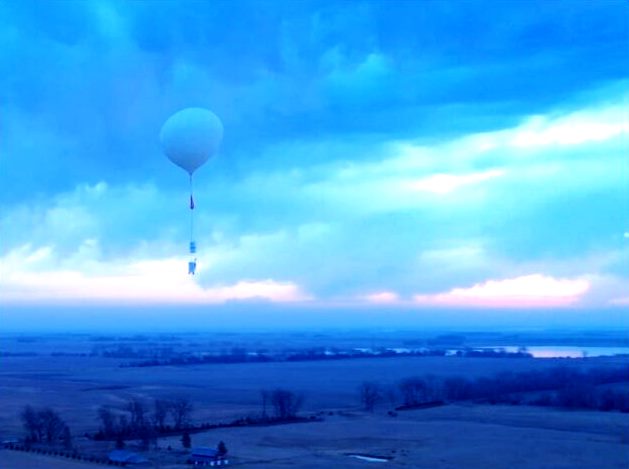
Image courtesy DE&S
UK Defence is developing use of uncrewed, high-altitude balloons to conduct intelligence, surveillance and reconnaissance (ISR) missions, boosting national security.
Test flight balloons each travel over 2,000 nautical miles at an operating altitude between 60,000 and 80,000 feet, double that of a commercial aircraft.

The trial balloons operated as a constellation for the first time and provided near-continuous ISR coverage of nearly a month, far exceeding the endurance of each balloon.
The UK could benefit from the collection of military intelligence, surveillance and reconnaissance from the stratosphere following the successful trials of new high-altitude balloons flying between 60,000 and 80,000 feet above the Earth – higher than most military aircraft operate.
The uncrewed balloons offer a low-cost surveillance and communications capability alternative to traditional solutions. They can travel uninterrupted at extreme altitudes for long periods, without maintenance, boosting national security.
The future use of such balloons could include support to operations and reliable communication and fast internet connection to disaster zones or remote areas with no coverage, while also providing information for weather forecasting and climate research.
With an ISR payload capacity of up to 3kg and with some modules that include weather sensors weighing as little as a European robin, the test vehicles can operate continuously for over five days.
The cost-effective system can be operated by a single person in challenging weather conditions, demonstrating advanced capabilities and precise navigation and station keeping.
Minister for Defence Procurement and Industry, Rt Hon Maria Eagle MP, said: "This innovation is about giving our Armed Forces the edge – better awareness, better communications and lower maintenance needs – supporting the government’s Plan for Change.
"Stratospheric technology like this could transform how we operate in complex environments, keeping our people safer and better informed than ever before.
"This successful trial is another example of UK defence pushing boundaries, with real potential to strengthen our future capabilities."
The trials took place in the South Dakota, USA earlier this year as part of Project AETHER, a concept development initiative supported by the Ministry of Defence’s procurement body, Defence Equipment & Support (DE&S).
The trials were led by UK company Voltitude in partnership with Landguard Systems (UK) and Aerostar (US), using UK-developed technology. With a current ISR payload capacity of up to 3kg, the test balloons can operate continuously for over five days. The findings from these trials will now be used to build upon this significant advancement in stratospheric surveillance, exploring whether the balloons can carry heavier payloads for longer durations, with the aim of enabling missions lasting between six and 12 months.
Head of UK Defence Innovation, Prove and Exploit team, James Gavin, said: "Defence procurement is making strides in the innovation space and DE&S is looking more at the art of the possible, pushing the boundaries and scoping new technologies.
"These latest trials have been incredibly fruitful and pave the way for more collaborative working with our allies to develop capabilities that will benefit our Armed Forces."
The UK-developed technology provides continuous Intelligence, Surveillance and Reconnaissance capability whilst maintaining remarkably low operating costs. It represents a significant advancement in stratospheric surveillance platforms for defence applications.
The Ministry of Defence is exploring future assessment operational use of the stratosphere, not only with this class of balloon but also with vehicles capable of carrying significantly higher payloads for mission durations of six to 12 months.