UK invests £1.5m in CBR robotics and AI research
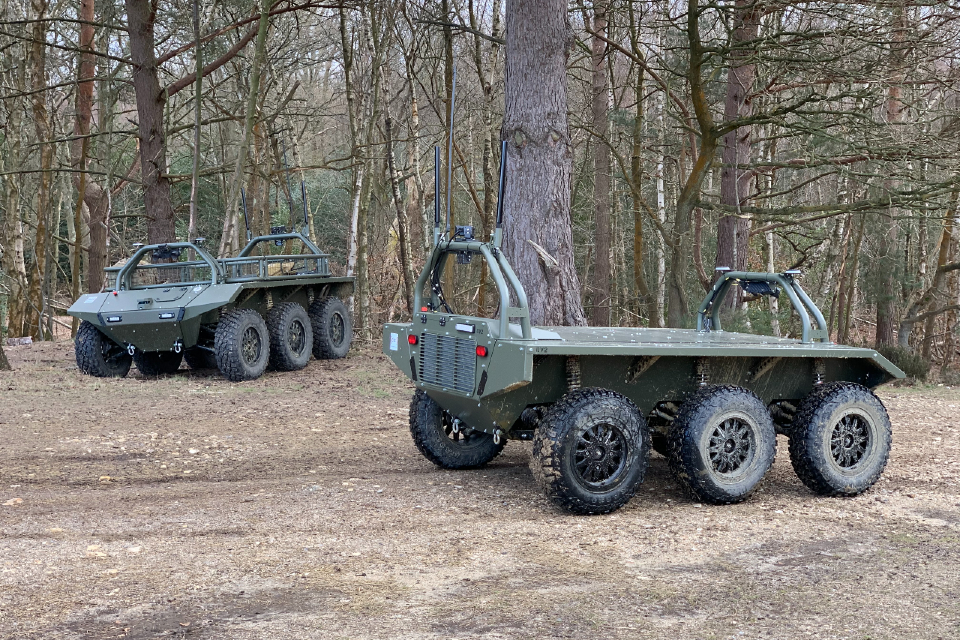
Above:
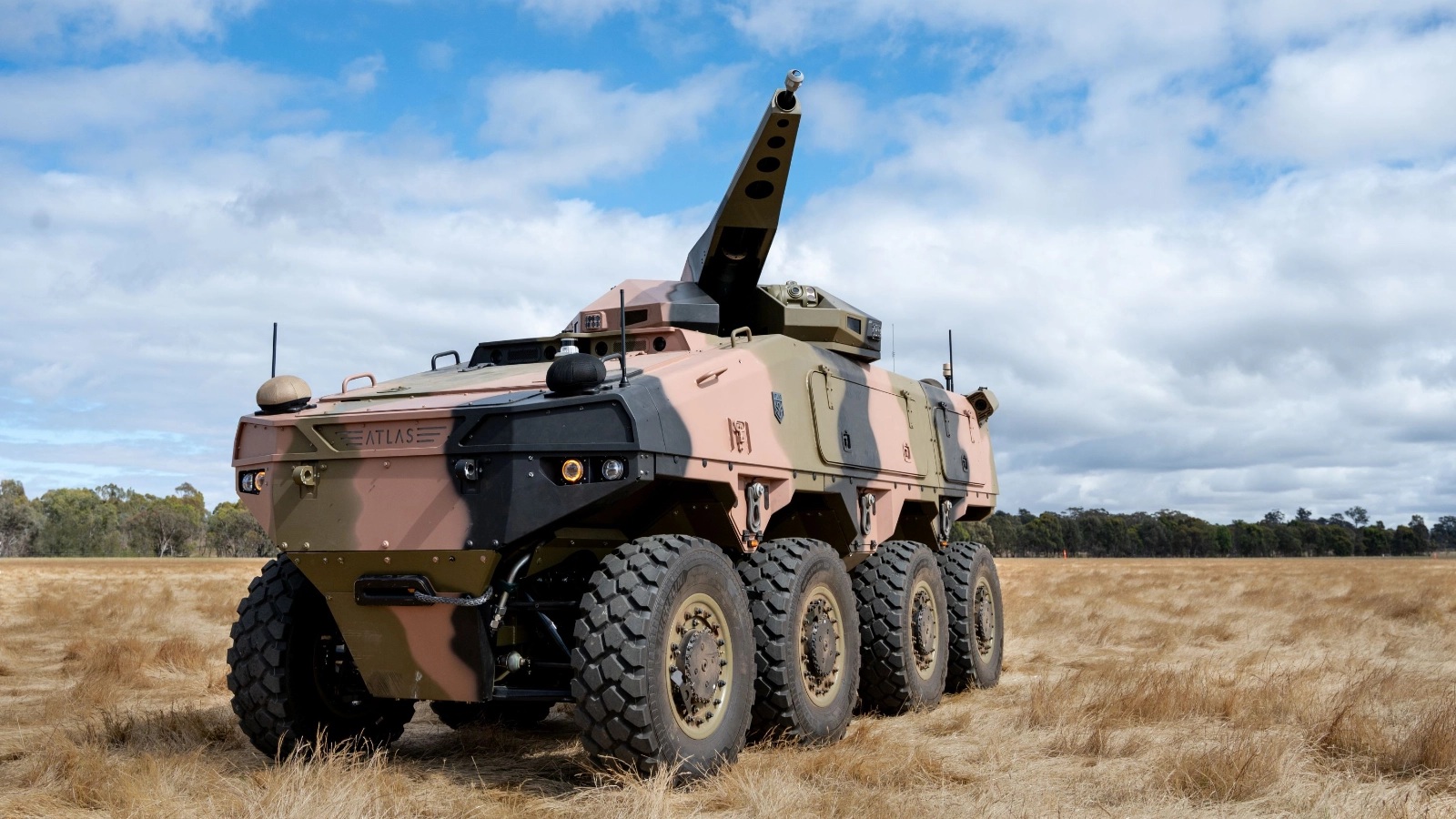
The VIKING UGVs.
Courtesy Dstl / MoD
The current wide area capability is based on specially adapted armoured Fuchs vehicles. For a number of years Dstl - the science inside UK defence and security - has been researching the potential of using autonomy and unmanned systems to survey areas for CBR materials.

This new investment with industry will help develop a concept demonstrator to be used in wide area experimental trials.
Dstl Project Lead, Ian Napier, said: "There is an understandable desire to remove the need for people to enter into hazardous areas, even if they are inside a protected vehicle.
"Recent developments in autonomous ground and air vehicles offer up some exciting opportunities to develop autonomy for CBR work.
"However, before making such a step change in our approach, we need to fully understand the variety of potential CBR scenarios and the tasks that may need to be undertaken by autonomous systems."
Dstl has already received great support and engagement from those within the military CBRN community. The project is now keen to expand out beyond MoD and see what industry can bring.
Dstl has contracted HORIBA MIRA Ltd to adapt a VIKING 6x6 uncrewed ground vehicle (UGV) and integrate a suite of chemical and radiological sensors supplied by Dstl. Making good use of open architectures should allow the development of a CBR sensor suite on a standard ‘pallet’, which could then be mounted onto the appropriate platform as and when required.
Last year Dstl purchased three all-terrain VIKING 6x6 uncrewed ground vehicles, supplied by HORIBA MIRA, which are capable of carrying payloads of up to 750kg and using advanced AI-based autonomy with GPS-denied navigation.
These VIKINGS were purchased under project THESEUS for autonomous logistics resupply missions and are being used for early de-risking work to increase MoD’s understanding of the capabilities and limitations of these systems in areas such as mobility, vulnerabilities and safety.
This new contract will now also fund the development of autonomy algorithms to allow the CBR sensor outputs to help drive the behaviour of the UGV, to detect and map areas of chemical or radiological hazards. One of the VIKINGS will undergo minor modifications to allow it to carry and interface with the CBR sensor pallet.
Andy Martin is the Dstl Technical Lead for the CBR Trials and Experimentation work package. He said: "This is a great opportunity for us to get a better understanding of the possible strengths and weaknesses of autonomous systems for CBR Recce and Survey. They appear well suited for dull and dangerous tasks. But can they fully replace manned systems, or are there some tasks where people are still required to be present?

"The purpose of these trials is not to develop a prototype new system, it is to gather the evidence we need to determine what operational concepts are likely to be successful."
Andy Maloney, Chief Engineer for Defence and Unmanned Solutions at HORIBA MIRA, said: "We are delighted to be working again with Dstl, MOD stakeholders and front line users in this important area.
"The project enables us to build upon our previous autonomous hazardous area survey work with small robots and leverage the capability of our much larger VIKING UGVs and their leading AI-based autonomy.
"The concept demonstrator will include new sensors and autonomous behaviours, modular autonomous control equipment (MACE), the ATLAS GNSS denied navigation system and a user interface provided by our Base Station RAS management software.
"The resulting system will enable significant sensor payloads to be carried over large areas at speed and new autonomous CBR survey concepts to be explored."