UK’s operational F-35s mark first landing on HMS Queen Elizabeth
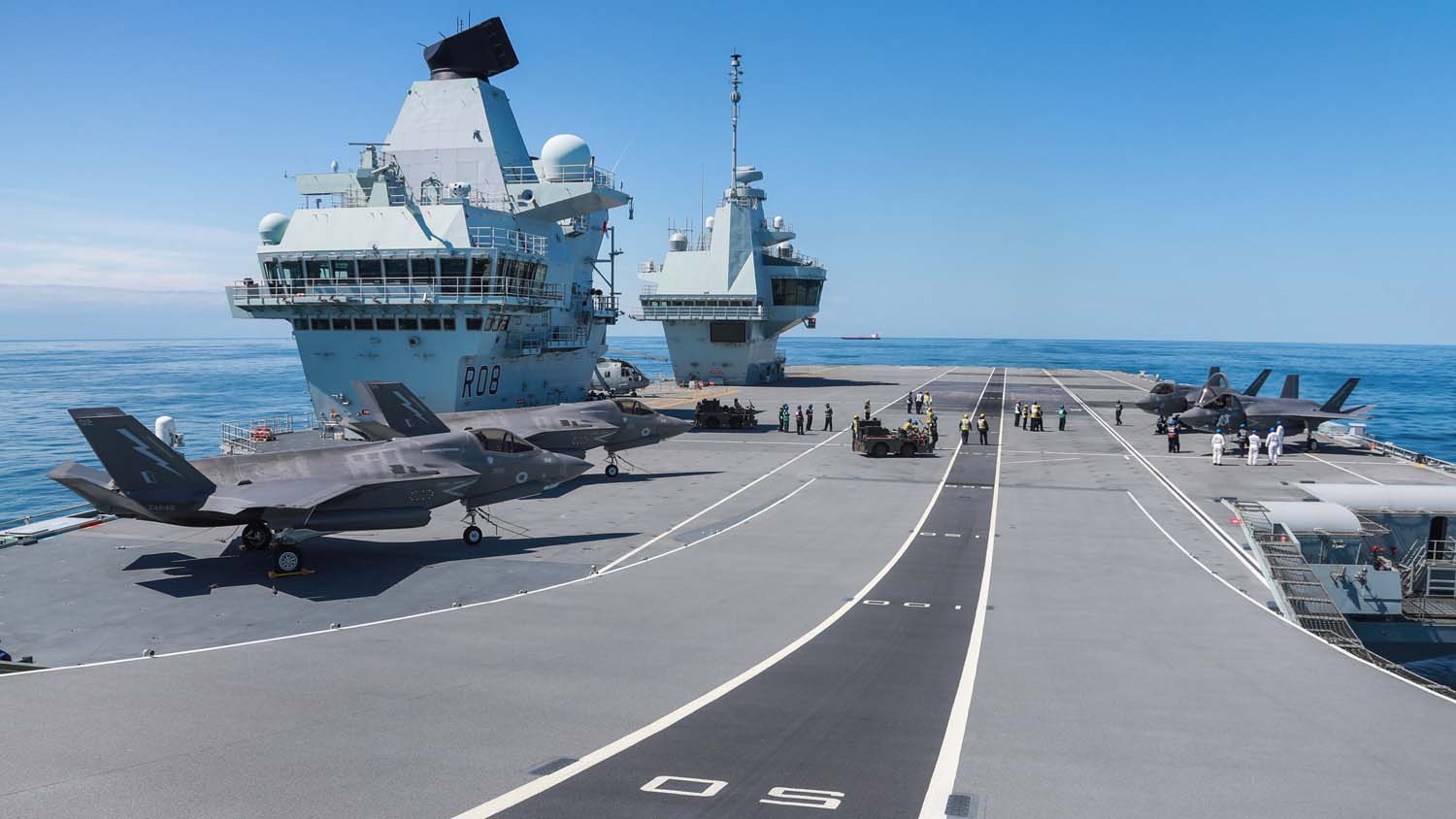
Image courtesy Royal Navy
Pilots, engineers, cyberspace and mission support staff from 617 Squadron, the UK’s operational strike squadron, embarked the carrier over the weekend during a quick stop in Portsmouth for supplies before the aircraft themselves landed on board yesterday afternoon.
It marks the first time 617 Squadron – famously known as the Dambusters – has fully joined HMS Queen Elizabeth as the UK prepares to deploy the next generation squadron of fighter aircraft to operate from the sea.

The F-35 jets that landed on board today will be the same aircraft that will sail next year with the ship for her maiden Global Carrier Strike Group 21 deployment.
Commander Mark Sparrow, the Commanding Officer of 617 Squadron, said: “We are excited to be on board the carrier and we have been training hard to be here.
“This is the first time the ship’s operational squadron has embarked and worked together.
“The F-35 brings next generation capability to UK Defence through its ability to find, destroy or avoid enemy air defences and enemy aircraft whilst gathering intelligence data.”
Commander Ed Phillips is the Commander Air on board HMS Queen Elizabeth. Known as ‘Wings’, Cdr Phillips is in charge of flying operations on the aircraft carrier. He said: “Today is a significant day for HMS Queen Elizabeth on the road to delivering carrier strike operations for the Royal Navy.
“We are at the heart of a world-leading capability for the UK and will soon have on our decks two squadrons of F-35s – from the UK and US – plus the protection of a strike group made up of destroyers, frigates and support ships.”
HMS Queen Elizabeth will now enter an intense period of flying having just successfully completed four weeks of basic sea training.
The aim is to demonstrate that the jets can successfully defend the aircraft carrier by delivering combat air patrols – launching from the ship to conduct strike missions against a target – and being ready to take off at short notice.
After the initial qualification period, 617 Squadron will test their ability to work with Portsmouth-based HMS Queen Elizabeth and Merlin helicopters of Culdrose-based 820 Naval Air Squadron by conducting a number of complex training missions.
This is all in preparation for their second embarkation later in the year when the squadron will join the carrier and her task group for a large multinational training exercise with US, European and NATO partners.
The Royal Navy is transforming into a force centred around carrier strike – supporting the ships as they conduct carrier strike missions, enforce no-fly zones, deploy Royal Marine Commandos, deliver humanitarian aid, and build international partnerships with our allies.
HMS Queen Elizabeth is due to return to Portsmouth later this month.