UK Space Agency backs Rolls-Royce nuclear power for Moon exploration
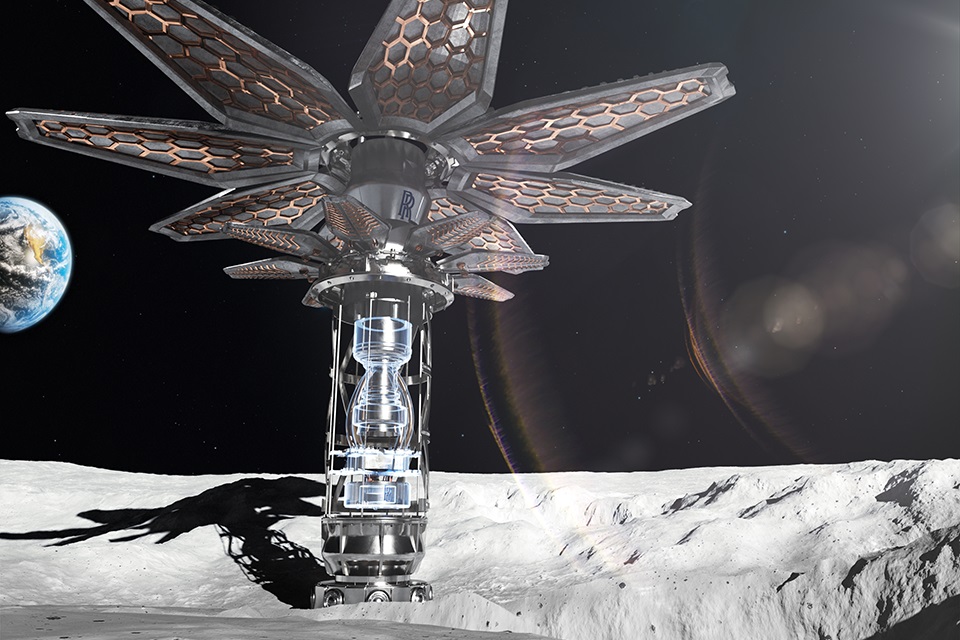
Image courtesy Rolls-Royce
Scientists and engineers at Rolls-Royce are working on the Micro-Reactor programme to develop technology that will provide power needed for humans to live and work on the Moon. All space missions depend on a power source, to support systems for communications, life-support and science experiments. Nuclear power has the potential to dramatically increase the duration of future Lunar missions and their scientific value.

The UK Space Agency has announced £2.9 million of new funding for the project which will deliver an initial demonstration of a UK lunar modular nuclear reactor. This follows a £249,000 study funded by the UK Space Agency in 2022.
Minister of State at the Department of Science, Innovation and Technology, George Freeman, said: "Space exploration is the ultimate laboratory for so many of the transformational technologies we need on Earth: from materials to robotics, nutrition, cleantech and much more.
"As we prepare to see humans return to the Moon for the first time in more than 50 years, we are backing exciting research like this lunar modular reactor with Rolls-Royce to pioneer new power sources for a lunar base.
"Partnerships like this, between British industry, the UK Space Agency and government are helping to create jobs across our £16 billion SpaceTech sector and help ensure the UK continues to be a major force in frontier science."
Nuclear space power is anticipated to create new skilled jobs across the UK to support the burgeoning UK space economy. Rolls-Royce plan to have a reactor ready to send to the Moon by 2029.
Relatively small and lightweight compared to other power systems, a nuclear micro-reactor could enable continuous power regardless of location, available sunlight, and other environmental conditions.
Rolls-Royce will be working alongside a variety of collaborators including the University of Oxford, University of Bangor, University of Brighton, University of Sheffield’s Advanced Manufacturing Research Centre (AMRC) and Nuclear AMRC. The funding means Rolls-Royce can further strengthen its knowledge of these complex systems, with a focus on three key features of the Micro-Reactor; the fuel used to generate heat, the method of heat transfer and technology to convert that heat into electricity.
The potential applications of Rolls-Royce Micro-Reactor technology are wide-ranging and could support commercial and defence use cases in addition to those in space. The aim is to create a world-leading power and propulsion capability for multiple markets and operator needs, alongside a clean, green and long-term power source.
Abi Clayton, Director of Future Programmes for Rolls-Royce said: "The new tranche of funding from the UK Space Agency means so much for the Rolls-Royce Micro-Reactor Programme. We’re proud to work collaboratively with the UK Space Agency and the many UK academic institutions to showcase the best of UK innovation and knowledge in space.
"This funding will bring us further down the road in making the Micro-Reactor a reality, with the technology bringing immense benefits for both space and Earth. The technology will deliver the capability to support commercial and defence use cases alongside providing a solution to decarbonise industry and provide clean, safe and reliable energy.
Dr Paul Bate, Chief Executive of the UK Space Agency, said: "We are backing technology and capabilities to support ambitious space exploration missions and boost sector growth across the UK. Developing space nuclear power offers a unique chance to support innovative technologies and grow our nuclear, science and space engineering skills base.
"This innovative research by Rolls-Royce could lay the groundwork for powering continuous human presence on the Moon, while enhancing the wider UK space sector, creating jobs and generating further investment."
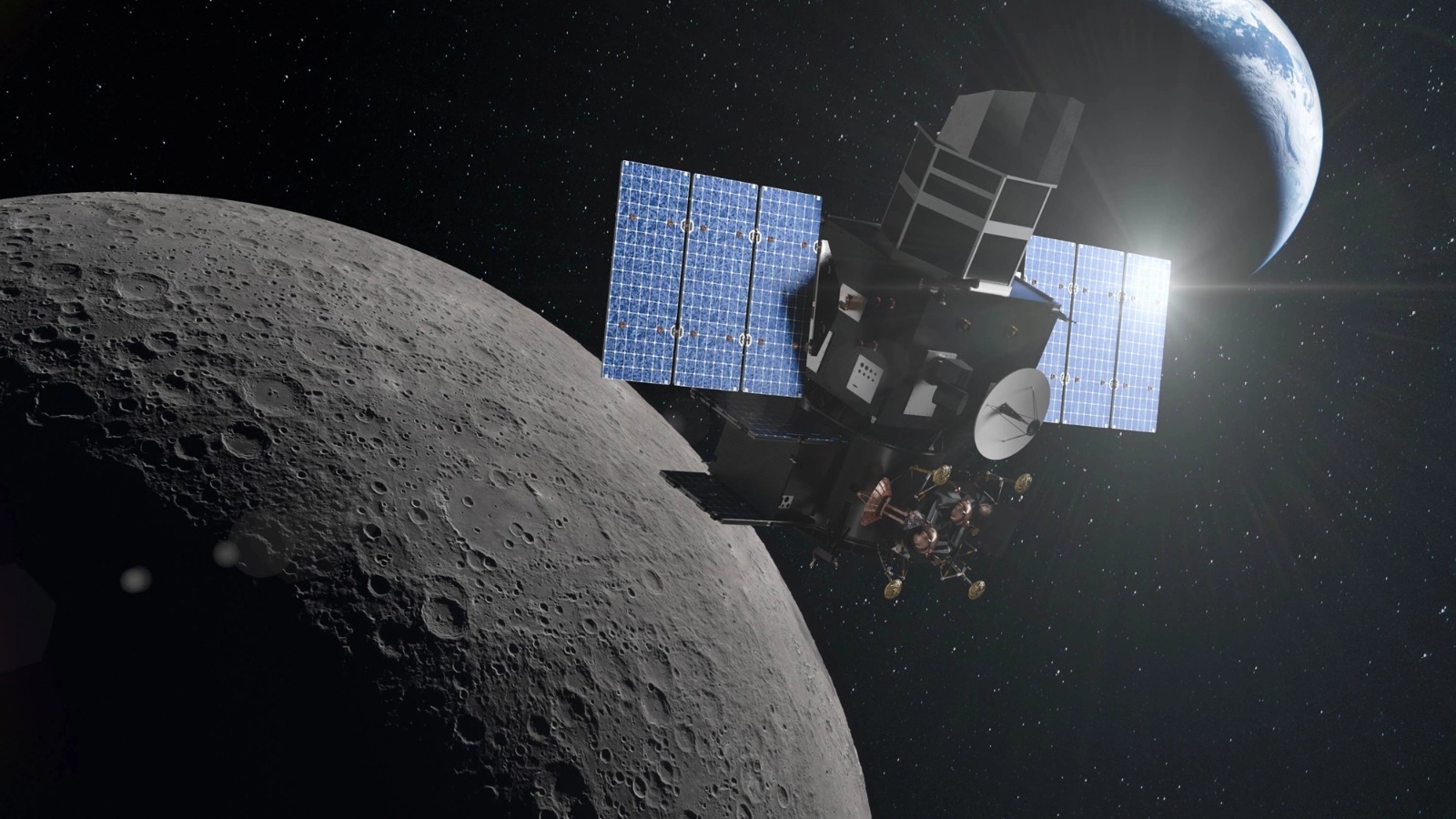
The partnership with Rolls-Royce comes after the UK Space Agency recently announced £51 million of funding available for UK companies to develop communication and navigation services for missions to the Moon, as part of the European Space Agency’s Moonlight programme, which aims to launch a constellation of satellites into orbit around the Moon.
This will allow future astronauts, rovers, science experiments and other equipment to communicate, share large amounts of data including high-definition video, and navigate safely across the lunar surface.