

UK Space Agency invests £17m to drive space innovation

Image courtesy UK Space Agency
This investment will accelerate breakthrough technologies, boost commercialisation and reinforce the UK’s global leadership in space innovation. The selected projects span five strategic themes critical to the UK’s space ambitions: space domain awareness, in-orbit servicing and manufacturing, Earth observation, satellite communications and position, navigation and timing.
Together, these projects will deliver transformative technologies to enhance climate monitoring, improve connectivity, enable sustainable satellite operations and strengthen national security. From quantum communications and robotic servicing tools to AI-powered pollution tracking and refuellable propulsion systems, these innovations will help build a resilient, competitive UK space sector.
Space Minister Liz Lloyd said: "Space technology benefits people’s lives every day – from checking the weather to navigating your car journey home from work. This funding backs the brilliant UK innovators developing the next generation of space technology.
"By supporting our space sector, we’re strengthening the UK’s position as a world leader in space innovation and building technologies that will benefit people across the country for years to come."
Commercial and public benefits
NSIP’s newly funded projects will also deliver tangible public value. Together, these projects are anticipated to create up to 140 skilled jobs across the UK, strengthening the talent pipeline in engineering, data science and advanced manufacturing.
Innovations in Earth observation and satellite data will enhance services such as weather forecasting, agricultural monitoring, and disaster response. HR Wallingford’s AI tool will use satellite data to assess how farming practices affect water quality in our rivers and bathing waters, supporting environmental protection and more sustainable land use.
Magdrive Ltd is developing a compact, versatile and efficient metal-based plasma propulsion system, targeting mass production in the UK to support the next generation of satellite constellations.
Several projects will also contribute to national security and resilience. The University of Birmingham’s AI-powered satellite radar analysis system will help understand and respond to objects in space, improving space domain awareness and shaping the future of autonomous satellite operations, making space missions safer and smarter with bespoke AI-approaches developed by Alan Turing Institute.
BAE Systems Digital Intelligence is developing a satellite-based service to detect and track radio signals from Earth, with applications in both civil and defence contexts. The programme is advancing the UK’s sustainability goals. Protolaunch’s water-based propulsion system and Orbit Fab’s first step to developing a refuellable electric propulsion system which will promote greener satellite operations, while Lodestar Space will develop autonomous, modular robotic tools to service spacecraft in orbit, reducing space debris and extending satellite lifespans.
Professor Mark Sims and Professor Anna Hogg, Space Academic Network (SPAN) Co-Chairs said: "We are pleased to see how the UK Space Agency NSIP programme enables great innovation across industry and academia, often jointly supporting the development of real future technologies for the UK space sector.
"The strengthening of collaboration between industry and academia over the last decade clearly demonstrates the power of working together. The wide variety of technologies now being developed through NSIP is exciting to see, each one representing an opportunity to advance the sector and drive future growth."
Building a world-leading space economy
This new investment from the UK Space Agency builds on the UK’s £18 billion space sector, which continues to grow rapidly and is a leading destination for space investment globally.
UKspace Executive Director, Colin Baldwin, said: "We offer our congratulations to all the successful recipients of these awards. This investment expands the impact of the NSIP and provides the opportunity for space companies and academic institutions to develop innovative new sovereign capability that strengthens the UK in several important areas.
"We also welcome the government’s announcement that from 2026 it will be spending more on civil space than ever before. We look forward to working with the emerging “One Government” approach to space to deliver security and growth for our nation.2
The UK last week agreed a £1.7 billion investment in European Space Agency (ESA) programmes at the ESA Council of Ministers in Bremen, boosting the UK’s total commitment to £2.8 billion over the next decade. This funding will sustain thousands of high-skilled jobs, drive innovation and deliver benefits for people and businesses, from improved connectivity to more resilient infrastructure.
Every £1 invested in ESA returns £7.49 to the UK economy, with contracts flowing back to UK industry and universities. Today’s announcement complements recent UK Space Agency funding that reinforce the UK’s strategic direction in space. These include £6.8 million in International Bilateral Fund awards to support global partnerships and £6.9 million in government funding for satellite communications projects, leveraging the space sector’s talents and strengthening the UK’s reputation as a world leader in space technology.
Together, these efforts reflect a coordinated approach to growing the UK’s space economy, advancing innovation and delivering lasting value to citizens and stakeholders across the country.
Projects
- Magdrive Ltd receives £2 million to ready a powerful propulsion system for small satellites for mass production.
- B2Space Ltd with partners SuperSharp Space Systems and University of South Wales receives £2 million to create a UK-led Earth observation system using high-altitude platforms with advanced sensors, satcom connectivity and onboard AI.
- Lightricity Ltd with partners AVS Added Value Solutions UK Ltd and IQE PLC receives £1.9 million to create a fully flexible roll-out foldable solar panel for small satellites that can generate several kilowatts of power.
- BAE Systems Digital Intelligence receives £1.47 million to develop a satellite-based service to detect and track radio signals from Earth for defence and civil use.
- Toshiba Europe Ltd, together with Heriot-Watt University and Cambridge, University has secured £1.45 million to space-qualify critical quantum optoelectric components and integrate them into a UK-developed secure quantum communication systems for small satellites.
- Filtronic Broadband Ltd receives £1.18 million to build a high-powered amplifier system for satellite communications using advanced UK technology.
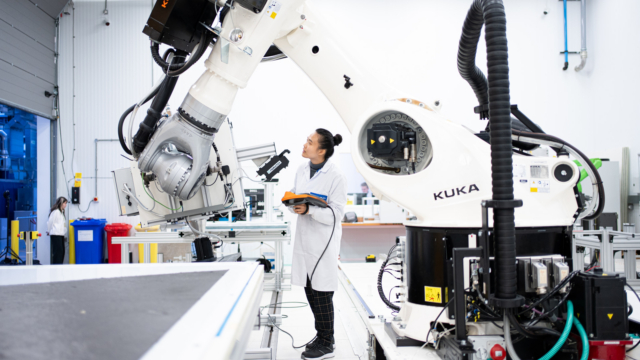
- Lodestar Space Ltd with partners Magdrive Ltd and Cranfield University receives £1 million to develop autonomous, modular robotic tools to service spacecraft in orbit.
- Protolaunch Ltd with partners University of Southampton and Naicker Scientific Ltd receives £1 million to develop a water-based propulsion system that combines chemical and electric thrust for sustainable and dynamic satellite movement.
- University of Bristol with partners University of Bath, Fraunhofer UK Research Ltd, University of Strathclyde and University of York receives £980,000 to create a UV-based secure communication devices for smaller size and longer distance inter satellite CubeSats links.
- University of Edinburgh with partner UK Astronomy Technology Centre (STFC) receives £850,000 to develop a compact, high-resolution CubeSat instrument to measure pollution from space, with global coverage.
- The University of Southampton has received £800,000 and partnered with Cranfield Plasma Solutions to develop a plasma torch system for simulating the extreme thermal conditions of spacecraft atmospheric re-entry. This innovation will fill a key UK capability gap by providing high-fidelity, contamination-free material ablation testing, supporting sustainable space operations.
- University of Birmingham with partner Alan Turing Institute receives £610,000 to design an AI-powered satellite radar system to understand the shape and structure of objects in space.
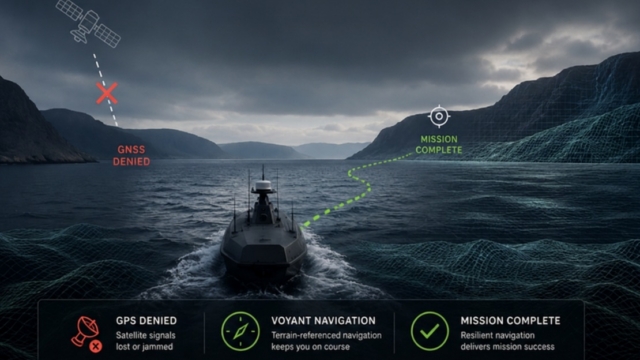
- University of Strathclyde with partner BAE Systems PLC receives £540,000 to develop a new satellite navigation system that avoids relying on GPS by maintaining an agreed time through synchronisation.
- University of Leicester with partner TWI Ltd receives £485,000 to build a robot-mounted welding system for in-space repair and structural joining, validated through vacuum and simulated-environment testing.
- Orbit Fab Ltd with partner TAS UK receives £340,000 to create a refuellable electric propulsion system for satellites by developing a fluidic flatsat.
- HR Wallingford receives £320,000, with support from Southern Water, Thames Water and Evenlode Catchment Partnership to build an AI tool that uses satellite data to assess how farming affects water quality.
- STFC RAL Space receives £260,000 to develop a new technology to support the calibration of next-generation meteorological satellites using UK-made electronics.
Sign up for our newsletter and get our latest content in your inbox.
Similar Reads



Sign up for our newsletter. Select all sectors relevant to you.
Related