

UK opens £37m space infrastructure fund to take technologies from lab to mission



The UK is investing at least £37 million in the infrastructure needed to build, test, and scale space technologies, with the new funding aimed at filling gaps between a laboratory idea and a product ready for a mission.
The UK Space Agency has opened Expressions of Interest for the next round of its Space Clusters Infrastructure Fund (SCIF), beginning a process that will eventually select projects for grants running through to 2030. The five-week EOI window opened on July 20 and closes at noon on August 21.
Unlike funding aimed directly at developing a particular spacecraft or technology, SCIF focuses on the facilities and capabilities companies need to develop those technologies. That can include testing and validation, manufacturing and scale-up facilities, supply-chain capabilities and other infrastructure needed to move technology towards commercial deployment or mission use.
That distinction is important for smaller space companies. A company may have a working technology but lack the cleanroom, specialist test equipment, manufacturing capability or other infrastructure needed to produce it at a larger scale.
SCIF is intended to address that gap.
What the £37 million can actually pay for
The UK Space Agency has deliberately kept the infrastructure categories broad.
Eligible investment opportunities include testing, validation, manufacturing, scale-up and supply-chain capabilities, as well as other enabling infrastructure required to take technologies closer to commercial deployment or use on missions.

The programme is aligned with several of the government’s priority space subsectors. These include satellite communications, in-orbit servicing, assembly and manufacturing, launch, Space Domain Awareness, Earth observation and data architecture, positioning, navigation and timing, space science and exploration, and space technologies with applications in defence and national security. That means the fund is not tied to one type of facility.
A project could, for example, address a shortage of specialist testing capacity, provide manufacturing infrastructure that allows a growing company to move beyond prototype production, or create facilities that several businesses can use rather than each company having to build its own.
The call does not, however, specify separate pots for propulsion, satellite integration or particular spacecraft subsystems. Those areas could be relevant where the proposed infrastructure fits the fund’s stated objectives, but the UK Space Agency has not allocated fixed amounts to them.
The focus is therefore on shared capability as much as individual technology.
The money is meant to reach beyond Britain’s traditional space centres
A major part of SCIF is geographical.
The UK Space Agency says at least 65% of the funding will be directed outside the Greater South East, provided proposals meet the required quality threshold.

That gives the programme a clear regional-development objective alongside its space-sector role.
The UK Space Agency wants projects to build on existing regional strengths and create infrastructure around the country’s space clusters. The intention is to bring businesses, universities, investors, local government and cluster organisations together rather than concentrating new capability in one part of the country.
The programme has three objectives. Building sovereign and scale-up capabilities carries a 40% weighting. This covers the physical and technical infrastructure needed to reduce the risks and costs associated with companies investing in their own facilities.
Growing local space economies also carries 40%. Projects are expected to build on regional strengths, attract investment, help businesses grow and deliver economic benefits.
The remaining 20% is focused on connecting the space sector. Applicants are expected to demonstrate partnerships and social value, including links between businesses, academia, investors, local talent and existing infrastructure.
That could also mean training, education and outreach becoming part of a project rather than being treated as separate from the infrastructure investment.
SCIF is part of a wider push to build more capability at home
The new infrastructure funding follows a broader UK government push to develop domestic space technologies.
At the Farnborough International Airshow on July 20, the UK Space Agency announced more than £62 million for British businesses, universities and researchers. That funding is separate from SCIF.
Of the £62 million, £42 million is going into the third round of the Connectivity in Low Earth Orbit programme, supporting new satellite communications technologies. The remaining £20 million is for the National Space Innovation Programme, covering space technology development across industry and universities.
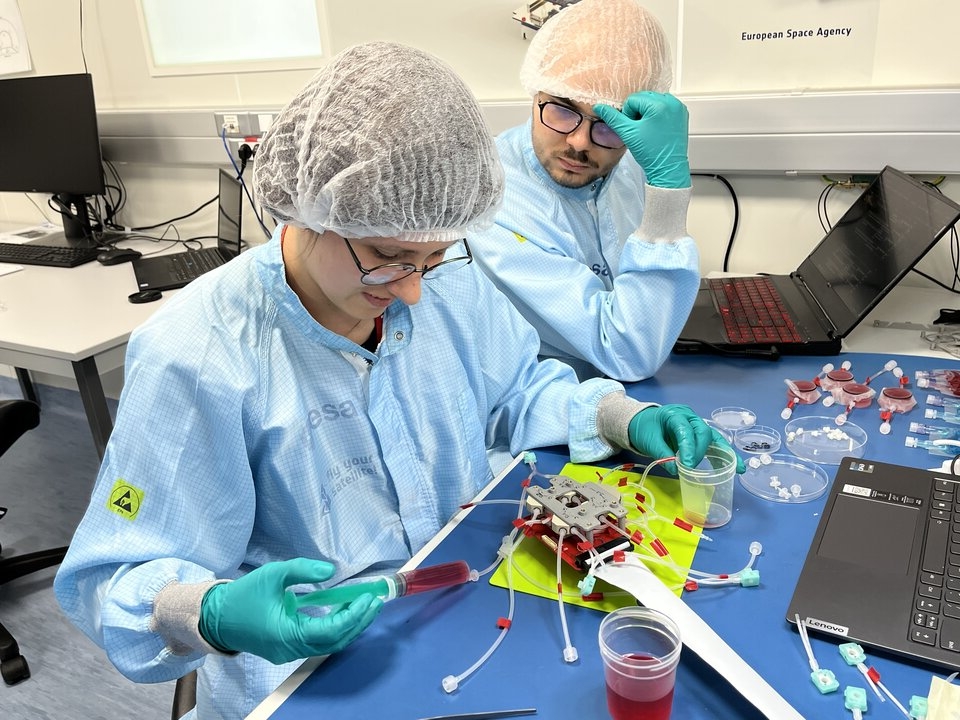
The C-LEO funding is focused on areas including on-board processing, active antennas, optical links, networking and routing, and user terminals. The new round takes total C-LEO funding available to UK organisations to as much as £77 million.
The £20 million NSIP programme has a broader remit. Up to 40% of its budget will focus on Space Domain Awareness and In-Space Assembly and Manufacturing, areas the government identifies as important to its ability to understand and respond to threats in orbit.
SCIF sits underneath that technology push by targeting the infrastructure needed to make development and commercialisation possible.
The three programmes therefore address different parts of the same problem: developing technology, supporting businesses and providing the infrastructure needed to scale it.
Companies have a chance to shape the competition before the funding call
The current SCIF stage is not the competition itself.
The Expression of Interest is designed to give the UK Space Agency an early view of proposed projects, their funding requirements, partnerships and regional opportunities. Submission is not mandatory, and submitting an EOI does not give an applicant an advantage in the later competition.
The agency plans to launch the formal call in September, beginning with outline proposals. Selected applicants are expected to move to the full-proposal stage from October, with grants targeted for award from February 2027. The programme will run from 2026 to 2030.
That timetable also gives space clusters an important role. Organisations considering an application can work with their local Space Cluster Manager to identify potential partners and strengthen their proposals before the formal competition.
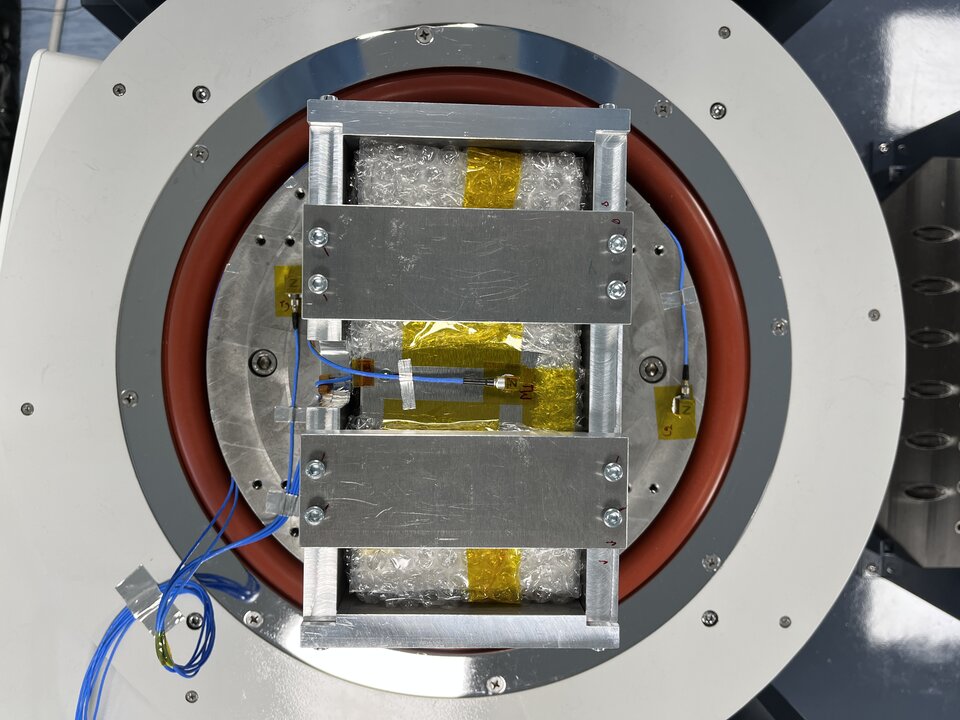
The emphasis on collaboration reflects one of the lessons from the earlier SCIF programme: infrastructure is intended to serve an ecosystem rather than become another isolated facility.
The target is bigger than building more space facilities
The UK Space Agency says the previous SCIF pilot supported 13 projects across the UK. The new round is intended to build on that experience while increasing the scale of investment.
The underlying issue is straightforward.
A company can develop a promising satellite component, communications system or space technology without having the resources to build a complete specialist facility around it. Testing equipment, manufacturing systems and other infrastructure can be expensive long before a company has enough orders to justify the investment.
SCIF is designed to put some of that infrastructure in place at the regional level. That could give companies access to capabilities they could not economically develop alone, while giving universities, established businesses and smaller suppliers a reason to work from the same facilities.
It also fits with the government’s wider argument for sovereign space capability. The July 20 funding announcement said that developing domestic capability would reduce dependence on others for technologies considered strategically important.
Sign up for our newsletter and get our latest content in your inbox.
Similar Reads




Sign up for our newsletter. Select all sectors relevant to you.
Related