UK space technologies to boost NHS Coronavirus response
Courtesy UK Space Agency
The UK space industry has some of the brightest minds in the country and is well placed to support the unprecedented national effort to overcome the biggest threat the UK has faced for decades.
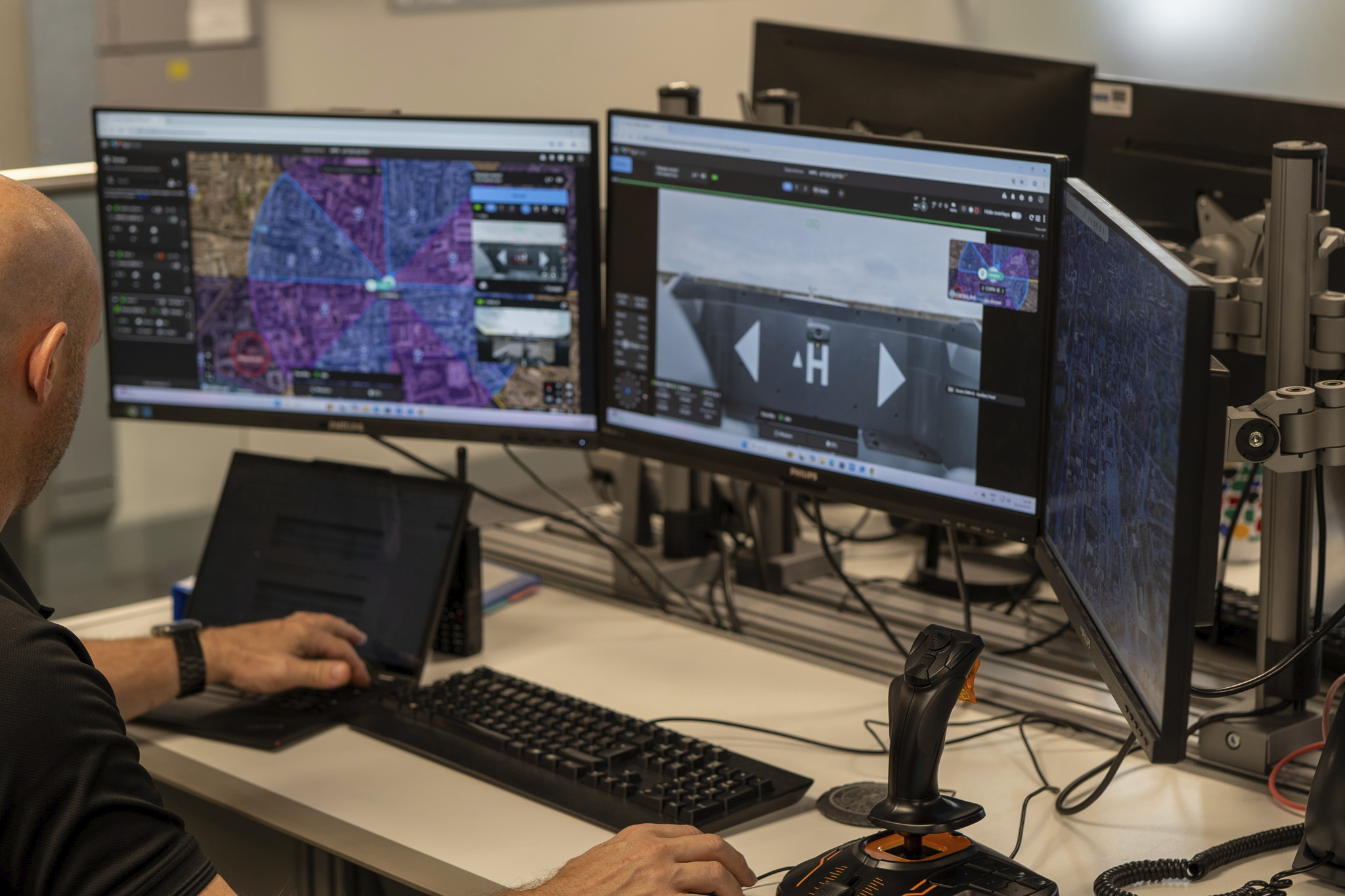
Satellite data and drone technology can help meet challenges such as delivering test kits, masks, gowns and goggles, managing infectious disease outbreaks and supporting the health and wellbeing of the nation.

An initial £2.6 million is being made available to fund a number of projects to develop hi-tech solutions to these challenges, in a joint initiative with the European Space Agency (ESA) in support of NHS England.
The NHS – like any health service around the world – only has a limited number of doctors, nurses, and specialist equipment. In addition to lifting capacity of the NHS and asking everyone to stay at home to slow the spread of the virus, the Government has called on industry and the UK’s world-leading universities to back the national effort, developing technology and equipment – from hand sanitiser to ventilators – to support the NHS.
Science Minister Amanda Solloway said: "From new advanced software helping speed up cancer diagnoses to satellite communications connecting GPs to patients virtually, the UK space sector has been world leading in applying its innovations to supporting our brilliant NHS.
"This new funding will ensure that the latest innovations will be on the frontline of tackling the unique problems the coronavirus outbreak has created, helping medical staff to focus on delivering world-class care."
Professor Tony Young, the NHS national clinical lead for innovation, said: "Everyone in the NHS is working hard to tackle the coronavirus pandemic and provide the best possible care for all our patients, and to do this we’ve looked outside the health service as well as to existing NHS services, including actively seeking to work with private sector providers and other businesses who can support NHS care.
"This is a global crisis that would overwhelm any health service on earth without strong action from the public and their public services, which is why the NHS is looking to industries across the world – or indeed from out of this world - for new and exciting innovations that could help improve the care we provide to patients or help the NHS respond to this pandemic."
The space-enabled solutions could include satellite communications, satellite navigation, Earth observation satellites or technology derived from human spaceflight. The UK continues to be a leading member of ESA, which is independent of the EU, having committed a record investment of £374 million per year in November 2019. This funding to support the coronavirus response comes from ESA’s Business Applications Space Solutions fund, which the UK is the leading investor in.
Nick Appleyard, Head of Downstream Business Applications at ESA’s European Centre for Space Applications and Telecommunications in Oxfordshire, said: "Even in normal times, satellites and space technology offer solutions to our needs in connectivity and inclusion, in resilience and logistics, and to support healthcare provision in even the most extreme situations.
"The current circumstances challenge the space business community to show just how much it can offer, to help us through this a once in a century event. Speed is of the essence, so let us act without delay."
Space is already playing an important part in healthcare. UK start-up company Lanterne recently announced a free app to help people observe social distancing to slow the spread of coronavirus, using GPS satellite data and AI technologies.
Last year the UK Space Agency provided £5 million for new health technologies inspired by working in space to support NHS England. These included providing real-time diagnosis of bowel cancer, developing more compact 3D X-ray machines and a mobile app that provided exercise plans free from air pollution for those with medical conditions such as asthma.
Meanwhile the UK Space Agency’s International Partnership Programme uses UK expertise to support healthcare projects all over the world, including forecasting and providing early warning of dengue fever outbreaks in Vietnam through Earth observation satellites and using telecommunications to extend the reach of basic medical healthcare into remote areas in Nigeria.
The UK Space Agency and UKspace trade body are also working together to help the space sector respond to the coronavirus pandemic.
The UK space sector employs 42,000 people and generates an income of £14.8 billion each year, while supporting £300 billion of wider economic activity through other industries with satellite services such as navigation, communications and Earth observation.
The funding is for projects which will address at least one of the following:
- Logistics within the health delivery system, e.g. with drone deliveries
- Managing infectious disease outbreaks
- Population health and wellbeing
- Recovering health system function and handling backlogs after the crisis
- Preparedness for future epidemics
To find out more and apply for funding:
https://business.esa.int/space-for-uk-covid-19