UK space weather probes capture solar radiation spike

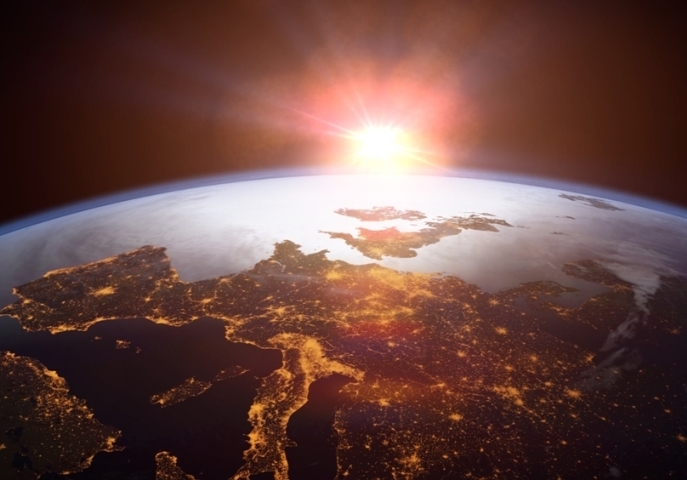
Image by Dotted Yeti / copyright Shutterstock
The solar flare – classified as an X5 event – triggered a rare Ground Level Enhancement (GLE) on 11th November 2025, in which solar energetic particles penetrated deep into Earth’s atmosphere and caused a radiation surge that was detectable even at ground level. Within an hour, the UK Met Office and their counterparts at KNMI in the Netherlands began launching a sequence of weather observation balloons equipped with Surrey’s sensors to measure the storm in real time – right up to commercial aircraft altitudes and into regions used by business jets and supersonic transport.
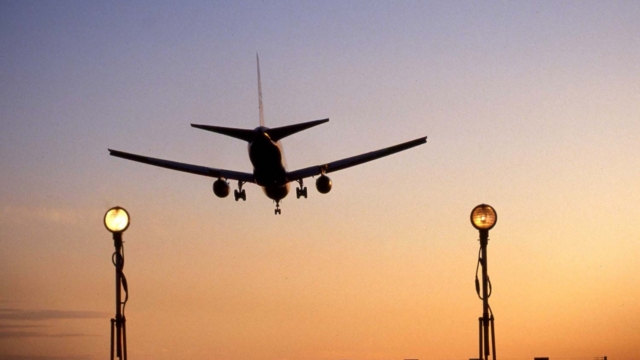
Early analysis shows that radiation levels at 40,000 feet rose to their highest since 2006, reaching almost ten times normal background levels for a short period. Although this event did not pose any immediate health concern, larger storms in future could be more worrying, not least because they have the potential to disturb on-board aircraft electronic systems. During the storm’s peak, the team estimate that single-event upsets – bit-flips in onboard computer memory caused by energetic particles – could have reached around 60 errors per hour per gigabyte.
Professor Clive Dyer, an expert in space weather at Surrey Space Centre, University of Surrey, said: “This was the strongest Ground Level Event we’ve seen since December 2006. Neutron monitors around the world measured significant increases and, in conjunction with newly installed UK monitors at Lerwick, Guildford and Camborne, these will enable us to map the footprint of the event across the globe. Our sensors have given the clearest picture yet of how rapidly conditions can change at aviation altitudes. We know from historical observations that significantly bigger events are possible, and we need to be ready.”
Events like this usually occur two or three times each solar cycle but the sun has been relatively quiet over the last couple of decades. The radiation increase on 11 November was only around two per cent of the biggest event on record in 1956, when some aircraft would have received more than 100 times the normal dose. Even bigger atmospheric radiation storms, “Miyake Events” – revealed through tree rings and ice cores – have hit Earth in the distant past, although nothing on that scale has been experienced in modern times.
The sensors are part of a long-running collaboration between Surrey Space Centre and the UK Met Office to improve space weather monitoring and modelling. Surrey’s atmospheric radiation monitors detect energetic particles in the atmosphere and stream real-time data as they ascend to 100,000 feet – more than twice the typical altitude for aircraft.
Observations from the sensors will be used to validate and enhance radiation models that are in use at the Met Office Space Weather Operations Centre, increasing the UK’s resilience to severe space weather events.
Built to withstand near-vacuum conditions and temperatures as low as –70°C, the sensors measure radiation dose rates and the likelihood of electronic errors in aircraft systems. These observations provide the Met Office with rapid, high-altitude data during solar storms, helping improve models used to protect aviation and other critical services.
It is hoped additional launches will take place in the coming years to further enhance monitoring and understanding of these events, with sensors still ready-to-launch at Met Office sites in Lerwick and Camborne, as well as with KNMI in the Netherlands.
Professor Keith Ryden, Director of Surrey Space Centre, said: “Because this type of event is highly unpredictable, it’s essential to capture as much data as possible when they do occur. This was our first chance to use the new rapid-reaction balloon sensors in a real event and it worked very well, giving us a ‘3D’ picture of radiation increases across UK airspace for the first time. Our research aims to improve aviation safety and this is a great step forward.”
Met Office Space Weather Manager, Krista Hammond, said: “Data from these launches are vital for our understanding of how space weather impacts radiation levels through Earth’s atmosphere. This is the first time radiation data has been collected over such a wide range of altitudes through the atmosphere during a space weather event, and this represents a big leap forward in scientific understanding that will make a real difference in space weather forecasting capability.”
Sign up for our newsletter and get our latest content in your inbox.
Similar Reads


Sign up for our newsletter. Select all sectors relevant to you.
Related