UK to buy F-35As and join NATO nuclear mission

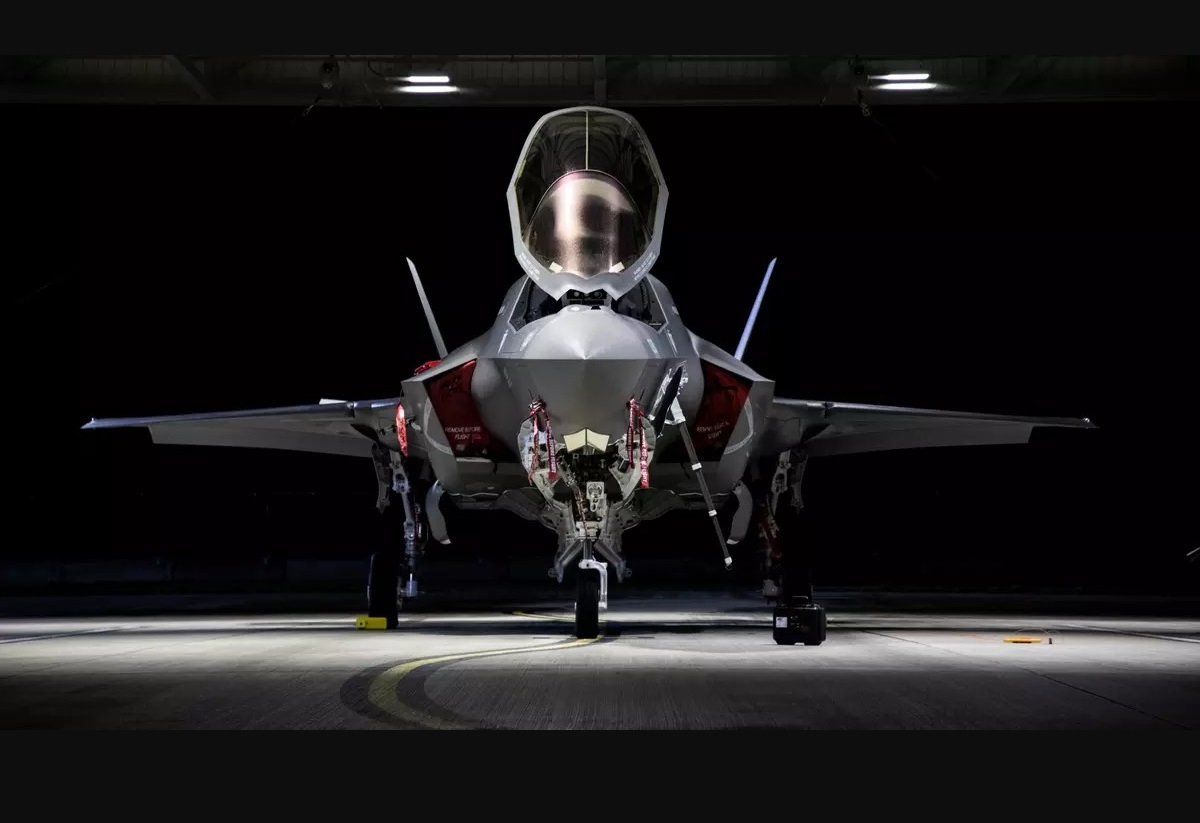
Image courtesy BAE Systems
The Prime Minister will announce at the NATO summit today that the UK intends to buy at least a dozen of the dual capable aircraft, which can carry both nuclear and conventional weapons.
The decision will support 20,000 jobs in the F35 programme in the UK, with 15% of the global supply chain for the jets based in Britain, supporting highly skilled jobs and opportunities for working people and delivering a defence dividend across the country.
The new fast jets will be based at RAF Marham, with the Government expected to procure 138 F35s over the lifetime of the programme. The procurement of 12 F-35A rather than 12 F-35B as part of the next procurement package will deliver a saving of up to 25% per aircraft for the taxpayer.
The purchase represents the biggest strengthening of the UK’s nuclear posture in a generation. It also reintroduces a nuclear role for the Royal Air Force for the first time since the UK retired its sovereign air-launched nuclear weapons following the end of the Cold War.
The UK will deploy the jets as part of NATO’s nuclear Dual Capable Aircraft mission, strengthening NATO’s nuclear deterrence posture.
Prime Minister Keir Starmer said: “In an era of radical uncertainty we can no longer take peace for granted, which is why my government is investing in our national security, ensuring our Armed Forces have the equipment they need and communities up and down the country reap the benefits from our defence dividend.
“Supporting 100 businesses across the country and more than 20,000 jobs, these F35 dual capable aircraft will herald a new era for our world-leading Royal Air Force and deter hostile threats that threaten the UK and our Allies.
“The UK’s commitment to NATO is unquestionable, as is the Alliance’s contribution to keeping the UK safe and secure but we must all step up to protect the Euro-Atlantic area for generations to come.”
From Samlesbury to Stevenage, UK based firms such as BAE Systems, Cobham, GE Aviation, Honeywell, Martin Baker, MBDA, QinetiQ, Rolls Royce, Leonardo UK, Ultra Electronics and EDM Limited all play a vital role in the supply of stealth fighter jets.
The Strategic Defence Review recognised that the UK is confronting a new era of threat, including rising nuclear risks. It recommended that the UK further strengthen our commitment to effective deterrence and our partnership with our NATO Allies, building on our unique role as the only European power to pledge our nuclear deterrent to defend our NATO allies.
The DCA mission is a critical part of NATO’s nuclear deterrence, helping to keep people across the alliance safe.
NATO Secretary General Mark Rutte said: “The UK has declared its nuclear deterrent to NATO for many decades and I strongly welcome today’s announcement that the UK will now also join NATO’s nuclear mission and procure the F-35A. This is yet another robust British contribution to NATO.”
The UK has always supported NATO’s nuclear mission, by providing conventional capabilities and resources such as aircraft and airspace to its annual exercises.
Defence Secretary John Healey MP said: “The Strategic Defence Review confirmed we face new nuclear risks, with other states increasing, modernising and diversifying their nuclear arsenals. And it recommended a new UK role in our collective defence and deterrence through a NATO-first approach.
“This commitment is an embodiment of NATO first, strengthening the alliance while at the same time using defence as an engine for growth to create jobs across in the UK.”
Our commitment to Britain’s nuclear deterrent is absolute, underpinned by our ‘triple-lock’: building four new nuclear submarines in Barrow-in-Furness, in Cumbria; maintaining our continuous at sea nuclear deterrent; and delivering all future upgrades needed.
This announcement further underlines the UK’s unshakeable commitment to NATO, and the principle of collective defence under Article V.
The UK remains committed to the goal of a world without nuclear weapons and upholds all our obligations under the NPT.
This announcement follows the SDR’s commitments to deliver up to 12 new conventionally armed, nuclear-powered submarines and £15 billion this parliament to deliver the sovereign nuclear warhead programme.
Dr David Blagden, from the University of Exeter’s Strategy and Security Institute, said: “The purchase of a small fleet – initially 12 – F-35A strike fighters comes with both up- and downsides. With its longer range and greater payload (compared to the B variant of the F-35 that the UK already operates), it can fulfil longer-range strike missions. Crucially that includes certification for the dropping of US-owned B61 nuclear bombs – so the UK will now be able to join NATO’s dual-key nuclear force, alongside the other European NATO members that already fulfil that mission. There may also be some additional modest benefits to a split F-35 fleet (e.g. using the cheaper and less complex A variant aircraft for training when they are not assigned on operational roles), plus it gives the UK something to announce around the 2025 NATO Summit in The Hague that will please both Trump’s US (buying American weapons to support an American-led mission) and vulnerable European allies (which want as much protection against Russian aggression as they can get).
“At the same time, however, there are potential drawbacks. Shifting to an F-35 fleet split between A and B variant aircraft will necessitate more complex supporting infrastructure and supply chains (many parts are different between the two variants), and thus more expense (potentially offsetting the A variant’s lower purchase price). Because only the short-takeoff B variant aircraft can be used on the UK’s aircraft carriers, a shift to more A variant aircraft could make it harder to generate meaningful carrier air groups for deployed naval operations. Spending on more US-made and -supported F-35s might also divert investment away from Britain’s own next-generation combat aircraft programme, Tempest (a UK collaboration with Italy and Japan).
“The main rationale for Britain to acquire a ‘tactical’ nuclear capability – weapons that can be used in limited capacities, e.g. against bases or vehicle columns, rather than for full strategic retaliation against an attack on UK/allied cities – would be having our own means to deter Russian use of its tactical nuclear weapons in circumstances in which the US was unwilling or unable to protect the UK, and in which the Royal Navy’s submarine-borne Trident nuclear missile system would be overkill (and therefore lack credibility). Yet buying another US-made aircraft, with US-controlled source code, to carry US-owned nuclear weapons actually deepens UK dependence on US goodwill. As such, this may make sense if the combination of F-35A aircraft with US B61 bombs is just an intermediary step on a road back to a sovereign UK tactical nuclear capability. But it makes less sense if the purpose is simply for the UK to become one more European NATO carrier of US nuclear bombs (of which there are already plenty).”
Sign up for our newsletter and get our latest content in your inbox.
Similar Reads





Sign up for our newsletter. Select all sectors relevant to you.
Related