University of Surrey and the Met partner to tackle knife crime

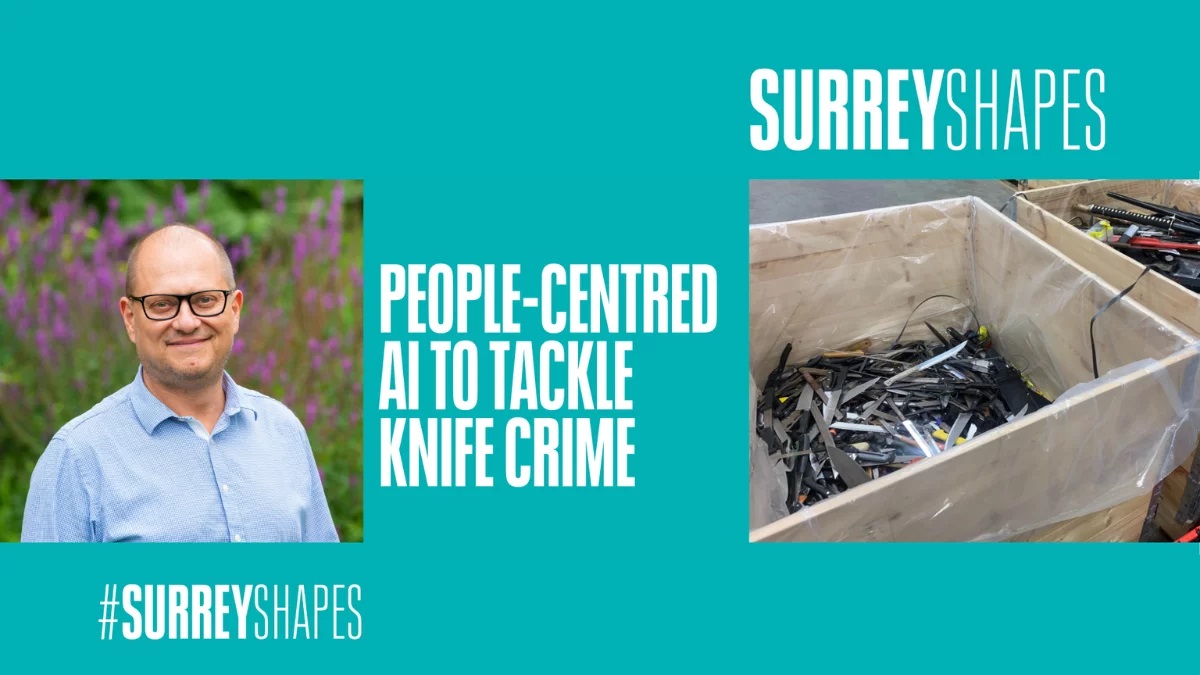
Image courtesy University of Surrey
Created in collaboration with the Metropolitan Police, Knife Hunter is believed to be the world’s first AI-based knife analysis system that allows police officers to identify weapons found during stops, recovered from crime scenes, or seized. With tens of thousands of such knives recovered annually in the UK, the system allows police to log these weapons, trace their origins through retail or illegal import channels and monitor geographical trends.
Additionally, Knife Hunter stores data, analyses trends and generates reports on knife crime patterns, supporting both local policing efforts and national policymaking. Previously, such intelligence was expensive to collect and, therefore, not widely available.
Professor Miroslaw Bober (above) project lead from the University of Surrey’s Institute for People-Centred AI, said: "For the past three years, we’ve partnered with the Metropolitan Police to develop a system that we believe could revolutionise how forces across the country tackle knife crime in the not-too-distant future.
"Knife Hunter transforms the way Police process and analyse images and videos, doing it faster and more efficiently. More importantly, it’s a major step forward in helping uncover the origins of weapons in our communities. Looking ahead, we’re excited about the potential for Knife Hunter and similar tools to work hand-in-hand with Police and local communities to create safer streets for everyone."
More than 50,000 knife crime offences were recorded nationwide in the year ending June 2024 – a 4% increase compared with the year ending June 2023.
At the core of Knife Hunter is ACTNET, a state-of-the-art recognition network developed by Professor Bober’s team. Trained on a comprehensive dataset of over 25,000 images spanning 550 different knife types, this advanced system excels in identifying even the most subtle distinguishing features of various weapons, regardless of viewing angle, lighting conditions, or partial occlusions. Its high precision and reliability were demonstrated during UK-wide trials conducted as part of the police’s Spectre operation, validating its effectiveness in real-world operations.
Professor Bober and his team are continuing to work with the Metropolitan Police to deliver a new product that can be used by any Police force, with an overview of how the Knife Hunter system works, the leads it can provide and how to spot crime trends.
Professor Adrian Hilton, Director Surrey Institute for People-Centred AI | Director of Centre for Vision, Speech and Signal Processing, said: "This research innovation is timely. At a time when the UK Government is trying to rebalance their approach to AI, from leading with risk management and safety to seizing the opportunities for AI to improve lives front and centre, we’re showing how people-centred AI can transform lives and communities for the better.
"Working with public sector and commercial partners across a range of grand challenges – in this case with the police to make the streets safer – we’re harnessing the power of AI for good."
Sign up for our newsletter and get our latest content in your inbox.
Similar Reads





Sign up for our newsletter. Select all sectors relevant to you.
Related