

Why the role of dogs in security is misunderstood

Canine teams are one of the most recognisable parts of the security industry, yet they are also among the most misunderstood. Popular culture has shaped perceptions of aggressive guard dogs patrolling sites or chasing suspects, but the reality is far more nuanced.
Today’s professionally trained dog teams fulfil a wide range of roles, complementing wider security measures to help protect people, property and places. They are carefully selected, highly trained and supported throughout their working lives, with their welfare remaining central to everything they do.
To mark International Dog Day (26th August), Mark Lloyd, Head of Canine Services at Securitas UK, highlighted five of the most common misconceptions businesses have about the role dogs play in modern security.
Misconception 1: All dogs in security are guard dogs
One of the biggest misconceptions is that dogs in security are trained to physically apprehend suspects. In reality, no security dog is trained in this way.
Guard dogs, to give them their official title, serve as a high-profile deterrent that has the capability to defend their handler if required, while supporting them to protect people and property.
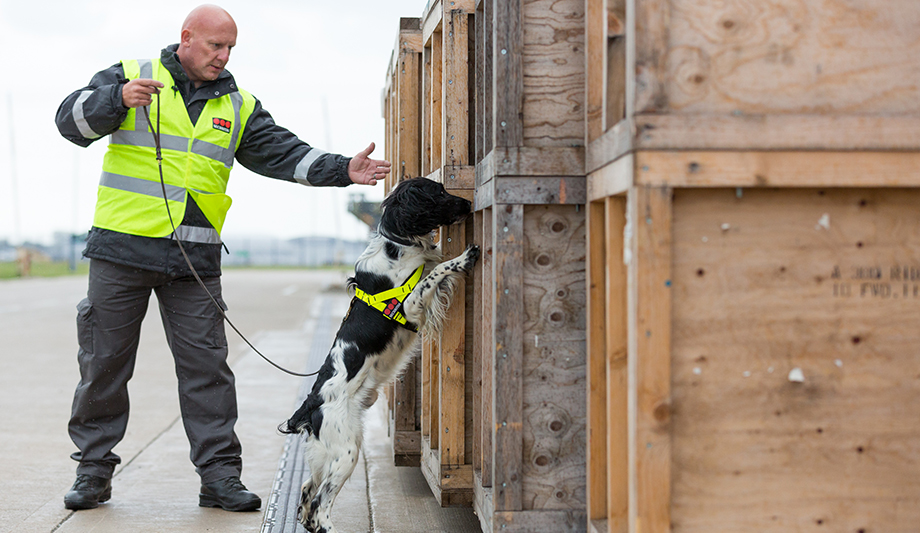
Many others perform a very different role as specialist detection dogs trained to detect explosives as part of specialist security operations. Using their highly developed sense of smell, they help screen environments as part of preventative security measures, providing an additional layer of reassurance before incidents occur.
Mark said: “Different dogs fulfil different roles. Understanding those differences helps organisations identify the right capability for the right security challenge.”
Misconception 2: The more aggressive the dog, the better
Contrary to popular belief, professional security dog teams are selected for qualities such as confidence, focus, control and temperament rather than aggression. Effective general-purpose security dogs should be able to remain calm in busy environments, respond consistently to their handler’s instructions and work safely around employees, visitors and members of the public.
Training is designed to develop these qualities through positive reinforcement and consistent handling, ensuring dogs remain confident, motivated and able to perform their role effectively throughout their careers.
Mark added: “The most effective security dogs are calm, focused and highly controllable. Confidence and temperament are far more important than aggression.”
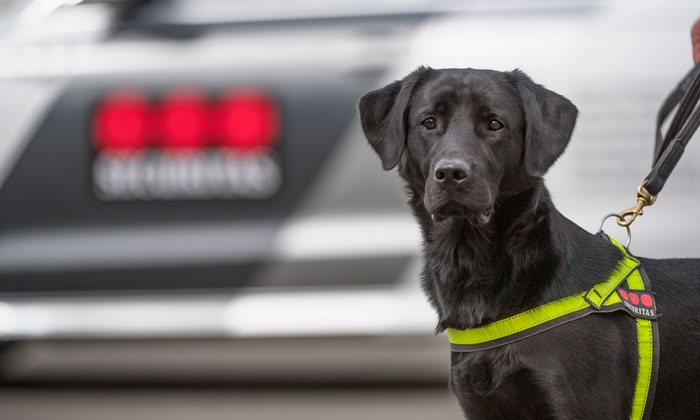
Photo: Securitas UK
Misconception 3: Technology has replaced a dog’s nose
Modern security has evolved significantly, with advances in surveillance, monitoring and technical screening technology helping organisations strengthen their security strategies. However, despite these developments, there are some capabilities that technology cannot easily replicate. Mark said: “Technology has transformed modern security but a dog’s sense of smell remains one of the most remarkable detection capabilities available. The best security outcomes come from combining specialist capabilities rather than relying on one solution alone.”
Dogs have up to 300 million olfactory receptors, compared with around six million in humans, giving them a sense of smell estimated to be between 10,000 and 100,000 times more sensitive than ours. This extraordinary capability enables detection dogs to screen environments quickly and efficiently, complementing wider security measures rather than replacing them.
The most effective security strategies combine people, technology and specialist capabilities, with dog teams providing an additional layer of confidence where appropriate.
Misconception 4: The dog does all the work
Behind every successful canine deployment is a highly trained handler. Mark added: “Every successful deployment is built on the relationship between the handler and the dog. It’s that partnership, developed through ongoing training and trust, that allows dog teams to operate so effectively.”
Handlers and dogs work together as a team, building a relationship through regular training, trust and consistency. Over time, handlers develop an in-depth understanding of their dog’s behaviour, enabling them to recognise subtle changes in behaviour and respond appropriately.
Like the dogs themselves, handlers undertake ongoing training and assessment to maintain professional standards. It is this partnership, rather than the dog working alone, that underpins the effectiveness of every canine team.
Misconception 5: Security dogs are only successful when they find something
It is easy to assume a successful deployment ends with a detection. In practice, one of the most valuable outcomes can be confirming that the dog has not found a detectable odour
Detection dogs help provide reassurance by supporting thorough security screening, while guarding dogs offer a highly visible presence that can discourage unwanted activity before it can escalate.
Success isn’t measured by what a security dog finds. It’s measured by the confidence, reassurance and preventative value that professionally trained dog teams bring as part of a wider security approach.
Mark said: “Prevention is always the objective. Sometimes the best outcome is simply providing the reassurance that an area is safe and secure.”
More than a stereotype
Professional security dogs are far more than the stereotypes often portrayed on screen. Carefully selected, highly trained and working in close partnership with skilled handlers, they continue to provide organisations with an important capability that complements wider security measures.
As security continues to evolve, canine teams remain an important part of helping organisations protect people, property and places.
Sign up for our newsletter and get our latest content in your inbox.
Similar Reads


Sign up for our newsletter. Select all sectors relevant to you.
Related