

UK launches tender for space debris removal


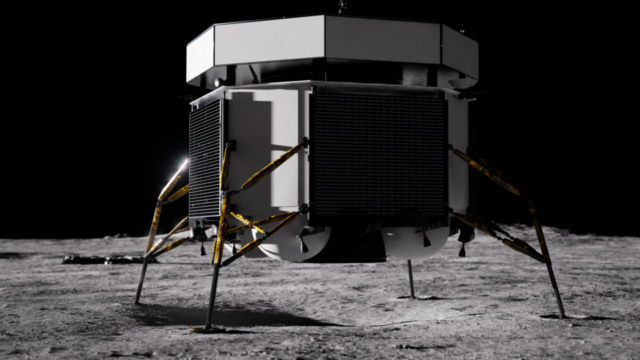
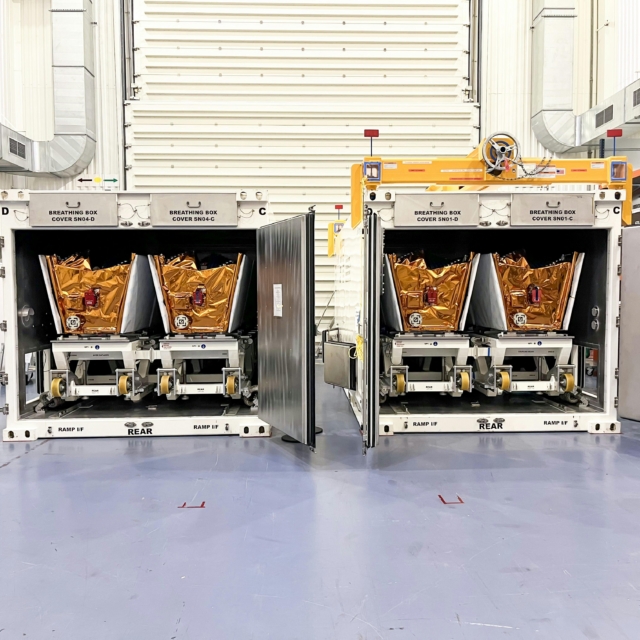
Image courtesy UKSA
This marks a pivotal step in the UK’s efforts to protect vital space infrastructure and ensure the long-term safety of the orbital environment.
At the heart of the proposed Active Debris Removal (ADR) mission, a specially designed spacecraft, equipped with cutting-edge British robotic and autonomous navigation technology, will capture and safely de-orbit two non-functioning UK-licensed satellites from low Earth orbit.
The spacecraft will guide the defunct satellites into Earth’s atmosphere, where they will burn up – eliminating potential threats to the satellite networks that power essential services such as GPS, weather forecasting and emergency communications.
There are an estimated 140 million pieces of space debris smaller than 1cm, and over 54,000 tracked objects larger than 10cm currently orbiting Earth. Even tiny fragments can cause catastrophic damage to satellites. This mission is a critical step in addressing the threat of space debris, ensuring the long-term sustainability of space operations and protecting the infrastructure that underpins modern life.
Minister for Space, Sir Chris Bryant, said: "This mission is a direct example of our Plan for Change in action, delivering innovation, sustainability and economic opportunity through bold investment in future technologies.
"By tackling the growing threat of space debris head-on, we are protecting the infrastructure that supports everything from national security to everyday connectivity whilst also creating high-skilled jobs and securing the UK’s leadership in the growing space economy."
The tender process secures home-grown expertise and strengthens the UK’s leadership in the rapidly advancing field of In-orbit Servicing, Assembly and Manufacturing (ISAM). It supports the ambitions of the Modern Industrial Strategy 2025, a 10-year plan to grow future industries, attract private investment, and establish the UK as a global innovation leader. Through this tender, the UK Space Agency is targeting funding on one of the five priority capabilities highlighted for investment in the space chapter of the Advanced Manufacturing Sector Plan.
This also represents a shift in the UK Space Agency’s approach, from traditional grants to competitive contracts, designed to stimulate private investment and create high-skilled jobs across the country.
Dr Paul Bate, CEO of the UK Space Agency, said: "Actively clearing space debris is a bold step toward a safer, more sustainable orbital environment.
"This mission showcases the UK’s technical excellence and our commitment to protecting the space systems that modern life depends on. It’s about securing the future of space for everyone, delivering tangible benefits here on Earth, and positioning the UK at the forefront of the in-orbit services market."
The UK Space Agency is now seeking a single supplier to deliver the five-year research and development contract, with the mission targeted for launch by the end of 2028. This follows £11 million already invested since 2021 in feasibility studies and design work, underscoring the government’s long-term commitment to becoming a clean space superpower.
Joanne Wheeler, Director of the Earth & Space Sustainability Initiative, said: "ESSI is very encouraged by this announcement. For the past three years, we have been developing sets of Space Sustainability Principles that will facilitate the establishment of the Space Sustainability Standards to ultimately ensure the sustainable use of outer space, covering the lifecycle of a satellite – from launch to decommissioning.
"The proposed ADR mission is a significant step in the right direction to achieving such sustainability and governance of ISAM activities, which the UK can lead on."
UK businesses, researchers, and satellite users stand to benefit from this ambitious initiative, which will strengthen international partnerships, drive economic growth, and help establish global standards for sustainable space operations.
Colin Baldwin, Executive Director at UKspace said: "Debris is one of the key factors in planning the future of low earth orbit. The UK leads in the development of solutions to address this critical market enabler. A number of our members are engaged in this exciting new market, which is developing rapidly. We welcome the UK Space Agency’s ongoing commitment to growing the UK’s capabilities through the launch of this new procurement."
Jennifer Jordan-Saifi, CEO of the Sustainable Markets Initiative, said: "Sustainability is no longer solely an Earth-bound mission. The space economy is growing at pace and at scale, therefore as we build the foundations to become multiplanetary, it’s critical we carry lessons of stewardship to the stars. We applaud the UK Space Agency’s leadership in addressing the issue of space debris."
Richard Jacklin, Commercial Lead, Plextek, commented: “Space is getting increasingly crowded. Over 10,000 active satellites orbit the Earth now – and thousands more coming from mega-constellations like SpaceX’s Starlink and Amazon’s Kuiper, increasing conjunctions and in the worst case making a collision in Low Earth Orbit (LEO) increasingly likely.
“It’s no surprise that the industry truly welcomes the news that the UK Space Agency is progressing with Phase 3 of their Active Debris Removal (ADR) programme. This is a large and meaningful investment in tackling a global problem of removing defunct satellites from orbit.
“Threats also don’t just come from large, trackable objects – micro-debris no bigger than a grain of sand also orbit the earth in their millions. Invisible to current tracking systems, these fragments can punch holes in satellites, threaten astronaut safety and derail multimillion-dollar missions. Yet, until now, operators have been flying only with theoretical models.
“To combat this, the Space industry urgently needs better detection and debris models. Like the RPO radar andmmWave radar for micro debris detection. Small enough to sit aboard satellites, powerful enough to detect debris as tiny as 1 mm and smart enough to work in real time, this radar can continuously scan for micro debris from orbit itself.
“Unlike traditional ground-based systems, mmWave radar offers high-frequency, low-power, always-on sensing – filling the gap in data needed for improving the current LEO debris models and smarter space traffic management.
“Along with Europe’s ESA championing the Zero Debris Initiative and the US ramping up investment in space domain awareness, the momentum in the UK is real. For space agencies and commercial operators alike, mmWave radar isn’t just a technological upgrade – it’s a necessity for sustainable space operations.
“This is a great time to work in the UK space industry and selecting ADR is a smart government investment that hopefully UK businesses will capitalise and show the world what we can do.”
The UK space sector is already a national success story, employing 52,000 people, generating £18.9 billion in annual income and comprising a vibrant ecosystem of over 1,700 organisations. With labour productivity 2.5 times the national average, the sector plays a vital role in delivering high skilled jobs, driving R&D, and underpinning critical services that support 18% of UK GDP – from navigation and telecommunications to climate monitoring and national security.
Sign up for our newsletter and get our latest content in your inbox.
Similar Reads



Sign up for our newsletter. Select all sectors relevant to you.
Related