Open Cosmos plans 192-satellite ConnectedCosmos LEO constellation by 2030



Open Cosmos will build a core constellation of 192 low Earth orbit satellites by 2030, following its recent €300 million (£255 million) funding round, a deployment that the company says will make ConnectedCosmos the second-largest European LEO connectivity network behind OneWeb.
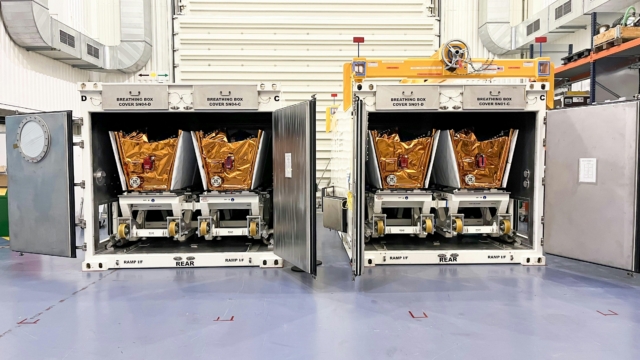
The Harwell-based space company plans to have more than 96 ConnectedCosmos satellites in orbit by the end of 2028, with another launch scheduled before the end of this year. The first two spacecraft in the network were launched aboard a Rocket Lab Electron in January.

The expansion marks a significant increase in the scale of Open Cosmos’s ambitions as European governments look for greater control over satellite communications and reduce their dependence on large non-European constellations.
ConnectedCosmos is being developed primarily for government, institutional and commercial customers requiring secure communications and control over sensitive data. Open Cosmos says customers will be able to have nationally governed network capacity rather than relying entirely on infrastructure controlled outside their jurisdiction.
ConnectedCosmos aims to expand European sovereign satellite communications
The network will use optical inter-satellite links to move data directly between spacecraft, allowing information to travel across the constellation without first passing through terrestrial ground stations.
Open Cosmos says this could be particularly important when conventional communications infrastructure is disrupted or compromised. The system is being designed to operate in environments affected by GNSS interference and to carry large quantities of data, including satellite imagery and video.
ConnectedCosmos was formally unveiled in March as a European secure-connectivity network using high-priority Ka-band spectrum filings from Liechtenstein. Open Cosmos brought those filings into use with the launch of its first two satellites earlier this year.
The company is also linking communications with its existing Earth observation business rather than operating the two as separate networks.
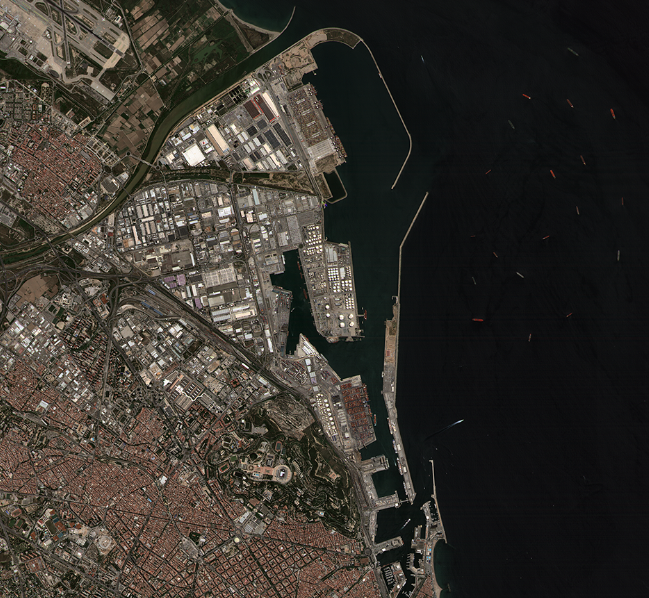
ConnectedCosmos will provide the communications layer for Earth observation spacecraft deployed through dedicated customer missions and OpenConstellation, its shared Earth observation network. The intention is to move imagery and other information between satellites and process it quickly enough to provide customers with intelligence without relying on lengthy ground-based data chains.
OpenConstellation 1.0, unveiled in June, is designed to use onboard processing and satellite-to-satellite communications to deliver information in as little as 30 minutes.
How Open Cosmos will use its €300 million funding
The constellation plan follows Open Cosmos’s €300 million funding round announced in September, which is being used to expand satellite manufacturing and accelerate ConnectedCosmos, OpenConstellation and the company’s DataCosmos information platform.

The investment was led by European investors and included participation from the UK’s National Security Strategic Investment Fund alongside Lightrock, ETF Partners, Institut Catala de Finances and others.
Open Cosmos says its European manufacturing operation can produce one satellite a day. The company has facilities in the UK, Spain, Portugal and Greece, with its headquarters and UK manufacturing operation at Harwell in Oxfordshire.
Founder and chief executive Rafel Jorda Siquier said the initial 192 spacecraft were intended to establish the network rather than represent its final size.
“The 192 satellites are the foundation, not the ceiling,” he said. “When customers and partner nations need more capacity, we can deliver it quickly.”
Open Cosmos is also examining a federated model under which independently owned European satellite systems could connect to ConnectedCosmos while remaining under national or institutional control.
Such an approach would allow countries to contribute their own capacity rather than requiring every spacecraft in the network to be owned by a single operator.
ConnectedCosmos could support future UK defence communications programmes
The expansion also comes as Open Cosmos moves further into the UK secure communications market.
In September, the company was selected as a supplier under the UK government’s TacSys tactical communications framework, a procurement vehicle valued at up to £8 billion and linked to future Ministry of Defence requirements for secure and resilient communications.

Open Cosmos was selected under the systems category, although inclusion on the framework does not itself constitute an £8 billion contract award.
That gives ConnectedCosmos a potential route into future UK defence programmes as the government looks at sovereign communications and alternatives to vulnerable terrestrial infrastructure.
The company says the network could also continue expanding through additional national and commercial commitments. It is in advanced discussions with several launch providers over missions planned between late 2026 and mid-2027.
The next ConnectedCosmos satellites are expected to launch before the end of this year.
Sign up for our newsletter and get our latest content in your inbox.
Similar Reads





Sign up for our newsletter. Select all sectors relevant to you.
Related