

Selecting precision motors for commercial aerospace applications


Julian Del Campo, Senior Industry Manager at Portescap, provides a broad overview of suitable miniature motor technologies for commercial aerospace and application requirements.

Above: Regarding passenger comfort, miniature precision motors are seeing increased use in window shades and seat actuation applications, graduating from private and business jets to wider commercial aviation.
Courtesy Portescap
Conditions outside the cabin
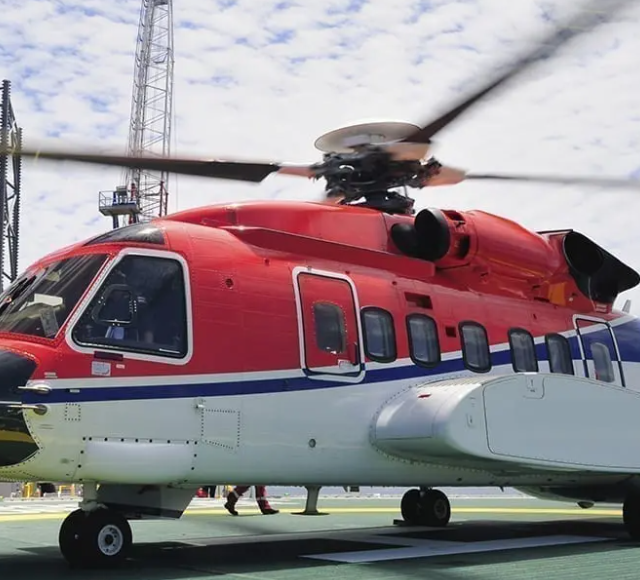
With the ubiquitousness of commercial aircraft, it can be easy to forget the challenges faced by motors operating outside the cabin. There are multiple design considerations when selecting motion control solutions for this extreme environment.
During take-off, flight and landing, commercial aircraft must contend with shocks and vibrations. Each application has a defined vibration curve, so every system and its subcomponents must meet long-term reliability requirements. To achieve this, motors can be reinforced, with potting for slotted designs or by using advanced laser welding when assembling components.
Over its entire service life, a commercial aircraft will repeatedly face extreme temperatures, ranging from -55°C to 125°C. Motor designers can ensure reliable operation by tailoring electric current to provide similar operation across this entire temperature range. Furthermore, specifying custom bearings with low outgassing and extreme temperature lubrication helps ensure consistent performance.
Humidity and soft fog are other factors. As an aircraft repeatedly travels up to 30,000 ft. and back to the ground, the repeated temperature cycles can cause moisture to build up on surfaces, raising the risk of oxidation and damaged electrical components. However, by choosing corrosion resistant materials for metallic parts and applying special printed circuit board (PCB) coatings that combat corrosion and resist absorption, this can be mitigated.
Sky high standards
Two industry standards support the design methodologies required to supply to aerospace.
RTCA DO-160G ensures that all devices used on aircraft can withstand the harsh environmental conditions during operation, encompassing temperature, shock and vibration. Brushless DC (BLDC) and DC motors can be designed to meet these criteria, as well as varied customer performance requirements.

Above: Portescap’s Mumbai, India facility attained AS9100 certification in 2023.
Another is AS9100 – a set of guidelines that aerospace suppliers must meet to ensure the quality and safety of their products and services. Attaining this standard means manufacturing motion solutions in a highly controlled manner within a rigorous quality management system, resulting in extremely proficient products. Portescap’s facility in Mumbai, India, attained AS9100 certification in 2023.
Fuel for thought
Arguably the most crucial systems on any aircraft are for fuel and propulsion, as without them, it would be unable to generate thrust for flight. Propulsion systems generate the power to propel planes through the atmosphere, while fuel systems manage the efficient delivery of kerosine to power the engines. Both are essential for enhancing performance, range and reliability – exceptionally important for any commercial aircraft.
Motors for these applications typically operate fuel valves outside the cabin, so extreme temperatures and vibrations are the norm, which mandates a robust design. Power and torque density are critical, as performance must be balanced with space and weight savings to improve the characteristics of the aircraft.
Consequently, BLDC slotted and slotless motors are preferred as they combine all the aforementioned features. Another key advantage is that they are highly customisable, allowing them to perform in a wide range of operations. In all cases, rigorous testing and quality standards are essential for any product.
Precision and responsiveness for flight control
Power is nothing without control and flight control systems allow aircraft to safely maintain stability and manoeuvrability in the air. Sensors, computers and actuators allow highly accurate piloting and command of flight parameters like altitude, heading and attitude. Multifacetted systems are designed to reduce human workload while improving efficiency and safety, with side sticks, yokes, autopilot actuators and flight control surfaces working in harmony.
From pilot controls to smart trim actuators, precision motors are utilised across flight control systems. All must quickly and precisely respond to inputs from the pilot or sensors, especially when paired with feedback devices like encoders and resolvers. For use outside the cabin, temperature and vibration resistance must be built in. The variance in possible applications means a myriad of possible solutions, from complex flat motor systems with redundancies for autopilot systems, to commercial-off-the-shelf (COTS) designs for side stick feedback.
Creating a comfortable environment
For the comfort of the passengers and the crew, environmental control systems are crucial. While cruising in the jet stream, these systems manage temperature, humidity, and pressure in the cabin, ensuring a pleasant flight for all.
Reducing the size and weight of components is crucial for all aircraft, so motors in this application need to be power and torque-dense, suiting the characteristics of BLDC designs. Efficiency is also key, as after clicking in their seatbelt, passengers usually turn their attention to air vents. Frequent usage of the valves in the HVAC system can be balanced out by a motor that reduces power drain on the overall system. Though located inside the aircraft, these motors often encounter refrigerants and other caustic substances, so some form of protection and robust system design are required.
With the precision needed to regulate conditions in the cabin, stepper motors are a frequent selection for environmental control systems. Whether operating as standalone or in a complete motion system with custom housings and integrated geartrains for an easily installed assembly – both must be suitably modified to application requirements.
Leaning back and throwing shade
Regarding passenger comfort, miniature precision motors are seeing increased use in window shades and seat actuation applications, graduating from private and business jets to wider commercial aviation.
Beyond the advantages of small size and reduced weight, key things to consider include smooth and quiet operation. A noisy environment for passengers is unacceptable, especially if they are paying for a premium ticket. Jerky movements of seats can also be disconcerting to those both in and behind the seat. Furthermore, ensuring that motors produce low electromagnetic interference (EMI) helps safeguard the operation of key systems on the aircraft.
Ultimately, DC motors are ideal for both applications. Quiet, efficient and power-dense – they meet the criteria for use inside the cabin. Motors can be incorporated with gearboxes and encoders as a complete motion system, while EMI protection and thermal fuses help safeguard system performance and reliability.

Above: Portescap’s Brushless DC (BLDC) and DC motors can be designed to meet the RTCA DO-160G criteria.
Taking to the skies with an expert
With so many applications and several different DC motor technologies available for them, key players in commercial aerospace can rely on Portescap to provide specialised solutions that provide high performance and long service life in extreme conditions.
Offering over 40 years of experience in the aerospace and defence markets, Portescap can provide either COTS or completely customised DC motors. Its broad selection of available models and manufacturing locations around the world are geared to support the global aerospace industry. As a result, its customers can take to the skies in any commercial aircraft with complete confidence in its motion control specification.
Sign up for our newsletter and get our latest content in your inbox.
Similar Reads



Sign up for our newsletter. Select all sectors relevant to you.
Related