

Hundreds of UK offshore workers face helicopter travel ban under new weight limit


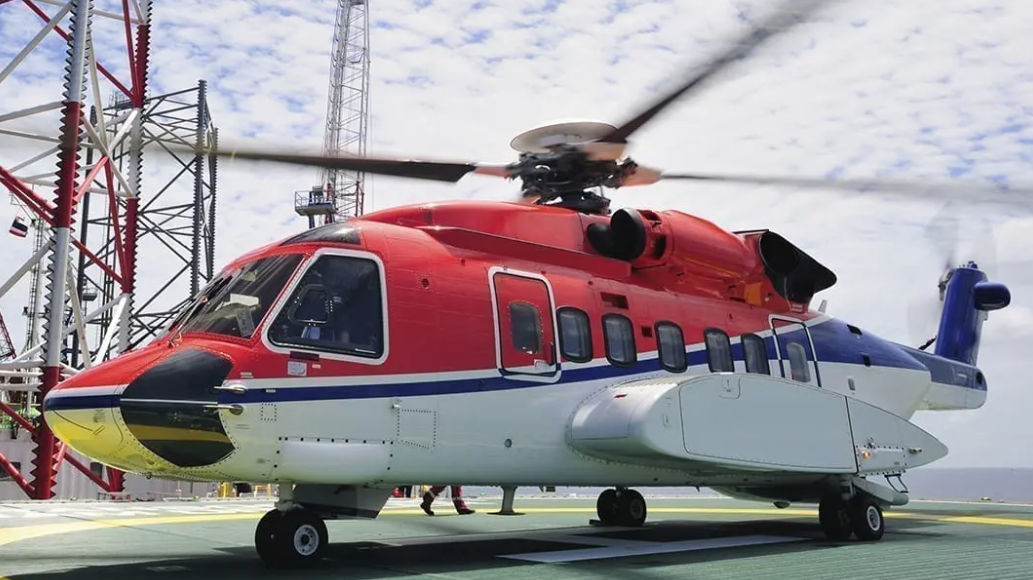
Hundreds of workers could be prevented from travelling by helicopter to UK’s offshore energy installations from November under a new weight limit tied to the lifting capacity of UK search-and-rescue helicopters.
From 1 November, offshore workers must have a clothed weight of no more than 124kg, or 19st 7lb, before travelling to installations covered by the new industry policy. Anyone exceeding the limit will not be permitted to travel offshore.
The weight policy was announced last year. The restriction stems from the maximum load that can safely be handled during a helicopter winch rescue rather than the carrying capacity of the aircraft transporting workers offshore.
A UK search-and-rescue helicopter winch has a maximum load of 249kg. Once the weight of the winchman, stretcher and rescue equipment is taken into account, no more than 124.7kg remains available for the person being rescued, according to Offshore Energies UK (OEUK). A person above that weight cannot be guaranteed recovery by SAR helicopter.
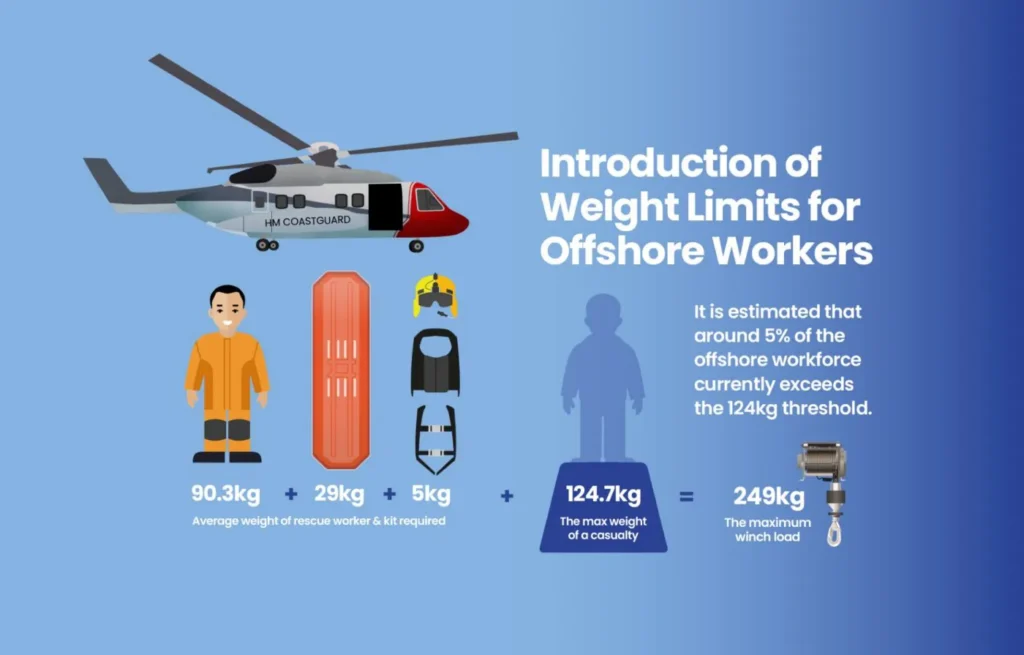
The industry has set the working limit at 124kg, incorporating a 0.7kg safety margin.
The policy was developed after the Maritime and Coastguard Agency raised concerns over the limitations of SAR winching systems.
OEUK said industry experts spent two and a half years examining alternatives before concluding there was no practical solution that avoided a weight restriction.
Workers are already weighed before offshore helicopter flights
Unlike passengers travelling on conventional airline services, UK offshore workers already have their weight recorded for helicopter journeys.
The Vantage personnel tracking system records an individual’s actual weight for every offshore helicopter flight. Scales used at heliports and offshore are subject to regular testing and calibration.
The 124kg threshold is based on clothed weight. Workers are weighed in normal seasonal travel clothing, including footwear, but without their helicopter transit suit or lifejacket.
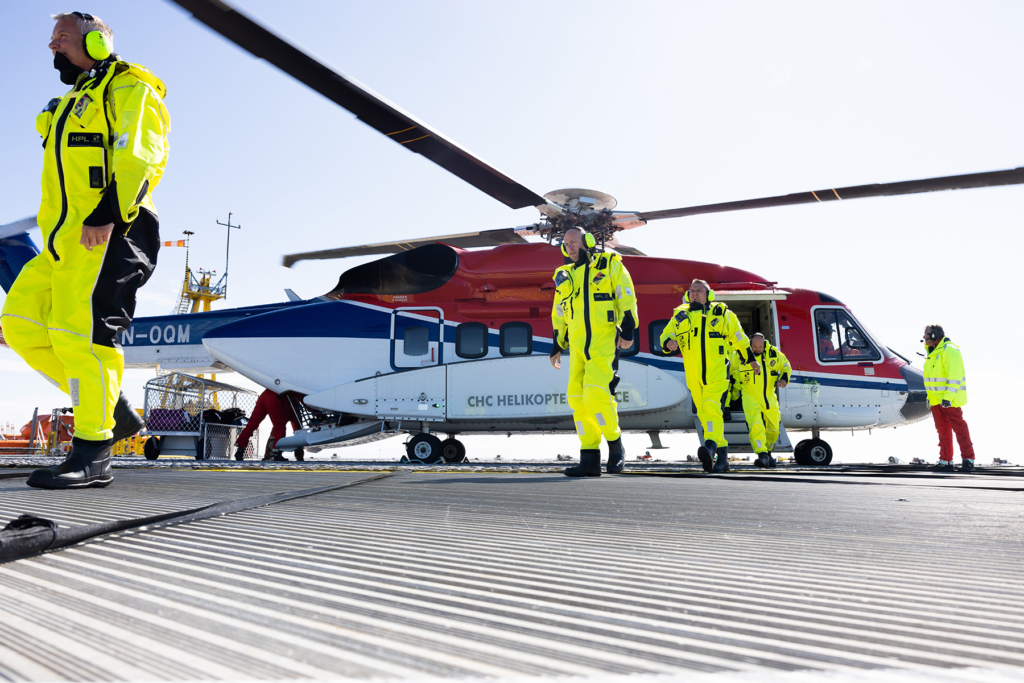
The restriction applies to outbound flights to offshore installations. There is no equivalent weight restriction on flights returning workers to shore. It covers installations operating under accepted Safety Cases under the Offshore Installations regulations, but not marine vessels, which are governed separately.
The policy entered an awareness phase in November 2025, followed by a transition period that runs from February until the end of October this year. Mandatory compliance begins on 1 November.
During the transition, medical examiners can issue shorter-duration certificates to workers who are close to or above the limit. From November, OEUK says no certificate will be issued to a worker exceeding 124kg.
That means workers unable to reach the threshold could no longer be cleared for offshore work where helicopter travel is required.
Offshore workforce has become heavier
The weight restriction follows years of concern about the changing size of the UK’s offshore workforce and whether emergency equipment designed to older assumptions remains suitable.
A detailed analysis commissioned by OEUK and published in March found the average weight of UK offshore workers in 2024 was 95.85kg, based on almost 50,000 records. More than 17,000 workers, or 35.11%, weighed over 100kg, while 2,392 — 4.83% — exceeded 124kg. Another 129 weighed more than 150kg.
The study cautioned against interpreting the latest figures as evidence that weights are still rising. The 2024 average was slightly below the 96.56kg recorded in a December 2022 study, although the datasets were collected differently. Researchers concluded there was no observable upward or downward trend between December 2022 and the end of 2024.
More recent figures supplied to the BBC indicate the number who could remain above the threshold by November may have fallen to between 500 and 800, following the industry’s transition programme.
OEUK had initially estimated that around 5,000 workers could be affected by the policy to varying degrees, while expecting most to meet the threshold through gradual weight reduction.
Employers have been encouraged to provide weight-management and wellbeing support during the transition.
Weight is not the first body-size restriction on offshore helicopter travel
UK’s offshore helicopter sector already operates another safety system based on passenger size.
Following recommendations in the UK Civil Aviation Authority’s CAP1145 review of offshore helicopter safety, passengers have had their shoulder width measured since 2015 to ensure they can pass through the emergency exits nearest their seats if a helicopter has to ditch.
Workers with shoulder widths below 55.9cm are classified as regular passengers. Those measuring 55.9cm or more are designated Extra-Broad and must be allocated a compatible emergency-exit seat. The measurement is recorded in the Vantage system before they can fly offshore.
The latest weight policy has wider implications than helicopter evacuation alone. OEUK says increasing worker size can affect lifeboat loading, stretcher rescue, marine rescue, confined spaces and other emergency equipment.
The Health and Safety Executive separately told offshore operators in 2025 that lifeboats and other lifesaving appliances must be suitable for the actual workforce using them, taking account of both weight and shoulder width.
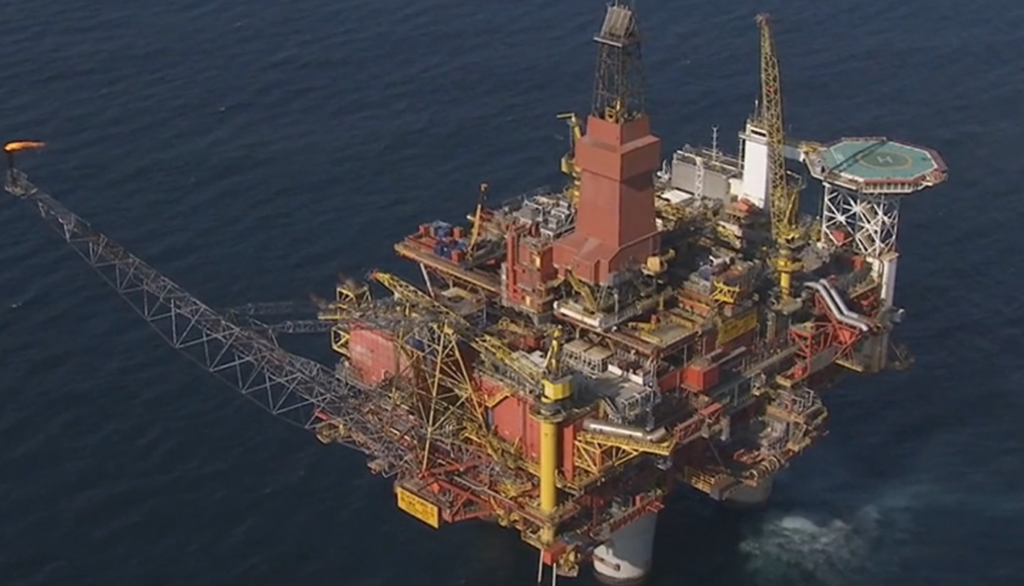
The UK’s offshore energy sector relies heavily on helicopters to move personnel between the mainland and installations in the North Sea.
Step Change in Safety says the sector is served by around 70 helicopters across six aircraft types, making the new threshold an operational requirement that will affect the industry’s helicopter network from November.
Sign up for our newsletter and get our latest content in your inbox.
Similar Reads



Sign up for our newsletter. Select all sectors relevant to you.
Related