RAF Airbus A400M takes off from grass runway in Poland amid Russian drone threat


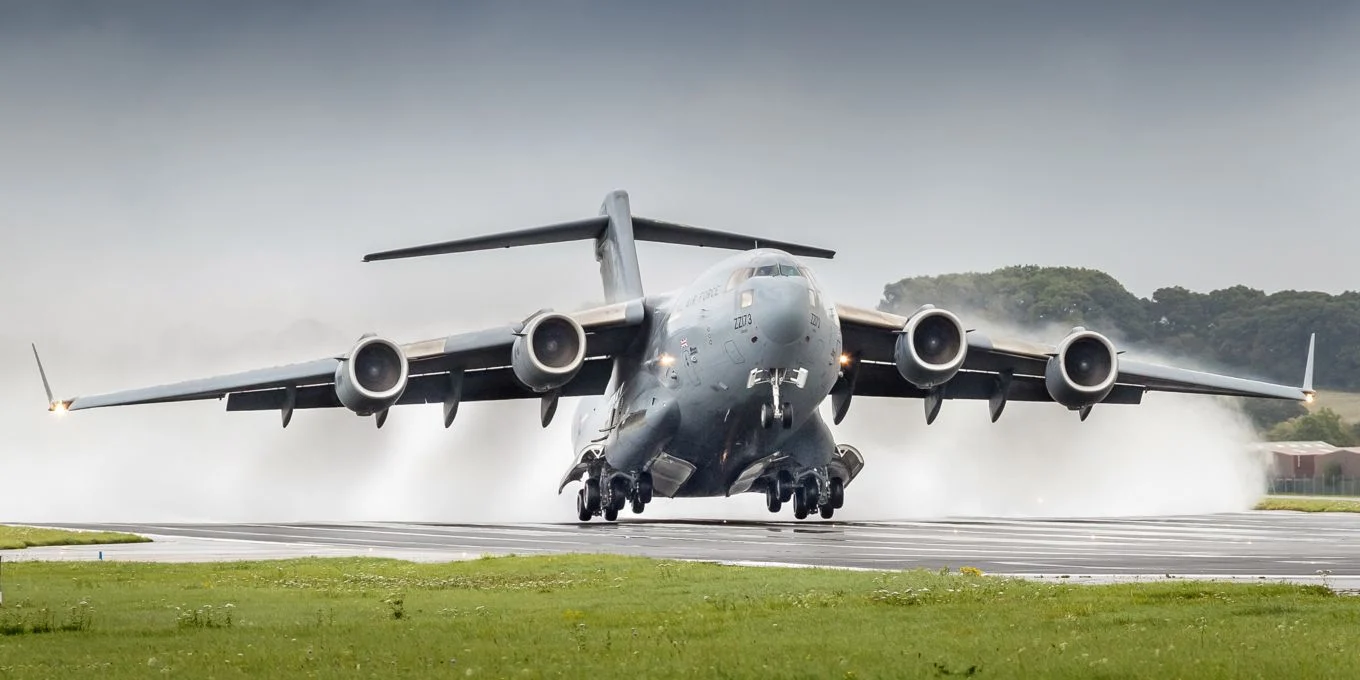
The Royal Air Force has practised operating its Airbus A400M Atlas from a grass runway in Poland as NATO strengthens its ability to disperse aircraft away from vulnerable permanent bases.
The RAF’s 70 Squadron deployed an Atlas C1 A400M to Powidz, where crews trained alongside the Polish Air Force. The exercise included low-level flying, temporary runway operations, airdrops and loading and unloading NATO vehicles, according to an RAF announcement published on 13 September.
The training comes as NATO countries on Europe’s eastern flank face repeated incursions by Russian drones. The RAF said drones have entered NATO airspace over Poland, Germany and Romania in recent months.
Why the RAF is practising A400M grass landings
The exercise focused on dispersal: moving aircraft and operations away from large, established military bases to smaller or improvised locations.
That could become important during a conflict in which permanent airfields, runways and supporting infrastructure are vulnerable to missile and drone attacks.
The RAF said operating from multiple austere locations makes its forces harder to target while helping maintain operations if a main airbase becomes unavailable.
Practising A400M take-offs and landings from a grass strip gives pilots, aircrew and commanders experience operating without conventional paved runways.
Wing Commander Doug Grove, Officer Commanding 70 Squadron, said: “Giving our crews the chance to practise unprepared runway operations ensures the RAF remains ready to fly and fight.”
Grove said the A400M gives the RAF and NATO the ability to move large vehicles, supplies and troops into challenging locations. He also highlighted the importance of working with Polish forces, saying “a great deal of mutual learning has taken place with our Polish friends.”
A400M designed for rough-field operations
The Atlas is the RAF version of the Airbus A400M, a four-engine turboprop designed to combine strategic airlift capacity with tactical operations.
According to the RAF’s A400M specifications, the aircraft provides tactical airlift and strategic oversize lift, complementing the larger Boeing C-17 Globemaster III.
Its ability to use unprepared surfaces allows troops, vehicles and supplies to be delivered closer to where they are needed without relying entirely on major airports.
The RAF has demonstrated the capability before. In 2023, A400M crews practised landing on Pembrey Sands in Wales, training on natural surfaces such as sand and grass.
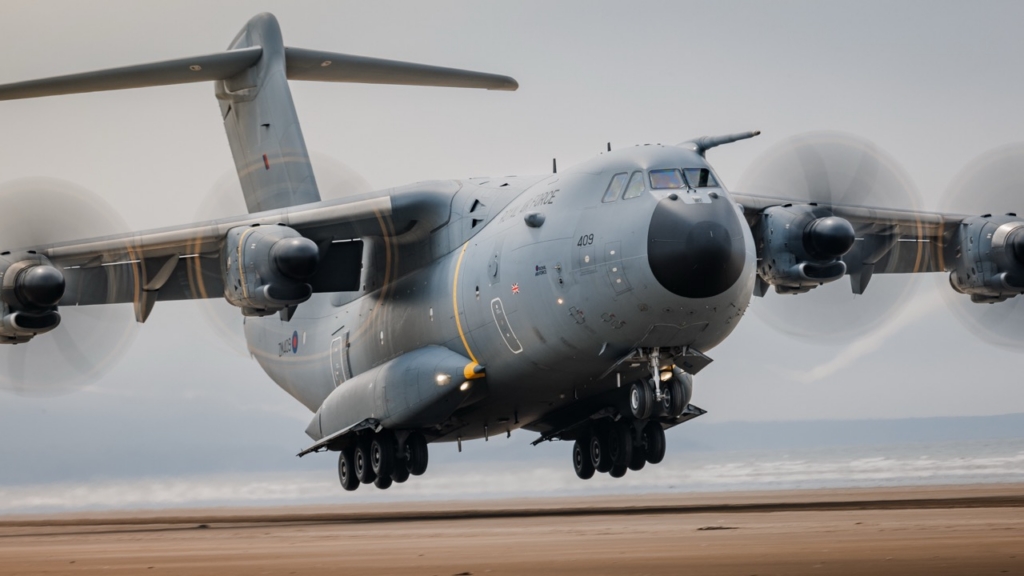
Pilots conducted touch-and-go and full-stop landings on a short temporary runway while Pathfinders from 16 Air Assault Brigade practised rapidly unloading vehicles.
The RAF has continued expanding its experience with austere operations. An A400M also made its first landing on the remote Norwegian island of Jan Mayen in October 2025, where there is no paved runway.
Dispersal becomes increasingly important for NATO
The Poland exercise gives the A400M’s rough-field capability greater significance because of its location and timing.
NATO forces increasingly train to operate without depending on a small number of established airbases. Dispersing aircraft, fuel, personnel and equipment across multiple locations makes operations more resilient if conventional bases are attacked or their runways damaged.
The RAF describes the wider concept as Agile Combat Employment, which aims to keep aircraft operating by moving forces rapidly between smaller locations with limited infrastructure.
For the A400M fleet, that means its ability to land on grass, sand and other unprepared surfaces is more than a design feature. It provides another way to keep NATO’s airlift network operating if conventional runways on the alliance’s eastern flank become unavailable.
Sign up for our newsletter and get our latest content in your inbox.
Similar Reads


Sign up for our newsletter. Select all sectors relevant to you.
Related