
General Atomics

Teledyne imaging sensors launch on ESA’s Sentinel-3C and FLEX Missions

The two European Space Agency (ESA) climate-monitoring missions will provide observations of Earth’s oceans, land surfaces and vegetation, using optimised hyperspectral imaging technology from Teledyne Space Imaging.

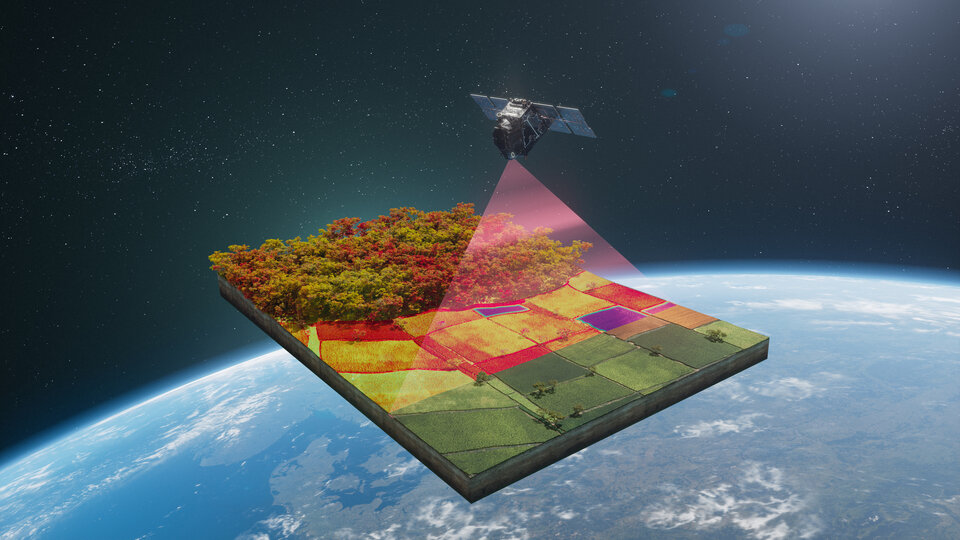
ESA's FLEX
Photo: ESA

Teledyne Space Imaging technology was successfully launched aboard two major European Space Agency (ESA) Earth observation missions, Sentinel-3C and the Fluorescence Explorer (FLEX).

The satellites were launched together yesterday morning aboard a Vega C rocket from Europe’s Spaceport in French Guiana.
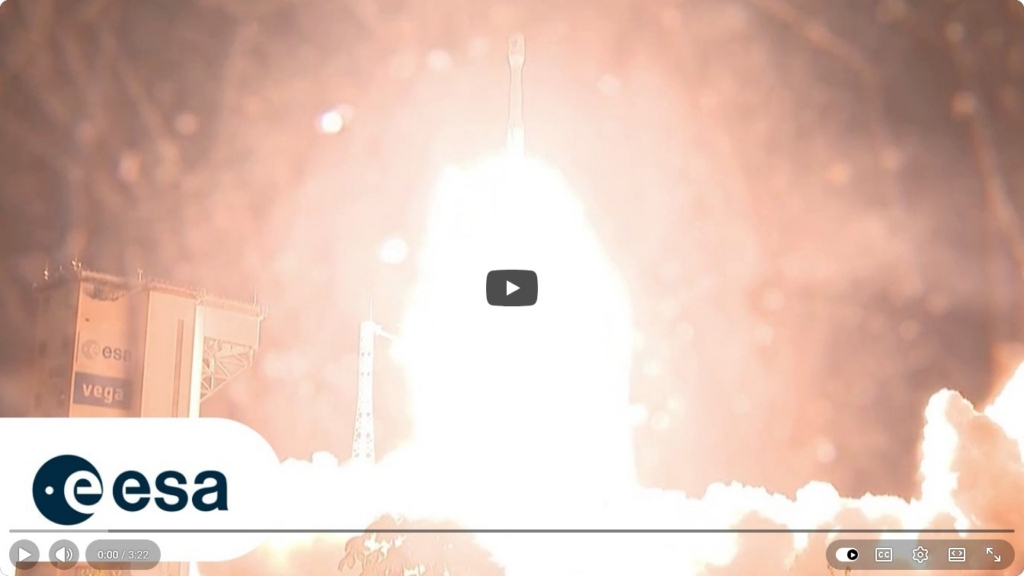
FLEX and Sentinel-3C launch
Photo: ESA/video

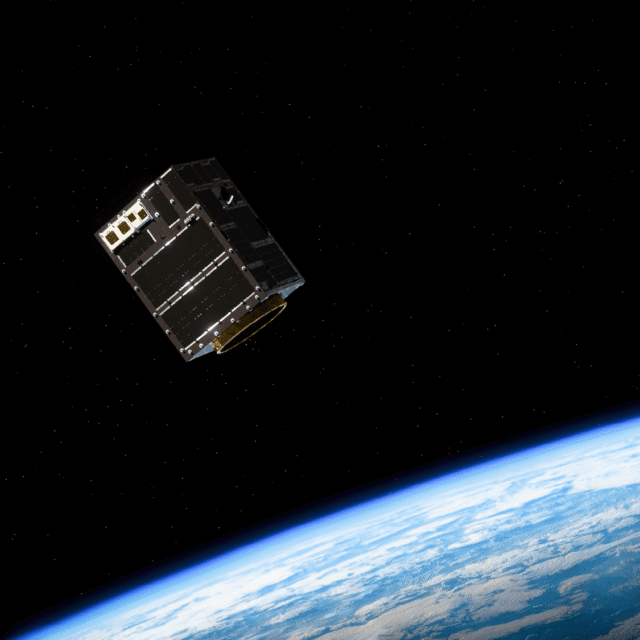
Designed and developed by ESA and operated by EUMETSAT, Sentinel-3C is the third satellite in the Sentinel-3 series. The Sentinel missions are part of Copernicus, the EU Space Programme’s Earth observation campaign.

How imaging technology supports observations made by Sentinel-3C

Teledyne supplied five CCD55-20 detectors for Sentinel-3C’s Ocean and Land Colour Instrument (OLCI). The detectors – back-illuminated, frame transfer CCDs optimised for hyperspectral imaging – observe in the visible to NIR, from 0.4 to 1.04 µm and will assist with mapping ocean colour, vegetation cover and land use.
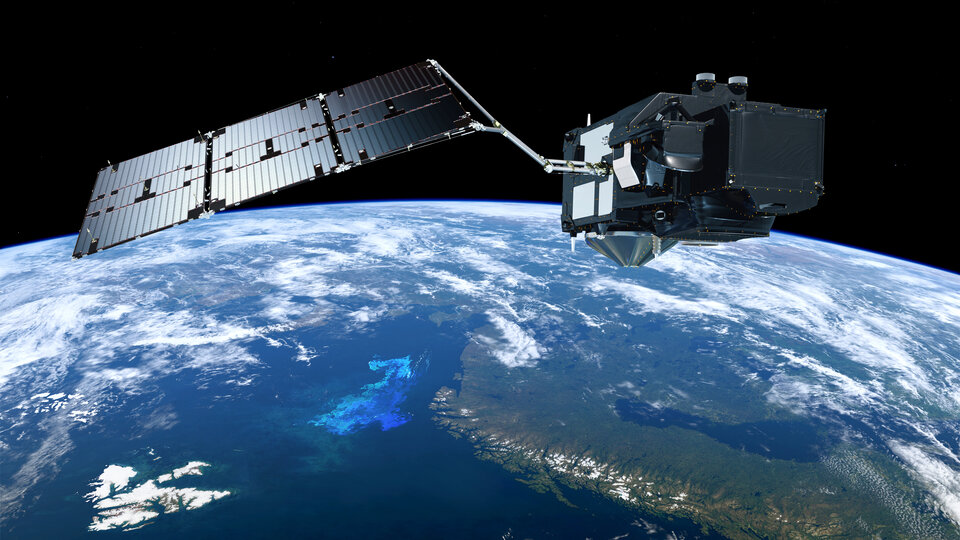
Photo: ESA

Elinor Mitchell, Product Engineering Team Leader of the CCD55-20 at Teledyne Space Imaging, said: “We’re delighted to see the successful launch of Sentinel-3C and our imaging technology continuing to play a vital role in helping support ocean forecasting systems, environmental monitoring and observing changes in atmospheric composition.”

Sentinel-3A was launched in 2016 and Sentinel-3B followed in 2018. Once fully commissioned, Sentinel-3C is expected to take over from Sentinel-3A, helping to ensure continuity of observations from the Sentinel-3 programme.
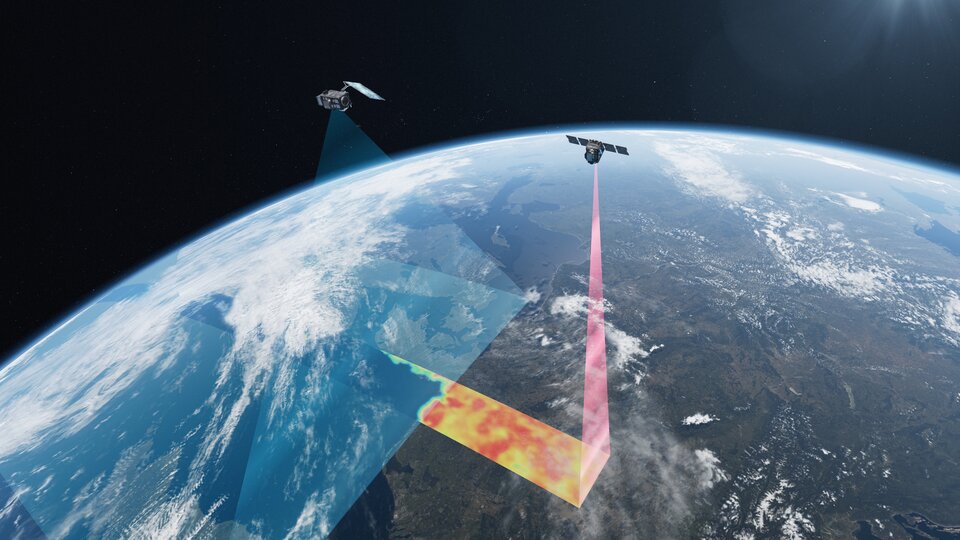
Photo: ESA

Helping to observe the health and function of plants and vegetation from space

Teledyne supplied three CCD325 detectors for the satellite’s Fluorescence Imaging Spectrometer (FLORIS). These detectors image in the spectral range from 0.5 to 0.78 µm. The imaging sensors have been engineered to measure the fluorescent signal given off by plants during photosynthesis. The amount of fluorescence will provide information on the plant’s photosynthetic efficiency, health and stress.

By measuring this signal, its strength also serves as a direct indicator of how much carbon dioxide is being pulled from the atmosphere during this natural process and will help us understand how well an ecosystem is working.

This data will offer scientists new information about the health and functioning of terrestrial vegetation and how plants interact with the wider Earth system – such as carbon and water cycles – processes that are essential for life on this planet.

Tracy Phillips, Principal Project Manager of the CCD325 at Teledyne Space Imaging, said: “Seeing FLEX successfully launch is an exciting moment for our team and everyone who has contributed to the mission. FLEX will give scientists a new way to observe the process of photosynthesis and understand the movement of carbon between plants and our atmosphere.

“We’re proud that Teledyne detectors will play a key role in generating data that will support important topics such as agricultural management and food security.”

Related

Mark Johnston appointed Chief Executive of Edinburgh Airport
Mark Johnston
Mark Johnston appointed Chief Executive of Edinburgh Airport
Moving from his role as Chief Operating Officer at London Gatwick, Mark is taking up the role of Chief Executive at Edinburgh Airport.
Aerospace

18 Sep 2026

NATS report finds one-millisecond fault behind airspace disruption
NATS air traffic controller
NATS report finds one-millisecond fault behind airspace disruption
A hidden fault affecting the allocation of aircraft squawk codes caused six hours of disruption and will now face an independent CAA review.
Aerospace

18 Sep 2026

UK project to beam power from the ground to PHASA-35 in bid for year-round stratospheric flight
PHASA-35
UK project to beam power from the ground to PHASA-35 in bid for year-round stratospheric flight
Space Solar will develop a 5.8 GHz wireless power system for PHASA-35 under a £1.3m ARIA project aimed at enabling year-round stratospheric flight.
Aerospace Space

17 Sep 2026

Inside the Royal Navy exercise bringing more than 30 ships and aircraft to UK waters
HMS Queen Elizabeth passing Portsmouth Harbour
Inside the Royal Navy exercise bringing more than 30 ships and aircraft to UK waters
More than 30 ships and aircraft will operate north and east of the UK during Exercise Strike Warrior 26 as HMS Queen Elizabeth begins its autumn NATO training.
Defence

18 Sep 2026

UK to retire final four Tranche 1 Typhoons after Falklands rotation
Two RAF Tranche 1 Typhoons in Falkland Islands
UK to retire final four Tranche 1 Typhoons after Falklands rotation
The remaining four Tranche 1 Typhoons will be withdrawn from Falkland's RAF Mount Pleasant and replaced with more advanced Tranche 2 Typhoons.
Defence

18 Sep 2026

NP Aerospace joins Team LionStrike on LMV tender bid
Vehicle modification.
NP Aerospace joins Team LionStrike on LMV tender bid
GM Defence has brought NP Aerospace onboard Team LionStrike as prime contractor and OEM-certified support provider, as it develops its Light Mobility Vehicle (LMV) programme proposal.
Defence Member News

18 Sep 2026

UK project to beam power from the ground to PHASA-35 in bid for year-round stratospheric flight
PHASA-35
UK project to beam power from the ground to PHASA-35 in bid for year-round stratospheric flight
Space Solar will develop a 5.8 GHz wireless power system for PHASA-35 under a £1.3m ARIA project aimed at enabling year-round stratospheric flight.
Aerospace Space

17 Sep 2026

Harwell-based Open Cosmos secures €300m to scale sovereign satellite production
Open Cosmos
Harwell-based Open Cosmos secures €300m to scale sovereign satellite production
Harwell-based Open Cosmos has raised €300m to expand satellite manufacturing and space-based intelligence as the UK strengthens sovereign capability.
Defence Space

16 Sep 2026

AccelerComm awarded ESA regenerative 5G satellite network contract
5G NTN
AccelerComm awarded ESA regenerative 5G satellite network contract
The European Space Agency (ESA) has selected AccelerComm to help build one of Europe's first regenerative 5G base stations that directly run onboard satellites, shifting away from today's 'bent-pipe' satellites that simply relay signals back to the ground.
Member News Space

15 Sep 2026

King warns of “existential dangers” of AI as tech leaders meet in Scotland
HM the King with attendees at AI conference in Scotland
King warns of “existential dangers” of AI as tech leaders meet in Scotland
King Charles urged leading AI companies to keep humans in control of powerful systems. Here's how UK defence and aerospace firms can prove AI is safe.
Insights Security

17 Sep 2026

MSI-DS launches TERRAHAWK RAPTOR mobile counter-drone weapon station
MSI-DS unveiled the TERRAHAWK RAPTOR during the opening day of DVD2026 on 16 September 2026. This RWS is optimised for C-UAS operations. Image: MSI-DS
MSI-DS launches TERRAHAWK RAPTOR mobile counter-drone weapon station
The new TERRAHAWK RAPTOR remote weapon station is designed for integration across tracked and wheeled platforms, including 4x4 vehicles and UGVs, as MSI-DS targets growing demand for mobile C-UAS capability.
Defence Security

16 Sep 2026

UK recruits hundreds of officers in £500bn money laundering crackdown
Home Office
UK recruits hundreds of officers in £500bn money laundering crackdown
Following National Crime Agency (NCA) estimates that over £100 billion is laundered through UK or UK corporate structures each year, 500 officers will target money laundering networks linked to organised crime, building on Operation Destabilise.
Security

16 Sep 2026