Ryanair threatens to shift UK capacity as passenger taxes rise



Ryanair has unveiled its biggest-ever UK winter schedule but warned it could move some aircraft elsewhere in Europe if the UK increases the tax burden on visitors.
The airline’s Winter 2026 programme covers 435 routes, including new services from London Stansted to Glasgow, Malmö and Parma and from Luton to Venice. Another 18 new routes will operate from 19 other UK airports.
However, the expansion comes with a warning from Ryanair CEO Michael O’Leary. He argues that the combination of the UK’s Air Passenger Duty (APD) and planned local taxes on overnight accommodation could make the UK less competitive for both airlines and tourists.
“If this double taxation goes ahead, Ryanair will review its capacity in the UK, and we will inevitably switch some of this capacity to zero tax, lower cost destinations elsewhere in Europe,” O’Leary said in the announcement of the new UK winter programme.
He suggested travellers could instead choose destinations including Barcelona, Rome, Milan, Madrid and Stockholm “and other EU countries where there is no visitor tax at the point of entry (APD), and where costs are generally lower.”
How much is UK Air Passenger Duty?
APD is charged to airlines for passengers departing UK airports, although airlines normally incorporate its cost into the ticket price. Flights themselves are not subject to VAT.
From 1 April 2026, an economy passenger flying from the UK pays at least £15 APD on a short-haul international flight. The economy rate rises sharply for longer journeys:
- Domestic: £8
- Up to 2,000 miles: £15
- 2,001–5,500 miles: £102
- More than 5,500 miles: £106
The UK’s long-haul APD is higher. An economy passenger can face £102 or £106, depending on distance, while premium passengers pay up to £253.
Premium cabins face higher rates. A passenger travelling on a premium ticket pays £32 on a journey up to 2,000 miles, £244 on a journey up to 5,500 miles and £253 on a journey over 5,500 miles.
On 12 February 2026, Exchequer Secretary Dan Tomlinson told Parliament: “The Government is clear that APD is an appropriate tax that ensures airlines make a fair contribution to the public finances.”
He noted airline tickets are VAT-free and aviation fuel incurs no duty. Tomlinson said APD was expected to raise £4.7 billion in 2025-26.
How does the UK compare with Europe?
Ryanair describes the £15 short-haul APD rate as Europe’s highest “visitor tax”, but it has also published data that paints a more accurate picture.
The UK is among Europe’s more heavily taxed aviation markets, particularly for long-haul travel, but it is not the only European country imposing substantial departure taxes.
Ryanair’s own published government-tax table shows how European markets compare.
Its current figures list the UK at £15 for international short-haul departures, compared with €15.53 (£13.35) in Germany, €12 (£10.32) for most Austrian flights and €5 (£4.30) for Belgian flights over 500km. Denmark currently charges DKK30 (£3.45), while Sweden has abolished its aviation tax.
The Netherlands is more expensive. Ryanair lists its passenger tax for short-haul travel at €30.25 (£20.61) through the end of 2026.
France’s aviation taxes vary by airport and destination and can exceed the UK’s £15 short-haul APD.
The German government reduced aviation tax from 1 July 2026 to improve the aviation industry’s operating environment and strengthen Germany’s competitiveness.
Still, Ryanair is not alone in pointing to APD as a dampener for aviation growth. Evidence submitted by the US airline association Airlines for America to Parliament’s Culture, Media and Sport Committee this year described the UK as having “among the highest air departure taxes globally.”
The association warned: “The UK’s current approach to aviation taxation is a key factor undermining its international competitiveness. APD places a significant additional cost on passengers travelling from UK airports. This increases ticket prices, dampens demand, and affects the commercial viability of routes.”
A second tax on visitors?
Ryanair’s immediate concern is the government’s new Overnight Visitor Levy for England.
The government announced on 10 September that mayors and other strategic authorities will receive powers to impose a levy on overnight accommodation. Rather than setting a national flat charge, the levy will be calculated as a percentage of the accommodation price, with individual authorities deciding whether to introduce it following consultation.
The government argues it can reinvest the money in transport, public spaces, attractions and other infrastructure supporting tourism. It also points out that similar accommodation taxes already operate in destinations across Germany, Italy, the Netherlands, the US and Canada. Legislation is still required, with local spending plans expected by early 2028.
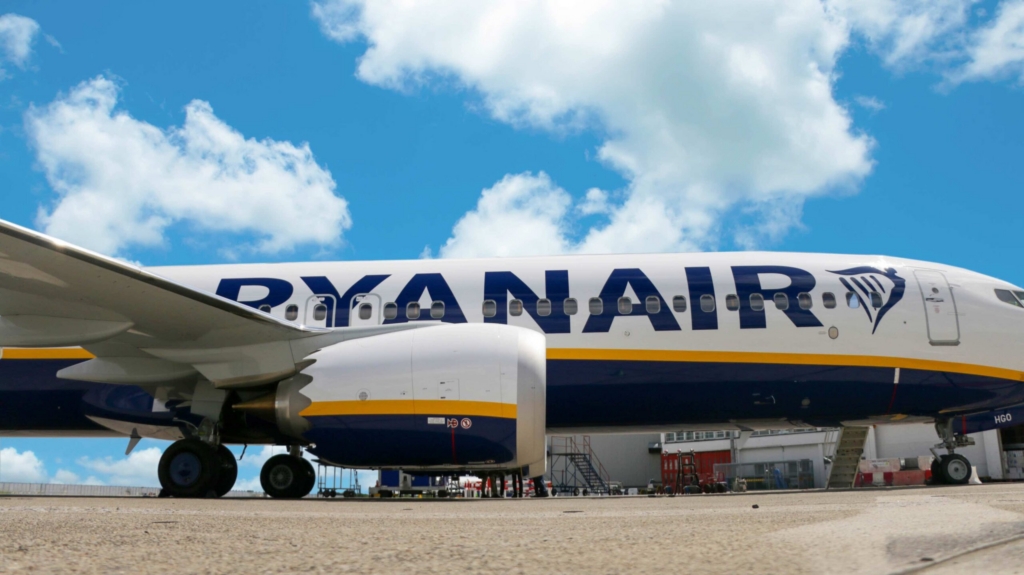
Ryanair sees the combination differently. O’Leary argues that visitors would effectively face one aviation tax when travelling to the UK and another on their accommodation.
“While we believe visitor taxes are appropriate once visitors are in the country, APD has failed to make the UK competitive or an attractive visitor destination, especially for families,” O’Leary said.
He argues for abolishing APD and using the proposed accommodation levy instead.
Ryanair expects 63 million UK passengers
Despite the warning, the UK remains one of Ryanair’s biggest markets.
The airline expects to carry 63 million passengers to and from the UK in 2026. It has previously proposed increasing that figure by 27% to 80 million passengers by 2030, although Ryanair says that investment depends on the government abolishing APD.
That puts tax policy at the centre of Ryanair’s strategy for deploying its growing fleet.
The airline has repeatedly demonstrated its willingness to move aircraft between European markets as taxes and airport costs change. Ryanair argues that countries that cut aviation taxes have a competitive advantage when airlines decide where to add aircraft, routes and frequencies.
Ryanair puts future UK growth on the table
Ryanair has substantial flexibility over where it deploys its growing fleet of aircraft. Its new UK schedule shows that it is still expanding in the UK despite its criticism of government policy. But its proposed increase from 63 million UK passengers this year to 80 million by 2030 would require considerably more capacity.
For now, Ryanair is delivering a record UK winter programme while warning that the next round of aircraft investment is not guaranteed to stay in the UK.
As O’Leary put it: “You cannot double tax UK visitors and not lose them.”
Sign up for our newsletter and get our latest content in your inbox.
Similar Reads