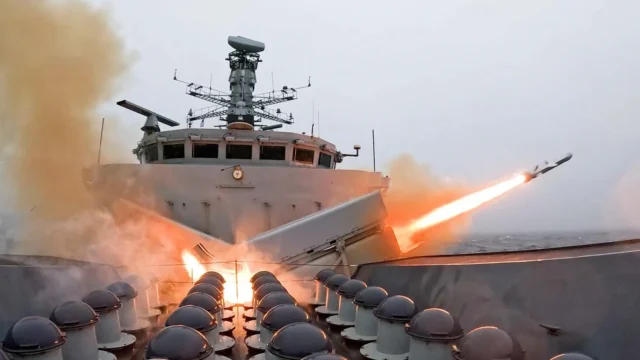


More than 25% of UK defence firms plan to invest £100m+ over the next year



More than a quarter of UK defence companies plan to invest more than £100 million over the next 12 months as rising military spending and demand for new technology encourage firms to expand.
New research commissioned by global law firm White & Case found that 27% of surveyed UK defence businesses expect to invest more than £100 million during the coming year.
A further 67% expect to invest between £50 million and £100 million. The average planned investment across respondents was £79 million.
The findings come as the UK government increases defence spending, intending procurement to expand domestic manufacturing and technology development.
Its Defence Investment Plan sets out £298 billion of investment over the four years from 2026.
UK defence firms prepare for higher demand
White & Case commissioned Censuswide to survey 250 senior decision-makers at UK-headquartered defence companies and military and defence technology start-ups between 17 and 24 September 2026.
- Half of respondents said maintaining competitiveness was driving their investment plans
- 42% cited demand for next-generation defence technologies
- 38% identified export opportunities
- 33% pointed to increased government defence spending.
The investment plans coincide with record government spending with domestic defence suppliers.
Ministry of Defence figures published in September show spending with UK industry reached £34.1 billion in 2025/26, up 3.2% in real terms and the highest level since the current records began.
The government has also committed to increasing defence spending. Its 2025 Strategic Defence Review put greater emphasis on domestic production, drones, digital warfare and emerging technology.
Air defence and counter-drone technology attract investment
More than half (56%) of the companies surveyed by White & Case said they intend to invest in defence technology over the next 12 months. Among those businesses, 46% plan to use the investment to develop new technologies, while 44% intend to increase production capacity.
Cybersecurity and digital capabilities were the most common technology priorities, cited by 46% of respondents. Advanced sensors followed at 45%, while 39% identified space technologies.

Air defence systems and counter-drone capabilities were the two most frequently cited applications, each identified by 68% of companies investing in technology.
The priorities reflect those identified by the government. Its Defence Investment Plan includes investment in long-range missiles and counter-drone systems, alongside more than £500 million for new technology and capabilities for UK Special Forces and Commandos.
The Ministry of Defence is also trying to accelerate the route from technology development to operational use. Its industrial strategy calls for faster procurement, greater involvement from technology companies and SMEs, and increased investment in dual-use and emerging technologies.
UK defence companies plan domestic expansion
White & Case’s survey also found strong confidence in the UK as an investment location.
Some 97% of respondents described the UK as Europe’s leading destination for defence technology investment.
- Around 76% said they intend to expand their UK presence over the next 12 months
- 55% expect to expand elsewhere in Europe
- 27% plan expansion in the US
- 26% in both the Middle East and Asia-Pacific.
“It is particularly encouraging to see defence and defence tech companies confirm the UK as Europe’s leading destination for investment in one of the hottest and most strategically important sectors, as military expenditure soars and companies race to invest in and develop new technologies,” Patrick Sarch, head of UK Public M&A at White & Case, said.
He added that the challenge would be ensuring UK companies can access sufficient funding to scale and compete internationally.
The government is pursuing a similar objective. In April, the Ministry of Defence and Treasury began examining ways of attracting more private investment into UK defence, including discussions with banks, venture capital firms and other financial institutions.
UK seeks to bring smaller technology companies into defence
The Ministry of Defence says it currently spends about £5 billion a year with SMEs directly and through larger supply chains. It plans to increase spending with smaller businesses by another £2.5 billion by summer 2028.
A £20 million Defence Unicorn Fund launched in January will help innovative British start-ups secure their first defence contracts.
Angus Nunn, Growth Capital and Technology M&A Partner at White & Case, said recent conflicts had changed the technologies governments are seeking.
“The nature of conflict has changed completely in the last five years and strengthening air-defence systems is now a major priority, with some of the highest-demand capabilities being affordable, scalable technologies that can intercept drone and missile threats at a fraction of the cost of legacy systems,” Nunn said.
He also pointed to the increasing use of artificial intelligence in existing defence systems.
White & Case expects higher government spending, increased private investment and demand for sovereign defence capabilities to support further fundraising, investment and mergers and acquisitions across the UK and Europe.
For UK defence companies, the survey suggests those trends are already translating into substantial spending plans, with nearly all respondents preparing to invest at least £50 million over the next year.
Sign up for our newsletter and get our latest content in your inbox.
Similar Reads




Sign up for our newsletter. Select all sectors relevant to you.
Related