

British Army trials tactical drone warfare skills in first “Drone Wars” competition


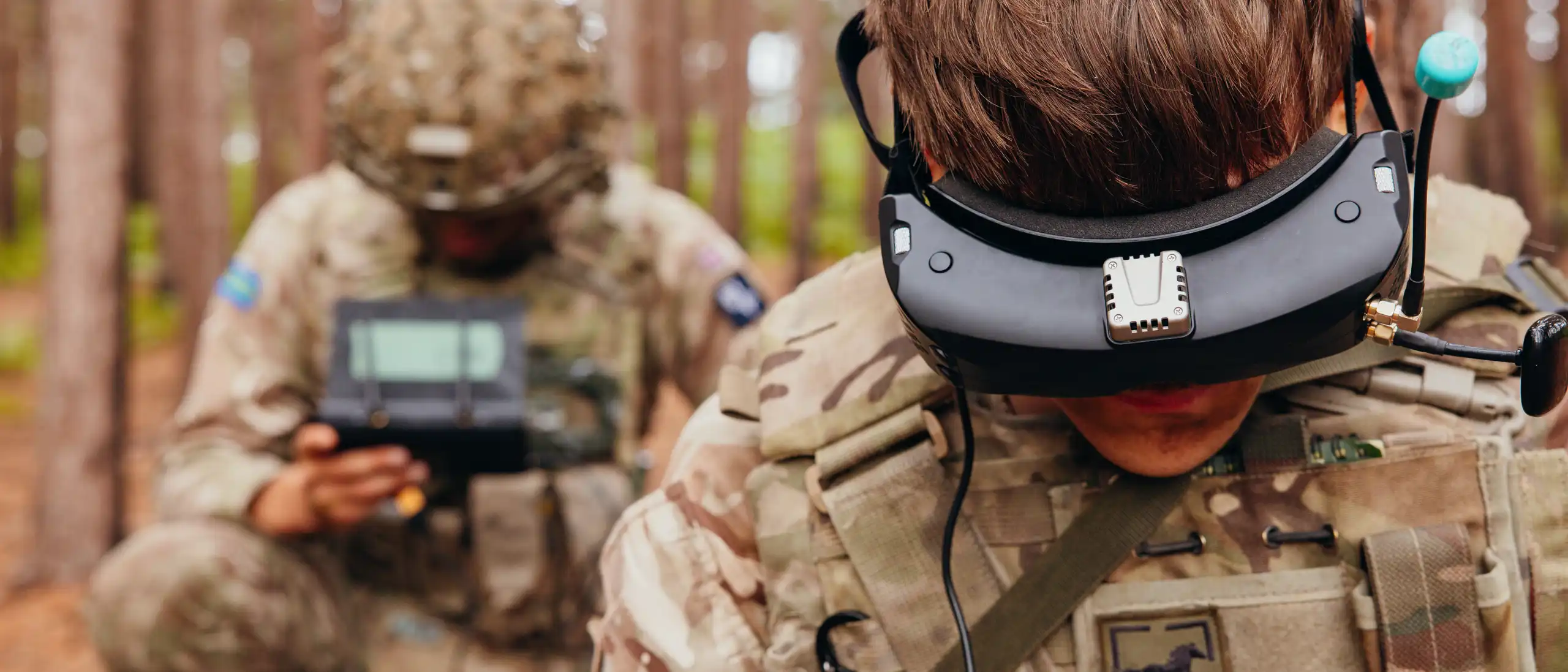
The British Army has completed its inaugural “Drone Wars” competition, bringing together 23 teams at the Royal Military Academy Sandhurst to test how effectively soldiers can employ drones as part of wider battlefield operations.
Held in September, the competition was designed to assess the tactical use of uncrewed systems rather than simply flying proficiency, reflecting the British Army’s growing emphasis on integrating drones across its battle formations.
The event provided an opportunity for personnel from different parts of the British Army to demonstrate how rapidly evolving drone technology can be incorporated into established military tactics, techniques and procedures (TTPs).
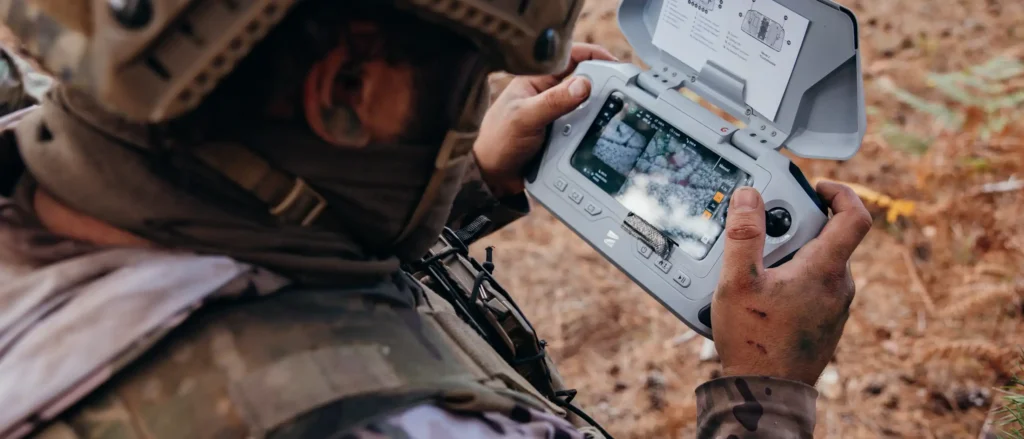
Competitors were required to combine drone operation with decision-making, reconnaissance, targeting and communication skills, mirroring the increasingly complex role of uncrewed systems on contemporary battlefields.
Teams of four soldiers from units ranging from Royal Armoured Corps (RAC) formations to Royal Engineers (RE) and Royal Logistic Corps (RLC) regiments followed a patrol route that incorporated six tasks. Throughout these challenges, competitors were judged on speed and accuracy while operating different types of drones.
Army tests uncrewed systems in six missions under battlefield conditions
These six challenges were designed to replicate a range of battlefield missions, including intelligence-gathering, targeting, strike and casualty evacuation (CASEVAC) taskings.
Soldiers were required to use a First-Person View (FPV) drone to strike a moving vehicle, fly another FPV system into a bunker and interpret video from a drone being flown by another operator before directing a kinetic strike against an identified target.
Other tasks involved locating friendly troops and delivering medical supplies via drone, conducting aerial reconnaissance ahead of an infantry assault, and locating an enemy position before calling in an artillery strike.
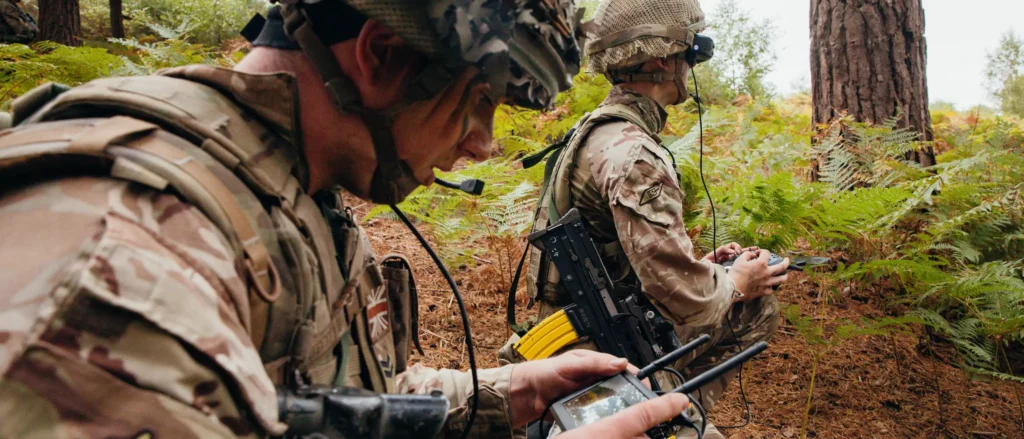
The organiser of the inaugural ‘Drone Wars’ event, Maj Callum Jones of the 1st Battalion, The Royal Gurkha Rifles (1 RGR), said the British Army was “embracing drone technology as a key element of modern soldiering.” He added that the participation of troops from the RE and RLC demonstrated “how broad the adoption of drones is” across the Army.
“Drones are no longer a specialist field, and every soldier needs to be aware of how to use drones and how to defend against drones used by the enemy,” Jones explained. “What we are testing is how soldiers use drones tactically, not how well they can fly them. As well as striking targets, soldiers are using drones to gather information to inform other actions, such as calling in artillery or launching an infantry attack.”
A team drawn from the 2nd and 4th Battalions of the British Army’s special operations-capable Ranger Regiment ultimately won the inaugural competition.
British Army “hunter-killer” teams put drone-enabled warfare into practice
The competition also demonstrated how drones can be integrated with the Army’s existing capabilities. Tpr Darel Anderson of the Household Cavalry Regiment and Tpr Harvey Chilman of the Queen’s Royal Hussars operated together as a “hunter-killer” team, with Anderson using an artificial intelligence (AI)-powered Skydio autonomous drone to identify targets while Chilman operated an FPV drone to conduct strikes.
Anderson said his unit had been working to understand how best to exploit the technology. “I’ve been flying drones for two years and we’re working hard as a unit to understand how best to use them,” he said. “Drones help us see more of the battlefield, so we can strike the enemy before they get close enough to target us.
“You need good observation skills to interpret what the drone is seeing, and then to clearly communicate that information to other soldiers. These are basic soldiering skills that we’re using in a different way with new technology,” he added.
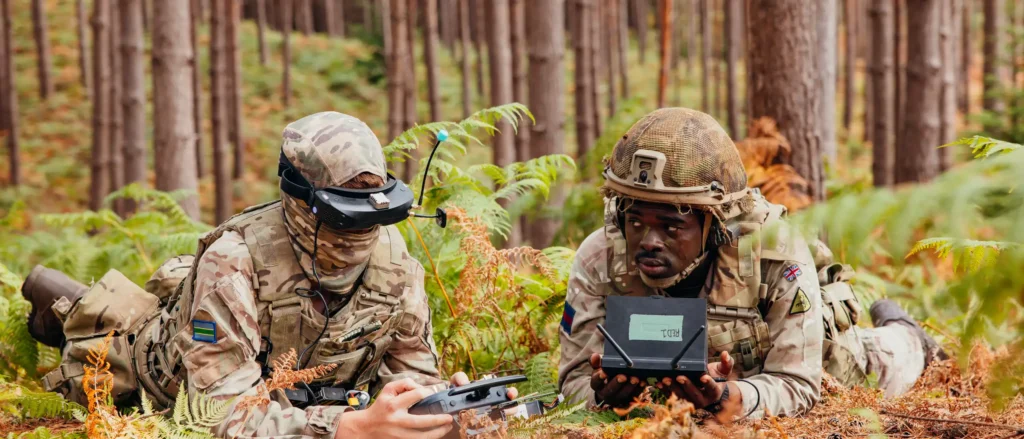
Chilman, who crews a FV4034 Challenger 2 main battle tank, said drones were being integrated into the Army’s armoured operations. “We’re integrating drones into how we operate under armour,” he said; adding that he had accumulated more than 170 flying hours as an FPV drone pilot.
“For me, there’s a similarity between flying drone missions and tank gunnery – both are about getting into the right position to line up on the target and hit it,” Chilman explained.
Alongside the tactical ‘Drone Wars’ competition, troops also took part in the Military International Drone Racing Tournament (MIDRT), bringing military teams from around the world to Sandhurst. The Australian Defence Force’s (ADF’s) Drone Racing Team won their eighth consecutive overall victory at the latest edition of the tournament, which was held from 14-18 September.
Ultimately, the inaugural ‘Drone Wars’ competition underlines the Army’s wider effort to make uncrewed and autonomous systems an integral part of battlefield reconnaissance, targeting and strike operations, while ensuring personnel across the force are able to exploit the technology and counter its use by adversaries.
Sign up for our newsletter and get our latest content in your inbox.
Similar Reads

Sign up for our newsletter. Select all sectors relevant to you.
Related