Royal Marines hone force protection skills in Exercise Jackal Dawn


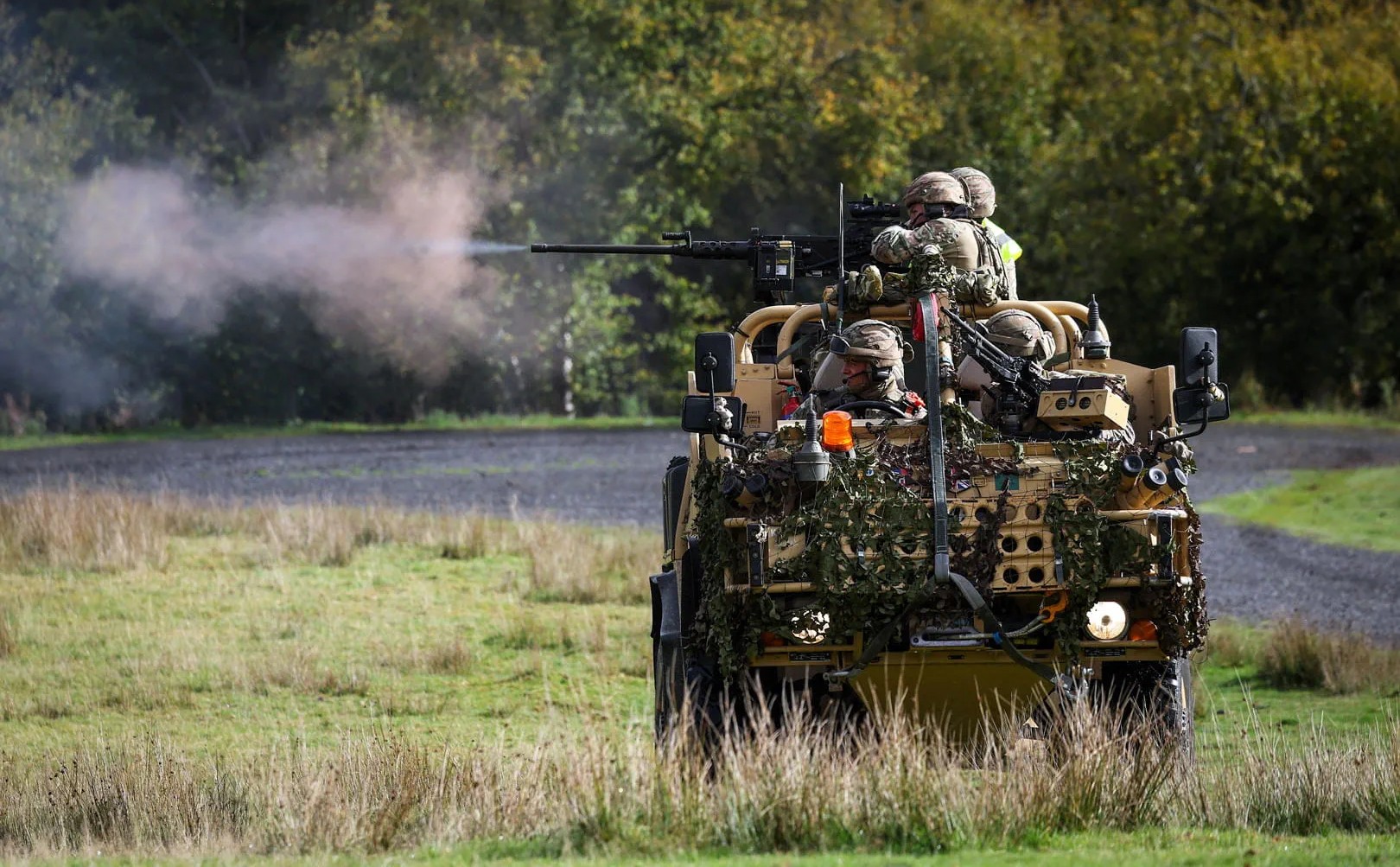
Royal Marine Commandos have completed months of progressive training drills that culminated with a live-fire exercise designed to validate their ability to protect helicopter operations in challenging environments and scenarios, including performing missions deep behind enemy lines.
Exercise Jackal Dawn took place at the Sennybridge Training Area in Powys, Wales, with Royal Marine Commandos from the Ground Mobility Troop of the Aviation Combat Service Support Squadron (ACSS) – which is typically based at RNAS Yeovilton in Somerset – completing a series of demanding tactical engagements.
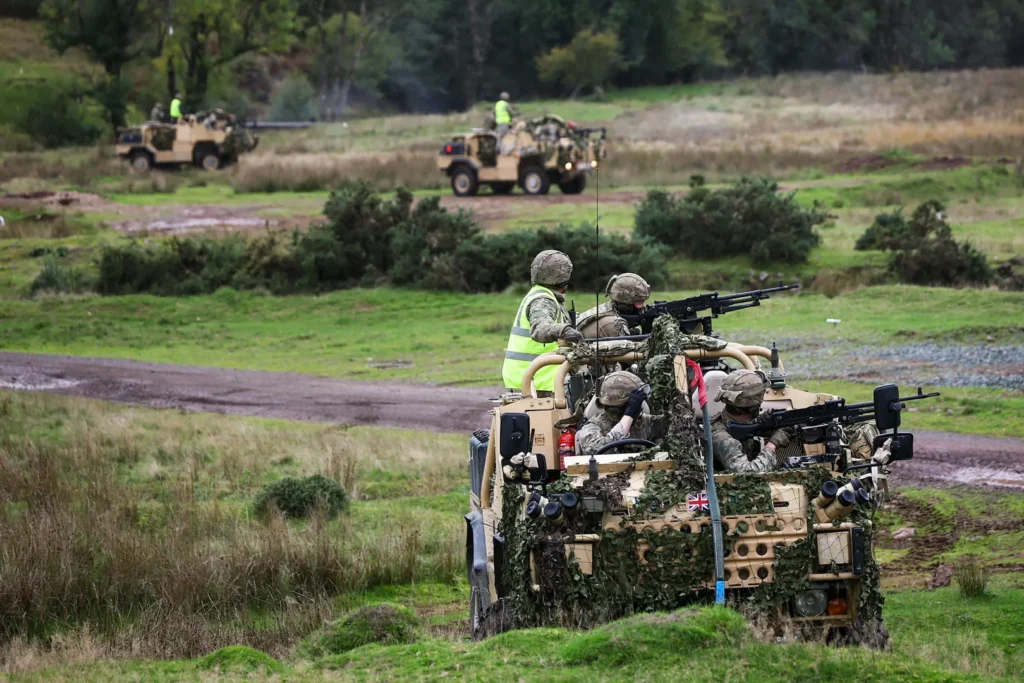
The Royal Navy announced the outcome on 26 October, describing the drill as the culmination of extensive preparation to ensure the Ground Mobility Troop can secure and defend tactical Forward Arming and Refuelling Points (FARPs) in support of Commando Helicopter Force (CHF) operations.
Ultimately, Jackal Dawn was designed to validate the Ground Mobility Troop’s force protection skills and its ability to sustain aviation activities across a spectrum of missions ranging from crisis response and littoral raids to high-intensity combat operations.
Jackal Dawn validates battlefield protection capabilities for the Royal Marines
The Ground Mobility Troop spent months building its capability through progressive training before deploying with four Supacat-built Jackal armoured wheeled vehicles and two trucks to the Sennybridge Training Area in Wales, which is roughly 48sq mi in size.
During the drill, personnel faced demanding training activities that encompassed navigation, communications, command-and-control (C2), tactical movement, live-fire manoeuvres and force protection. The programme tested both the troop’s mounted and dismounted close combat skills, reflecting the realistic conditions that Royal Marine Commandos could encounter during future CHF operations.
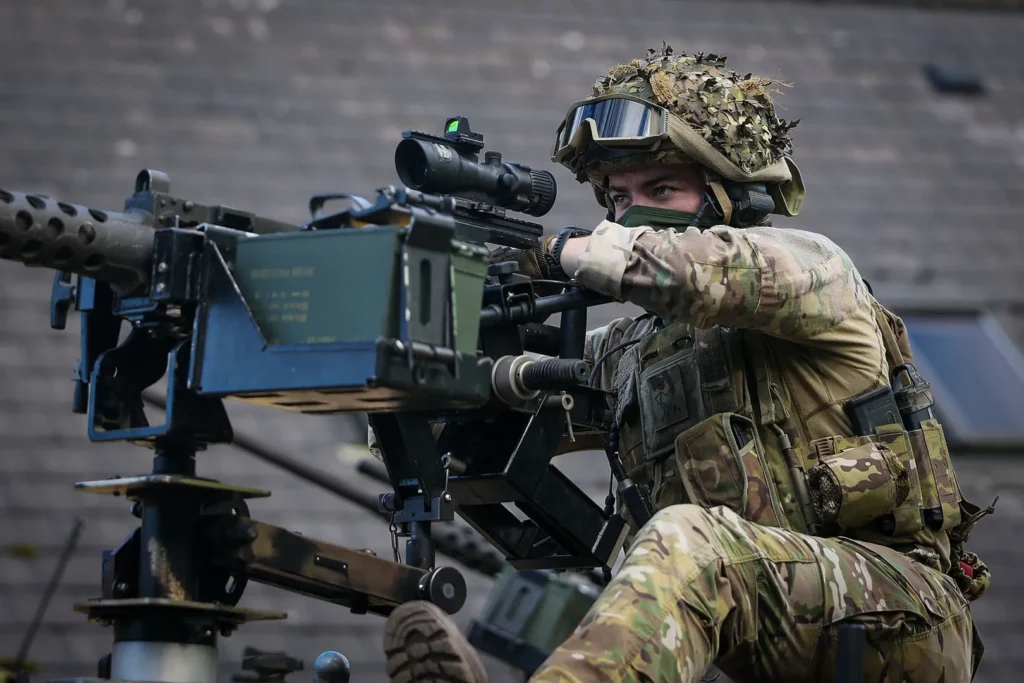
Used across the British Army, Royal Marines and Royal Air Force (RAF) Regiment, the Jackal armoured vehicles provide a mobile, highly manoeuvrable platform for reconnaissance and force protection operations. Weighing approximately 6.5 tonnes and capable of reaching speeds of 80mph, it can be armed with both a .50-cal heavy machine gun and a 7.62mm general-purpose machine gun.
Lt Oliver ‘Smudge’ Smith, the officer commanding the ACSS’s Ground Mobility Troop, said: “Conducting live-fire tactical manoeuvre training at Sennybridge has enabled our personnel to demonstrate the professionalism, tactical competence and fighting spirit required to operate effectively in complex environments…
“Most importantly, the exercise has validated our ability to provide robust force protection for aviation assets operating from tactical [FARPs],” he added.
Force protection underpins forward-deployed Commando helicopter operations
The Royal Marines’ ACSS provides ground and logistical support to CHF aircraft – namely Merlin HC4 and Wildcat AH1 helicopters – operating away from established bases. Its responsibilities include the provision of aviation fuel, equipment, catering, logistics and medical treatment services.
Meanwhile, the ACSS Ground Mobility Troop is charged with locating, securing and defending (when necessary) remote and exposed FARPs, enabling helicopters to refuel, rearm and receive support without returning to their main operating bases.
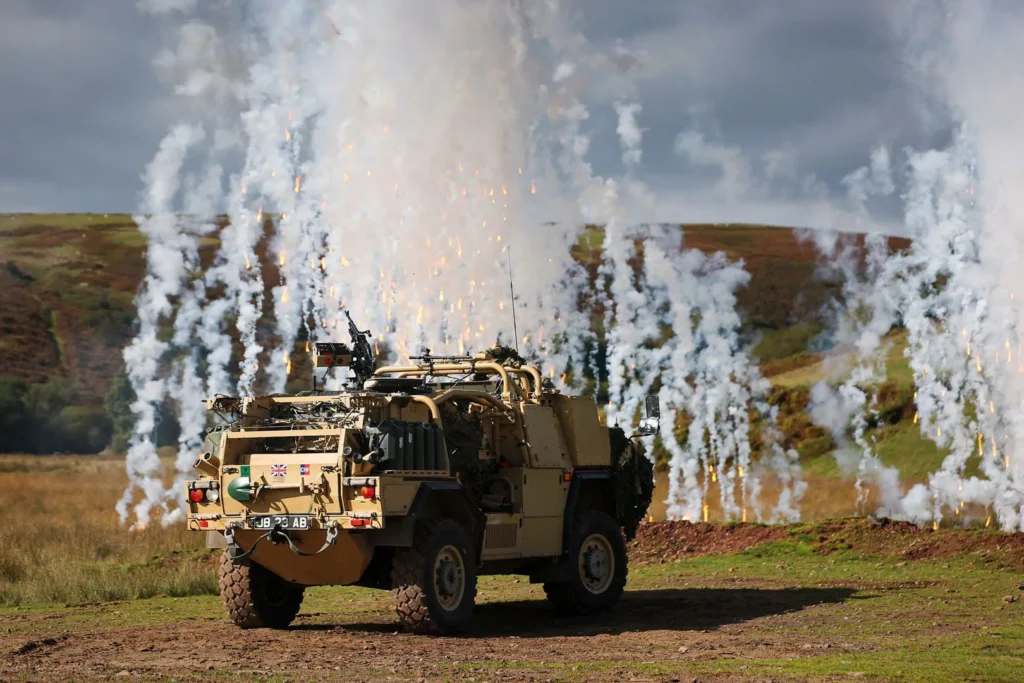
The creation of these forward locations are substantial logistical undertakings, requiring around 290 personnel, force protection teams and communications specialists, as well as sufficient supplies of water, fuel, ammunition and rations to sustain operations in austere environments.
The ability to establish and protect these locations is central to extending the reach of the UK Commando Force (UKCF) and allowing helicopter crews to maintain operational tempo in demanding environments while reducing reliance on fixed infrastructure.
Maj Ryan McCormick, the officer commanding the Royal Marines’ ACSS, described the successful completion of Jackal Dawn as a significant milestone in developing the squadron’s deployable, force-protected tactical forward refuelling capability. The drill reinforces the importance of integrated ground mobility, logistics and force protection in enabling the CHF to support UKCF operations globally.
Sign up for our newsletter and get our latest content in your inbox.
Similar Reads



Sign up for our newsletter. Select all sectors relevant to you.
Related