General Atomics

UK industry to lead development of three advanced AUKUS undersea technologies

The initiative follows a week of testing and demonstrations at the Maritime Big Play exercise in San Diego, California.

MoD-GOV_UK-AUKUS-Sub-03062026
Image: Ministry of Defence

British industry is set to lead the development of three advanced undersea technologies for the AUKUS security partnership, strengthening allied maritime capabilities while supporting innovation, investment and skilled jobs across the UK.

Announced by the Ministry of Defence on 27 October, the initiative follows a week of testing and demonstrations at the Maritime Big Play exercise in San Diego, California. The programme brings together Australia, the UK and the United States to accelerate the development and deployment of advanced autonomous maritime systems.

Three technologies to transform undersea operations

The UK will lead the development and delivery of three advanced sensor payloads for uncrewed underwater vehicles (UUVs), designed to improve surveillance, threat detection and operational effectiveness beneath the ocean surface. The technologies are:

Synthetic Aperture Sonar: Designed to collect detailed underwater information, supporting improved awareness of the subsea environment.

Deployable Anti-Submarine Warfare Sensor: Enables the deployment of sensors to detect and classify underwater threats, strengthening anti-submarine warfare capabilities.

Deployable Non-Kinetic Effector: Provides an additional capability to generate effects underwater, expanding the potential operational applications of uncrewed systems.

Together, these technologies will help uncrewed underwater vehicles monitor large areas of ocean and protect critical undersea infrastructure. The payloads are expected to be available across the three nations’ UUV fleets from 2027, enhancing interoperability and supporting security across the Euro-Atlantic, High North and Indo-Pacific.

Advancing the AUKUS partnership

The programme represents a significant milestone for AUKUS Pillar II, which focuses on developing advanced defence capabilities through collaboration between the three partner nations. Maritime Big Play provides a realistic testing environment in which crewed and uncrewed systems can be integrated, evaluated and refined before wider adoption. The latest exercise explored four key areas: anti-submarine warfare, lethality, contested resupply, and subsea and seabed warfare.
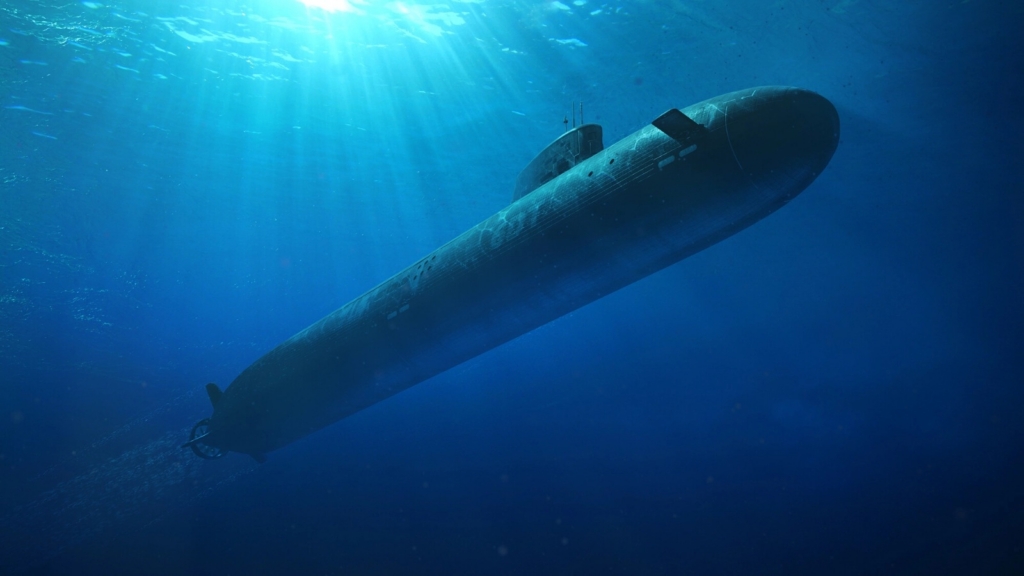
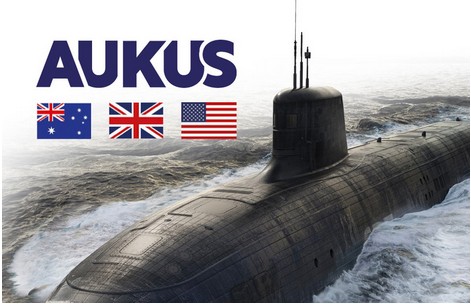
A digital rendering of the SSN-AUKUS nuclear-powered attack submarine. Image: BAE Systems
Image: BAE Systems

The UK led the anti-submarine warfare strand, contributing 13 uncrewed surface vehicles, two anti-submarine warfare targets and four underwater gliders, supported by six industry partners. These activities are helping accelerate the transition from technological innovation to operational capability, demonstrating how autonomous systems can work alongside crewed platforms to deliver a more flexible and effective naval force.

Creating opportunities for British industry

The initiative also highlights the contribution of UK companies to next-generation maritime defence technology. Businesses of different sizes are supporting the development of autonomous systems and the control technologies needed to enable multiple underwater platforms to operate together. Companies based in Frome, Basingstoke and Dorchester are among those contributing to the wider AUKUS innovation programme.

The Maritime Innovation Challenge has also awarded a share of £3 million in funding to four suppliers: SEA Ltd, Decision Analysis Services Ltd, A2i and US-based MSI Transducers. Their work focuses on innovative capabilities that enable the command, control and cooperation of undersea systems. With 12 UK industry partners showcasing their capabilities at Maritime Big Play, the programme demonstrates the breadth of British expertise and the potential for defence collaboration to create skilled employment and economic opportunities.

Building a more capable Hybrid Navy

The development of these three technologies supports the UK’s ambition to establish a Hybrid Navy, combining traditional crewed platforms with autonomous and uncrewed systems. By integrating advanced sensing capabilities with collaborative control systems, the AUKUS partners aim to improve their ability to detect underwater threats, safeguard critical infrastructure and strengthen maritime deterrence.

As development progresses towards the planned 2027 availability, the programme will further establish British industry as a key contributor to allied undersea innovation, while reinforcing the strategic partnership between Australia, the UK and the United States.

Related

Pilot fatigue raises fresh concerns over European aviation safety
Cockpit
Pilot fatigue raises fresh concerns over European aviation safety
A recent survey has found that 24% of European pilots usually continue flying rather than declare themselves unfit for duty due to fatigue.
Aerospace

28 Oct 2026

MAAS Aviation appoints Edwin Poldermans as Head of MRO
Edwin Poldermans
MAAS Aviation appoints Edwin Poldermans as Head of MRO
With over 30 years of aviation and aerospace experience, Edwin Poldermans has joined MAAS Aviation to help drive expansion of the MRO side of its aircraft painting service.
Aerospace Member News

27 Oct 2026

UK advances Storm Fighter programme as RAF plans to field first CCAs before 2030
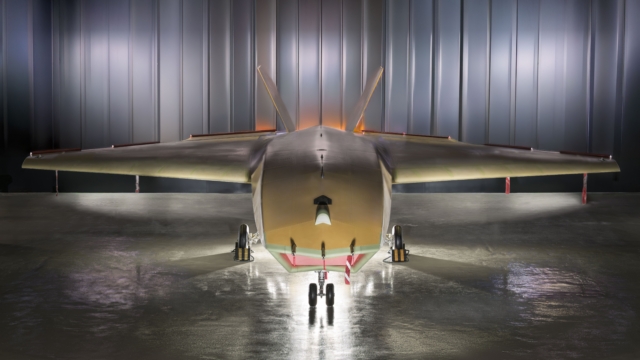
BAE Systems unveiled its first production-standard Brontanax CCA demonstrator during the 2026 Farnborough International Airshow. The platform is expected to completed its maiden flight in 2027. Image: BAE Systems
UK advances Storm Fighter programme as RAF plans to field first CCAs before 2030
The UK is accelerating its Storm Fighter programme, with plans to field operational Collaborative Combat Aircraft (CCA) before 2030 to strengthen the RAF’s future air combat capabilities.
Aerospace Defence

27 Oct 2026

UK Budget 2026: Government confirms full funding for Defence Investment Plan and sets 2030 target for 3% defence spending
Houses of Parliament
UK Budget 2026: Government confirms full funding for Defence Investment Plan and sets 2030 target for 3% defence spending
The UK government has confirmed that its £298 billion Defence Investment Plan will be fully funded, providing greater certainty for the UK's defence industry and its supply chains.
Defence

28 Oct 2026

Three Royal Navy Vanguard-class nuclear submarines at sea simultaneously in rare deployment
HMS Vengeance returns to HMNB Clyde after completing Operational Sea Training (OST) on 9 July 2007. Image: MOD Crown Copyright/POA(Phot) Tam McDonald
Three Royal Navy Vanguard-class nuclear submarines at sea simultaneously in rare deployment
Three of the Royal Navy’s four Vanguard-class ballistic missile submarines are now reportedly at sea, highlighting the operational demands of maintaining the UK’s nuclear deterrent.
Defence

28 Oct 2026

Airbus awarded contract for additional Galileo satellites
Airbus G2 satellites
Airbus awarded contract for additional Galileo satellites
The additional Galileo satellites will benefit from existing Airbus manufacturing capabilities and feature advanced anti-jamming and anti-spoofing to safeguard Galileo’s signals, extending Europe's independent satellite navigation services for European security and defence.
Airbus awarded contract for additional Galileo satellites
Airbus G2 satellites
Airbus awarded contract for additional Galileo satellites
The additional Galileo satellites will benefit from existing Airbus manufacturing capabilities and feature advanced anti-jamming and anti-spoofing to safeguard Galileo’s signals, extending Europe's independent satellite navigation services for European security and defence.
UK space start-up completes cancer drug experiment aboard ISS after £9.8m funding boost
UK start-up space mission aims to transform cancer therapies
UK space start-up completes cancer drug experiment aboard ISS after £9.8m funding boost
UK start-up BioOrbit has completed a six-week ISS experiment to produce protein crystals that could make some cancer treatments suitable for home injections.
Space Test

28 Oct 2026

ClearSpace and Eutelsat sign term sheet to advance Phoenix GEO life-extension services
Artificial rendering of Phoenix approaching a client satellite.
ClearSpace and Eutelsat sign term sheet to advance Phoenix GEO life-extension services
A new agreement between ClearSpace and Eutelsat has established a framework for cooperation on the Phoenix mission and future commercial life-extension services, bringing satellite operator expertise into the development of next-gen in-orbit servicing capabilities.
Member News Space

22 Oct 2026

Deloitte awarded £30m Lead Delivery Partner contract to support PoliceAI
National Police Chiefs Council photo of police on duty
Deloitte awarded £30m Lead Delivery Partner contract to support PoliceAI
As Lead Delivery Partner for PoliceAI, Deloitte will be responsible for delivery of artificial intelligence solutions for police forces across England and Wales.
Member News Security

28 Oct 2026

Airbus awarded contract for additional Galileo satellites
Airbus G2 satellites
Airbus awarded contract for additional Galileo satellites
The additional Galileo satellites will benefit from existing Airbus manufacturing capabilities and feature advanced anti-jamming and anti-spoofing to safeguard Galileo’s signals, extending Europe's independent satellite navigation services for European security and defence.
UK police and fire services face serious cyber attack risks as watchdog exposes security gaps
Uk fire engines
UK police and fire services face serious cyber attack risks as watchdog exposes security gaps
A UK watchdog has warned that police and fire services remain vulnerable to cyberattacks, citing ageing technology, poor safeguards and inadequate preparedness.
Security Uncategorized

28 Oct 2026