Three Royal Navy Vanguard-class nuclear submarines at sea simultaneously in rare deployment


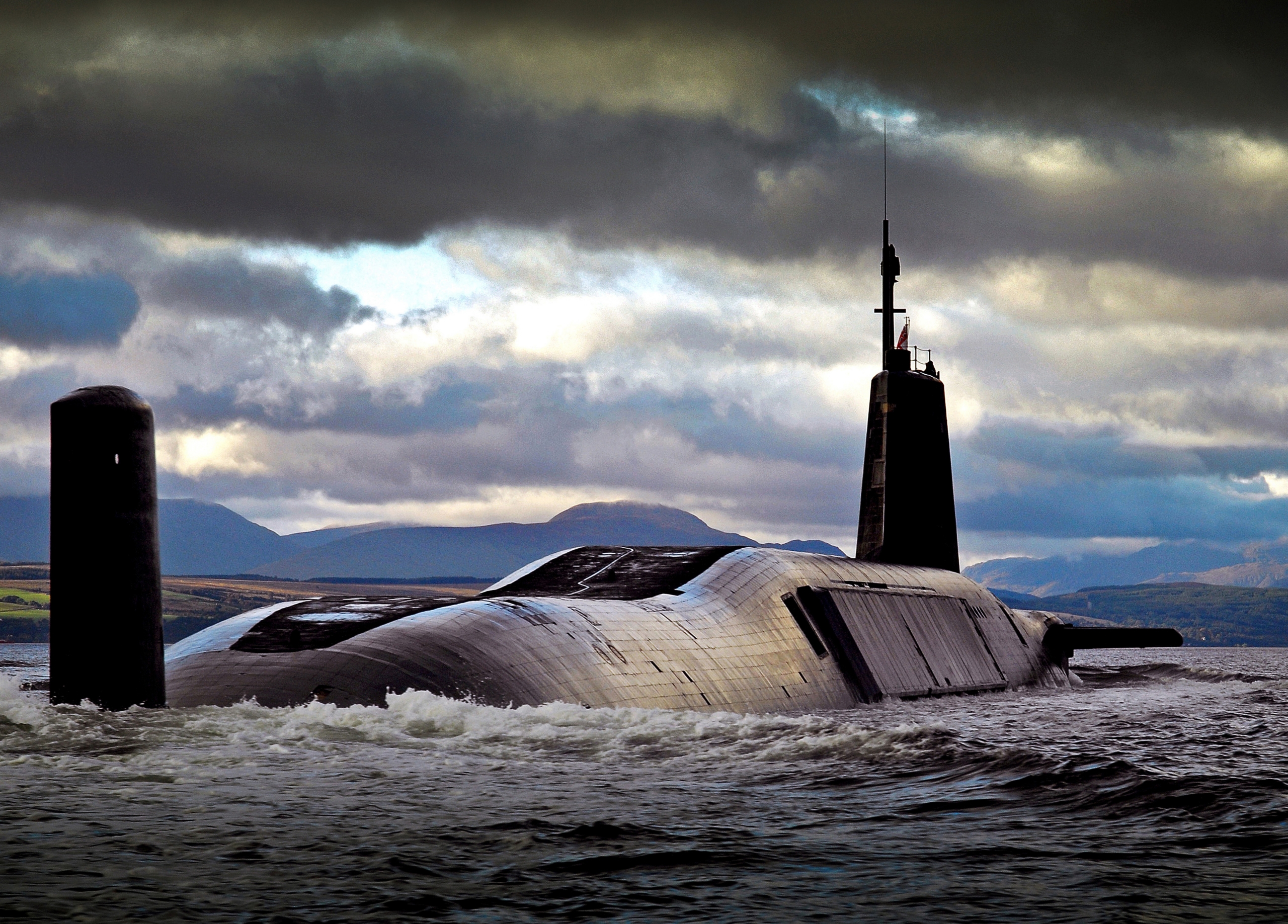
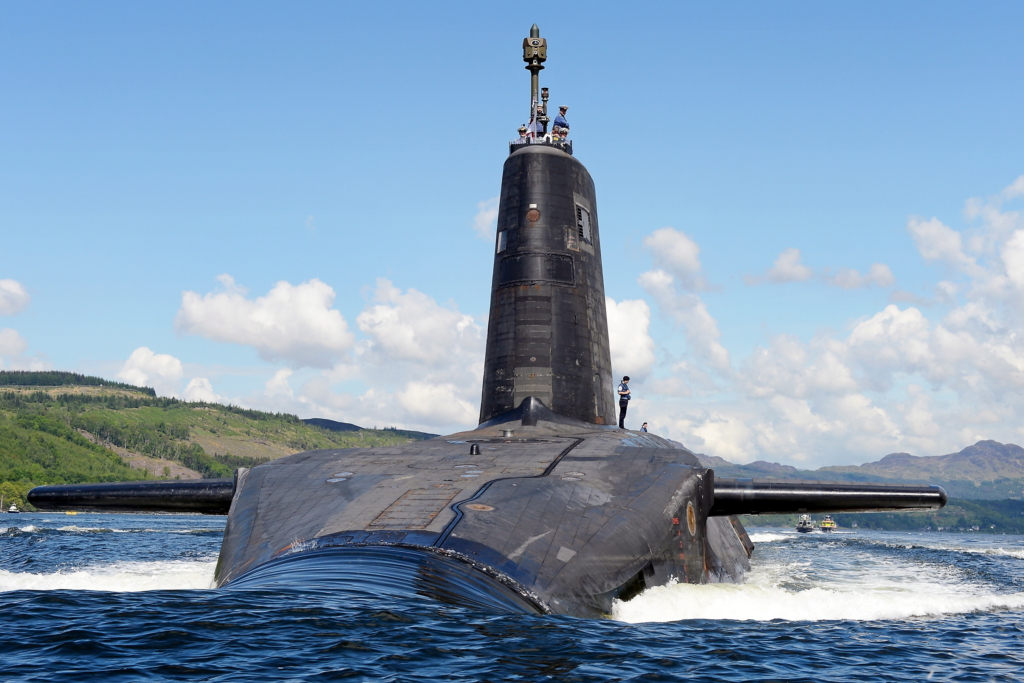
It is understood that three of the Royal Navy’s four ageing Vanguard-class nuclear-powered ballistic missile submarines have been deployed at sea simultaneously, marking a rare and unusual occurrence for the strategic fleet that is currently tasked with maintaining the UK’s continuous at-sea nuclear deterrent.
This unusual deployment is notable given the demands of keeping at least on Vanguard-class submarine on patrol at all times while balancing maintenance, availability, training and operational readiness across the ageing four-ship fleet, which will be succeeded by four Dreadnought-class nuclear-powered ballistic missile submarines from the early 2030s.
Initially reported by Sky News and The Telegraph on 27 October, the deployment places three quarters of the Vanguard-class fleet at sea simultaneously. At least one vessel is understood to be conducting a routine nuclear deterrent patrol, while the missions of the remaining two deployed submarines have not officially been confirmed.
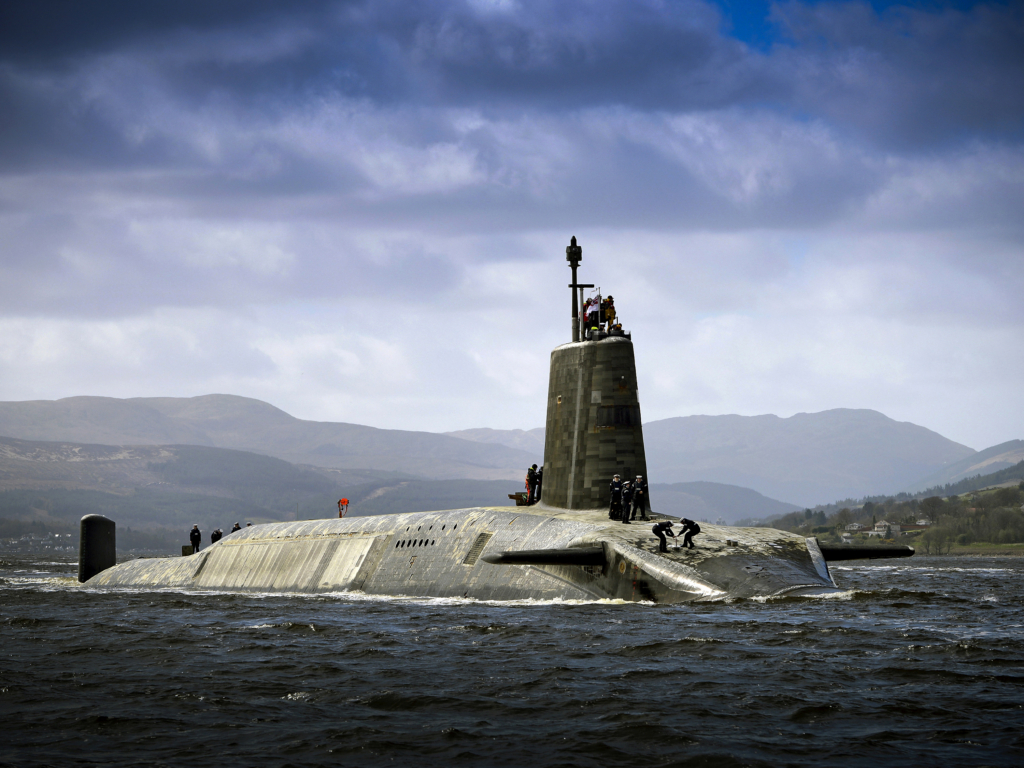
The UK Ministry of Defence (MOD) had declined to comment on operational details – which is not uncommon considering the secrecy surrounding the nature of strategic deterrence operations – although it reiterated that the UK’s at-sea nuclear deterrent protects both Britain and its NATO allies.
However, this development remains to be significant given that the Vanguard-class fleet is designed to maintain a continuous at-sea nuclear deterrent, rather than routinely deploy nearly all available submarines together.
According to the specialist nuclear weapon monitoring and tracking group, Nukewatch UK, the last recorded occasion in which three Vanguard-class submarines were deployed simultaneously at sea was between 22 October and 3 November 2022.
Why is it unusual for the Navy to deploy three Vanguard-class submarines at sea simultaneously?
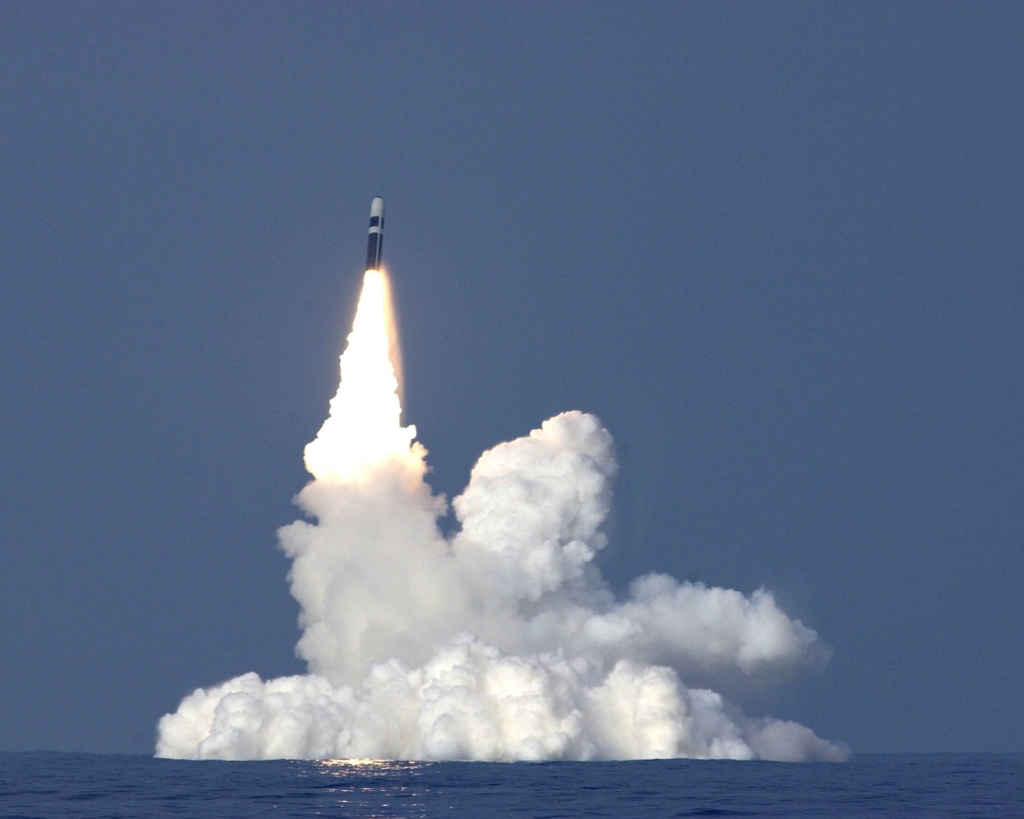
The Royal Navy operates four Vanguard-class nuclear-powered ballistic missile submarines: HMS Vanguard (S28), HMS Victorious (S29), HMS Vigilant (S30) and HMS Vengeance (S31). Driven by a Rolls-Royce PWR2 nuclear reactor and equipped to carry up to 16 Trident II D5 submarine-launched nuclear ballistic missiles (SLBMs), the Vanguard-class provides the UK’s strategic nuclear deterrent.
Under the existing Continuous At-Sea Deterrent (CASD) policy, at least one Vanguard-class submarine remains on patrol at all times to ensure the UK retains a survivable nuclear response capability. During such operations, details regarding the submarine’s location and patrol route are deliberately kept secret.
This four-boat structure provides the flexibility needed to sustain this commitment while accommodating maintenance, operational preparation, training and crew recovery. A second submarine may be preparing to relieve the vessel on CASD patrol, while another could be undergoing sea trials or other operational readiness activities.
Given what is currently known, one Vanguard-class submarine is currently deployed on the UK’s latest CASD patrol, with another having likely been put to sea to conduct work-up activities before relieving the former upon its return. Meanwhile, the third (HMS Vigilant) has likely deployed for sea trials after the vessel recently completed a lengthy overhaul and modernisation programme.
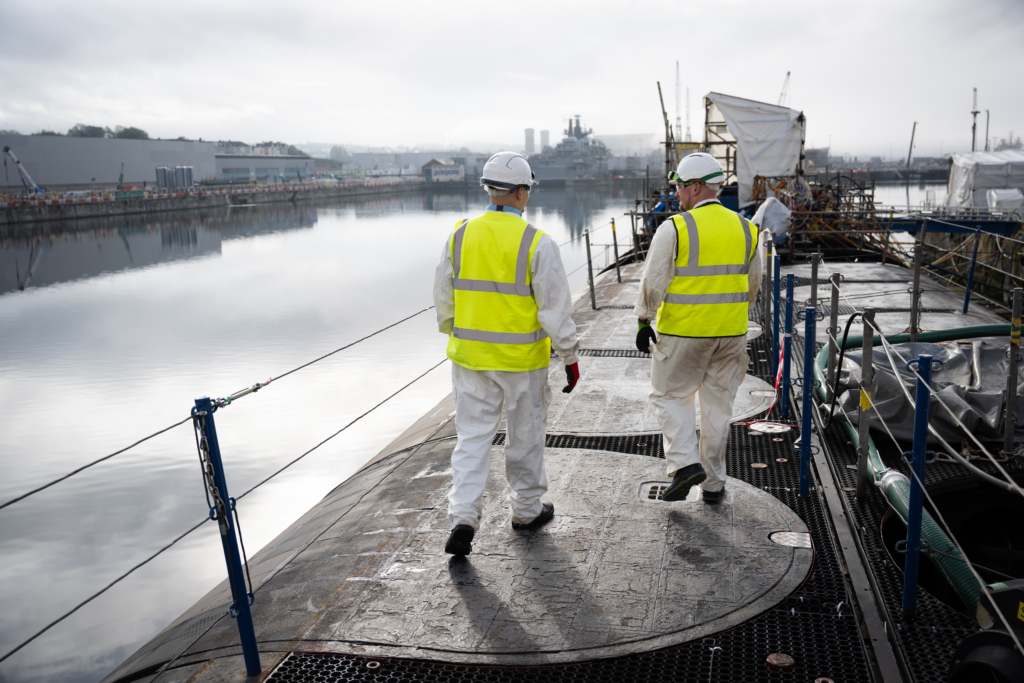
While likely, this remains unconfirmed by the UK MOD. However, the fourth vessel (HMS Victorious) is still undergoing maintenance and modernisation in dock at HMNB Devonport in Devon.
Consequently, having three ships at sea simultaneously represents a rare and unusual concentration of the UK’s available deterrence fleet, marking a notable departure from the force’s routine operating pattern.
Specialist observers have described the arrangement as rare. While some reports characterise it as the first such deployment in at least seven years, Nukewatch UK’s publicly documented observations identify a comparable period between October and November 2022. The evidence therefore supports describing the current deployment as unusual, rather than definitively unprecedented.
Ageing submarines, mounting demands and a new era of British nuclear deterrence
The deployment also draws attention to persistent challenges surrounding British submarine availability. The Vanguard-class vessels are ageing, and maintenance delays have contributed to extended operational patrols in recent years.
HMS Vanguard reportedly spent more than 200 days at sea during a patrol in 2025, while HMS Victorious completed a reported 207-day deployment in 2021 – which is considered to be one of the longest cruises conducted by the Vanguard-class fleet.
Such lengthy absences place considerable demands on crews and underline the importance of having sufficient boats available to sustain CASD without overextending personnel or equipment.
Three submarines at sea could indicate improved availability and greater flexibility within the operational cycle. However, without any confirmation of their missions, it would be premature to conclude that the deployment reflects a deliberate increase in Britain’s nuclear readiness or a response to a specific threat.
The wider strategic context is nevertheless important. The UK continues to rely on its submarine-based deterrent as the cornerstone of its nuclear posture, while the Dreadnought-class – so far comprising the future HMS Dreadnought, HMS Valiant, HMS Warspite and HMS King George VI – is being developed to replace the veteran Vanguard fleet from the early 2030s.
For the defence industry, this episode reinforces the operational importance of submarine maintenance, through-life support services and the timely delivery of the next generation of strategic nuclear deterrence platforms.
The significance of this deployment ultimately lies not simply in the number of British submarines at sea, but in what it demonstrates about the availability of the force currently responsible for maintaining the UK’s nuclear deterrent. Until the UK MOD provides further information, whether the unusual concentration reflects routine scheduling, trials or a wider operational tasking remains unconfirmed.
At the same time, this deployment comes as the UK moves to reintroduce an airborne nuclear role for the Royal Air Force (RAF); a capability that was lost when the service withdrew its own air-launched nuclear weapons in 1998.
Under plans announced following the 2025 Strategic Defence Review (SDR), the UK will acquire at least 12 conventional take-off and landing (CTOL)-configured F-35A Lightning IIs, which are capable of carrying US-built nuclear gravity bombs as part of NATO’s nuclear-sharing mission.
The move will complement, rather than replace, the UK’s independently operated submarine-based nuclear deterrent, adding another dimension to the nation’s wider contribution to NATO’s nuclear forces.
Sign up for our newsletter and get our latest content in your inbox.
Similar Reads


Sign up for our newsletter. Select all sectors relevant to you.
Related