UK advances Storm Fighter programme as RAF plans to field first CCAs before 2030


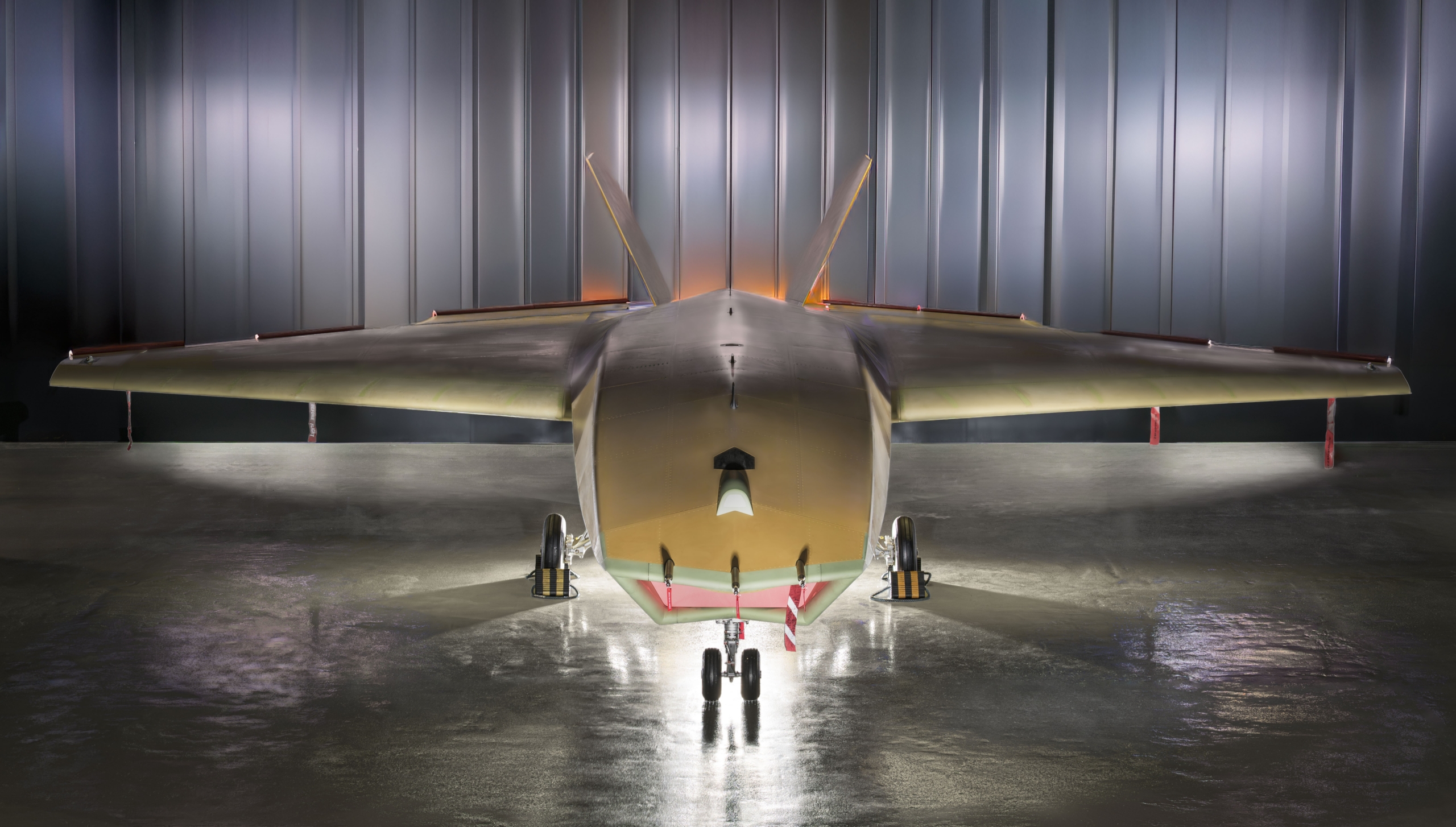
The UK is accelerating plans to field Collaborative Combat Aircraft (CCA) operationally before 2030, with the Royal Air Force (RAF) advancing its fledgling Storm Fighter programme in a bid to rapidly strengthen the nation’s future air combat capabilities.
Announced in July 2026, the UK’s Storm Fighter programme aims to introduce affordable and attritable autonomous combat aircraft that are capable of operating alongside conventional crewed military aircraft, providing additional sensors, weapons and electronic warfare (EW) while reducing the risks faced by pilots in contested airspace and increasing overall combat mass.
The UK is currently targeting a maiden flight for its Storm Fighter demonstrator in 2027, ahead of the RAF’s ambition to establish an operational CCA capability before 2030. The initiative forms part of a wider shift towards integrating artificial intelligence (AI) systems, autonomy and manned-unmanned teaming (MUM-T) into British military operations.
The planned capability is also expected to inform the evolution of the UK’s Future Combat Air System (FCAS) programme – namely supporting the ongoing development of Tempest through the Global Combat Air Programme (GCAP), along with the family of systems that will support it – while complementing the air arm’s existing Typhoon FGR4 and F-35B Lightning II fleets.
Storm Fighter family targets combat, electronic warfare and long-range strike capabilities
Storm Fighter is being developed as part of a wider family of autonomous platforms intended to deliver complementary effects across the battlespace. The three different concepts being discussed as part of this family are Storm Fighter, Storm Chrome and Storm Fire.
Storm Fighter is intended to provide the RAF’s principal CCA capability, working alongside crewed aircraft to extend sensor coverage, carry additional weapons and support missions in heavily defended and contested airspace. Pioneered through the ‘Loyal Wingman’ concept, CCAs could undertake higher-risk tasks deep within hostile airspace at the direction of a crewed aircraft operating at a safer stand-off range.
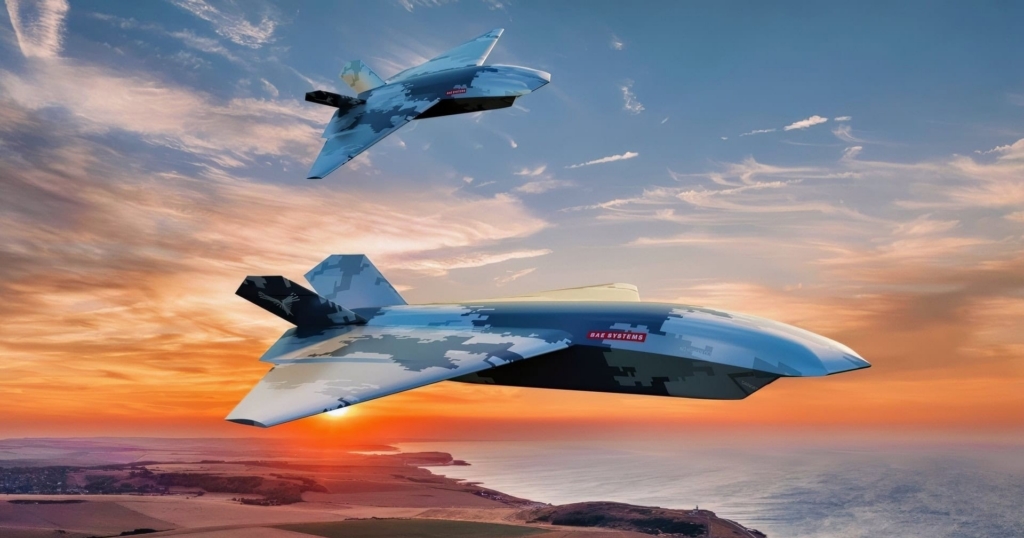
Storm Chrome is envisaged as an electronic attack (EA) platform, designed to disrupt hostile radar, communications and air defence networks. Meanwhile, Storm Fire is being discussed as a one-way attack (OWA) drone, with a proposed combat range of up to 1,000 miles (1,609km), which would enable long-range strikes against hostile targets.
Together, the three concepts would provide a combination of collaborative combat, EW and long-range uncrewed strike capabilities. Their precise specifications, acquisition quantities and operational configurations have yet to be fully established.
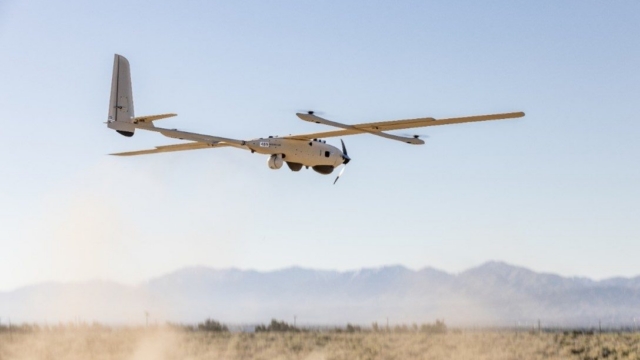
The RAF’s recent experience with StormShroud – an autonomous platform based on the Tekever AR3 that entered service with No 216 Squadron in May 2025 and is designed to deliver EW effects – provides a foundation for the UK’s wider Storm Fighter initiative. Such systems intend to complicate an adversary’s defensive response and create opportunities for crewed aircraft to operate more effectively.
“Autonomy, not flesh”: RAF chief sets places AI at centre of future air warfare
The RAF’s Chief of the Air Staff, ACM Sir Harv Smyth, has highlighted the potential of AI to transform military aviation, arguing that autonomous systems will become increasingly important as the character or modern and future air warfare continues to evolve.
Speaking at the Lord Trenchard Memorial Lecture at the Royal United Services Institute (RUSI) on 26 October, Smyth described the technological progress as “simply breathtaking”, highlighting the rapid speed at which AI systems can develop skills through repeated simulation.
As reported by The Times, Smyth cited that AI systems trained in simulated air-to-air (A2A) combat scenarios continuously over a 14-day period, accumulating experience equivalent to approximately 50 years of human air combat training. “Simply put, managed correctly, AI can be better than a human,” he added.
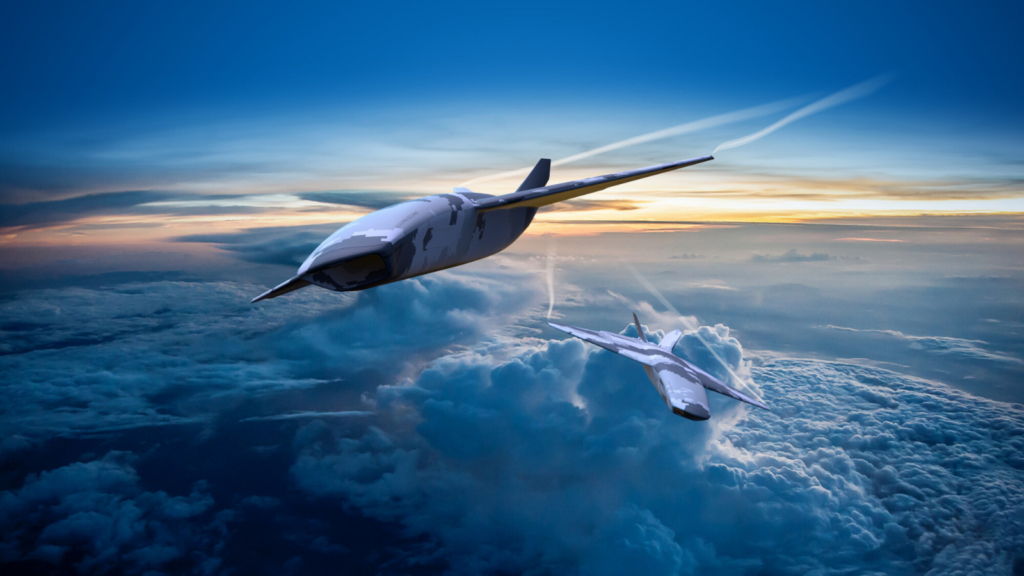
He also argued that future military operations will require a fundamental change in approach. “Given today’s changing character… I would argue strongly that the modern paradigm must now become autonomy, not flesh,” he said.
The RAF’s emerging CCA concept envisages a crewed fighter – namely a Typhoon FGR4 or F-35B – directing four uncrewed aircraft, enabling a single formation to deploy a greater number of sensors and weapons while distributing risk across multiple platforms.
The approach intends to preserve human oversight while allowing autonomous systems to undertake dangerous or repetitive tasks, increasing the effectiveness, mass and survivability of the overall force.
Storm Fighter now faces the challenge of moving from concept to frontline service
Delivering the future Storm Fighter family within the proposed timeframe will require advances in autonomous mission management, secure communications, weapons integration and coordination between crewed and uncrewed aircraft.
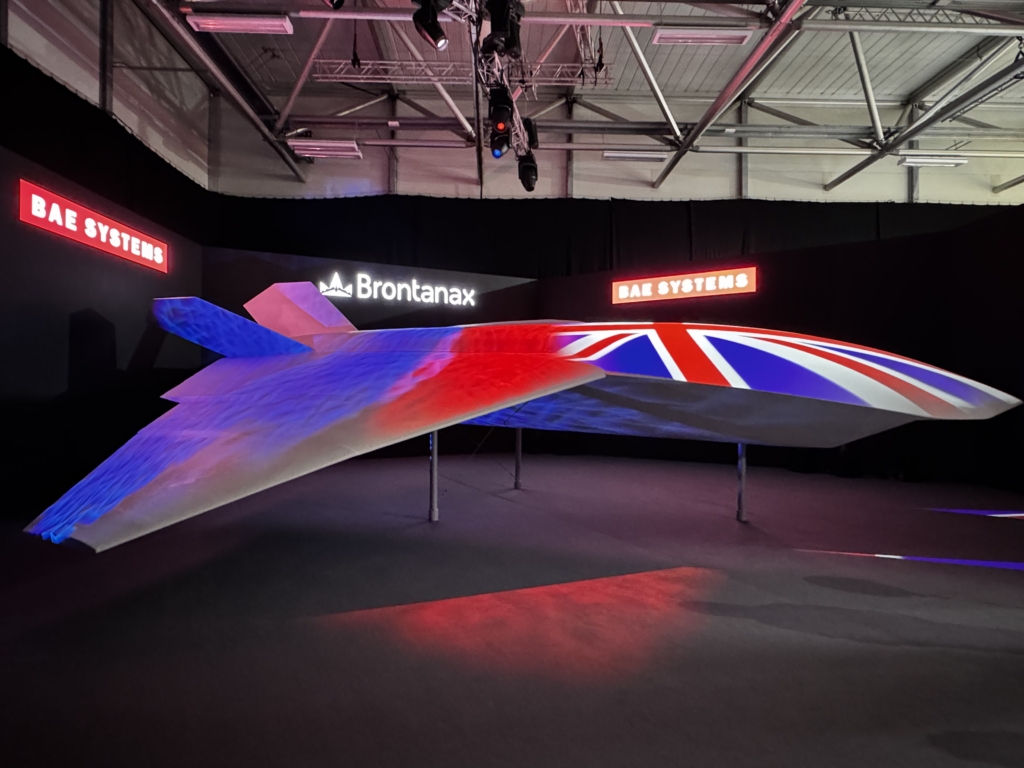
Industry competition will be central to translating the emerging concepts into operational platforms. Unveiled during the Farnborough International Airshow 2026, BAE Systems has presented its Brontanax platform within the UK’s developing CCA landscape, as the sector positions itself to support the RAF’s rapidly growing requirements.
The transition from demonstrators to operational service will also depend on extensive testing, including the validation of autonomous behaviour in complex combat scenarios, the creation of effective tactics, techniques and procedures (TTPs) and the integration of new systems into existing command structures and architectures.
Storm Fighter represents a significant element of the RAF’s longer-term transformation, linking its current combat aircraft with a future force designed around distributed capabilities and closer human-machine collaboration.
If the planned milestones are achieved, the UK could begin fielding operational CCAs before 2030, adding a new dimension to its Combat Air capability and preparing the RAF for increasingly complex and contested operating environments against growing near-peer threats.
Sign up for our newsletter and get our latest content in your inbox.
Similar Reads


Sign up for our newsletter. Select all sectors relevant to you.
Related