CAA puts AI reliability and human oversight in focus as aerospace adoption grows

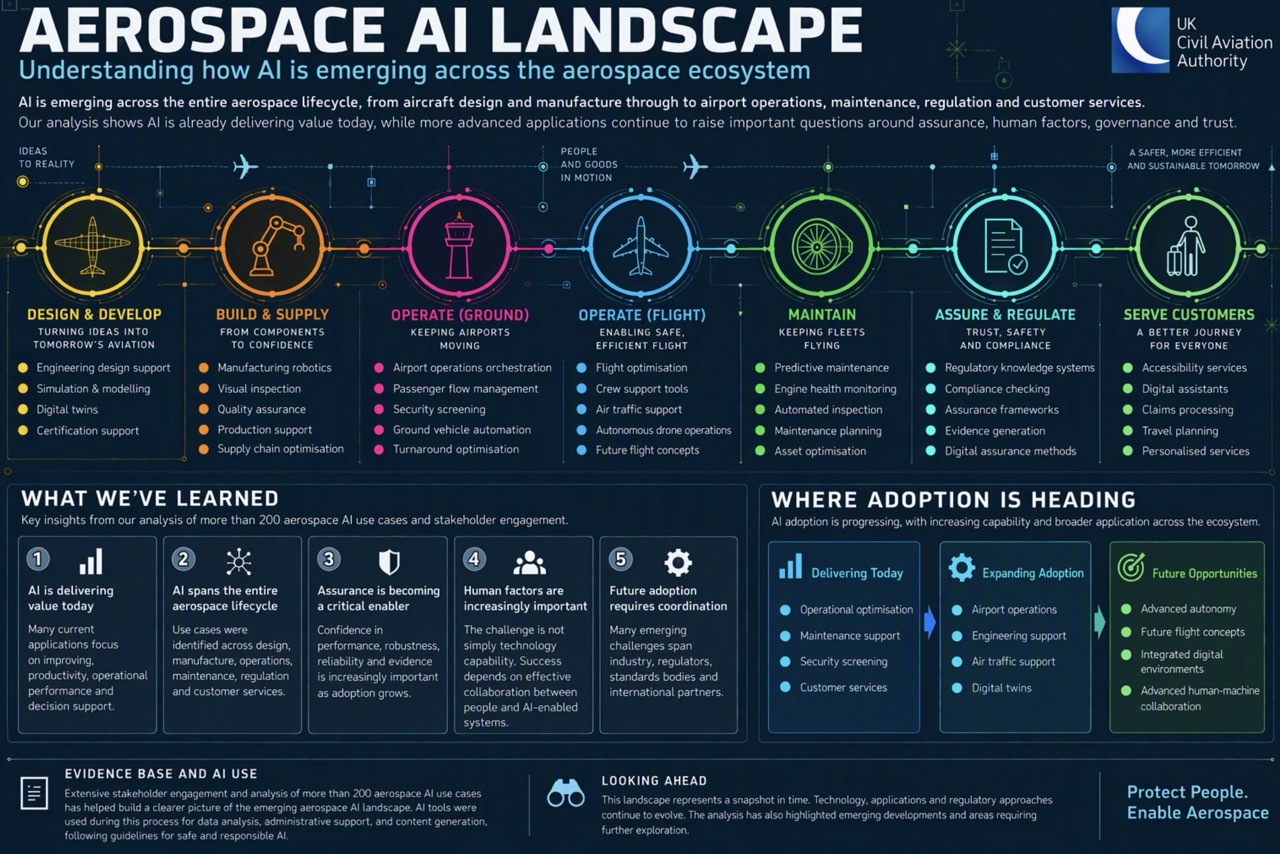
The Civil Aviation Authority has reviewed more than 200 aerospace AI use cases, from maintenance and security screening to engineering and air traffic support.

Artificial Intelligence
Photo: Pixabay | Wikimedia Commons

The UK Civil Aviation Authority (CAA) has identified reliability and human oversight as growing concerns as artificial intelligence expands into more complex aerospace work, including engineering and air traffic support.

The regulator analysed more than 200 aerospace AI use cases and consulted stakeholders during its summer 2026 research. It published the findings on 10 November as a baseline for tracking where the technology is being used and what wider adoption could mean for aviation safety and regulation.

The CAA found that current use is most visible in operational planning and optimisation, maintenance support, security screening and customer service. It also identified growing use in airport operations and engineering, including digital twins, which are virtual representations of physical assets or systems.

What aerospace firms need to demonstrate

The CAA highlighted assurance as an increasingly important part of adoption. For a company introducing an AI tool, that means building evidence that it performs reliably in the conditions in which staff will use it. The research also highlights the importance of how people work with the technology, particularly as it takes on more complex tasks.

A maintenance planning tool, for example, could flag a component for closer inspection. The question for the company is how staff assess AI recommendations and handle conflicts with other evidence. The consequences of an AI error depend on how its recommendations are used and which decisions the technology informs.
CAA Aerospace AI landscape infographic
Infographic: CAA

The CAA places advanced autonomy and future flight concepts among potential opportunities. Its published findings suggest that some of the challenges ahead will require co-ordination between industry, regulators, standards bodies and international partners.

The Aerospace Technology Institute and Capgemini reached a similar conclusion in their July research on UK aerospace manufacturing. They identified data quality, digital infrastructure, workforce skills and governance as conditions for wider adoption. They also stressed the continuing role of engineering judgement as manufacturers apply AI to work such as design, validation and production.

UK trials put AI to work

The CAA is testing AI in its own safety reporting workflow. The pilot examines whether AI can help staff sort and label mandatory occurrence reports, which record events that could impact aviation safety. Consistent classification could help safety specialists group similar events and identify patterns.

A separate example is Operation Blue Skies, a £5 million programme backed by the Department for Transport through the Aerospace Technology Institute Programme. The project will test whether small changes in flight altitude can help commercial aircraft avoid conditions that produce persistent warming contrails in the North Atlantic.

Google is developing AI models to predict where those contrails could form. NATS says the planned altitude changes will be co-ordinated through established air traffic control channels. Testing in Shanwick oceanic airspace is planned for two winters, 2026–27 and 2027–28. The trials are designed to assess both the feasibility of making the changes during normal flight operations and their environmental effect.

The CAA is inviting organisations deploying AI to share their experience as it continues to monitor developments. Its existing strategy for regulating AI and advanced automation sets out how it intends to support innovation while maintaining aviation safety and consumer protection.

Related

More women take the controls as UK pilot licence numbers rise
Woman pilot sitting in airplane cockpit, wearing headset.
More women take the controls as UK pilot licence numbers rise
The latest statistics show encouraging progress being made in female representation across both commercial and general aviation sectors.
Aerospace

11 Nov 2026

Satellite connectivity could unlock UK drone operations at scale
Viasat 3 is designed to take drone control to the next level
Satellite connectivity could unlock UK drone operations at scale
Satellite communications could become a critical part of the infrastructure needed to move UK drones from tightly controlled trials to routine beyond-visual-line-of-sight operations.
Aerospace Defence Magazine

11 Nov 2026

B&H Worldwide acquires Founders Logistics
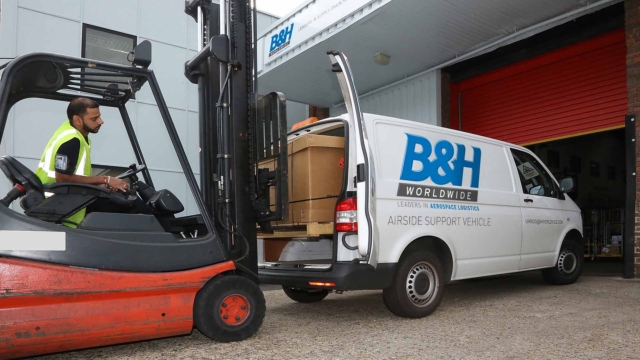
B&H Worldwide Forklift
B&H Worldwide acquires Founders Logistics
Through its acquisition of US-based Founders Logistics, B&H Worldwide has added specialist expertise in the transportation of aircraft engines to its comprehensive range of responsive global logistics operations.
Aerospace

10 Nov 2026

UK defence tech investment heads towards £1bn after tripling in 2026
State of UK Deep Tech 2026 report
UK defence tech investment heads towards £1bn after tripling in 2026
Venture capital investment in UK defence tech has nearly tripled to £720 million in 2026 and is projected to approach £1 billion by year-end, led by surges in AI and autonomous systems, according to a new Royal Academy of Engineering report.
Defence

11 Nov 2026

Royal Navy moves to deter Russian undersea threats with new ‘Atlantic Net’ investment
Image via Royal Navy
Royal Navy moves to deter Russian undersea threats with new ‘Atlantic Net’ investment
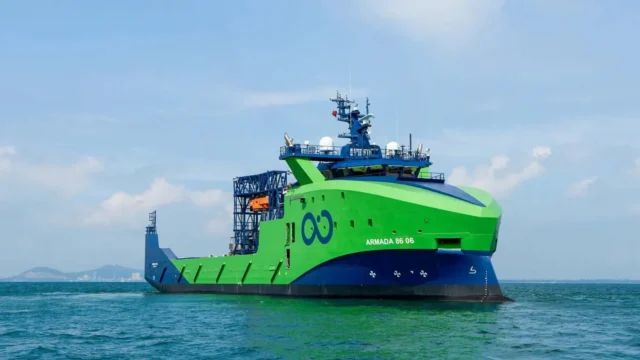
A £90m investment in autonomous maritime technology will bolster the Royal Navy’s surveillance capabilities while deterring Russian submarines and safeguarding critical seabed infrastructure in the North Atlantic.
Defence Security

11 Nov 2026

Satellite connectivity could unlock UK drone operations at scale
Viasat 3 is designed to take drone control to the next level
Satellite connectivity could unlock UK drone operations at scale
Satellite communications could become a critical part of the infrastructure needed to move UK drones from tightly controlled trials to routine beyond-visual-line-of-sight operations.
Aerospace Defence Magazine

11 Nov 2026

UK military satellite Titania reaches orbit as MoD trials space-threat sensors
Titania Satellite
UK military satellite Titania reaches orbit as MoD trials space-threat sensors
The UK's second ISTARI military satellite, Titania, reaches orbit as trials launch for a three-site sensor network to monitor potential threats to spacecraft.
Defence Space

9 Nov 2026

Leicester’s National Space Centre Discovery Team wins Sir Arthur Clarke Award
National Space Centre Discovery Team wins Sir Arthur Clarke Award
Leicester’s National Space Centre Discovery Team wins Sir Arthur Clarke Award
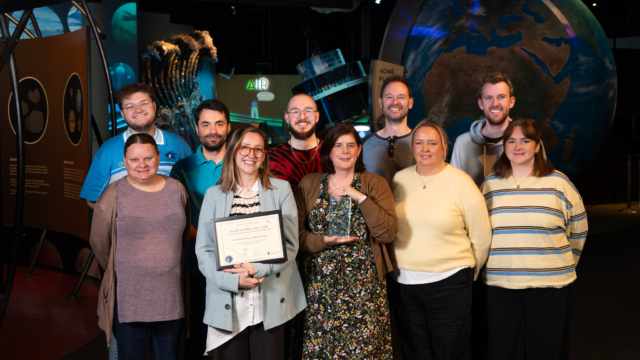
Following delivery of its education and outreach initiatives across the UK to inspire the next generation of scientists, engineers and space explorers, the National Space Centre's Discovery Team has gained national recognition by winning a prestigious Sir Arthur Clarke Award.
Member News Space

5 Nov 2026

Astroscale and OHB to collaborate on space security
Astroscale and OHB sign MoU
Astroscale and OHB to collaborate on space security
Following ratification of the Kensington Treaty in October, Astroscale and OHB have signed an MoU to enhance cooperation between the UK, Germany and Japan towards protecting critical infrastructure in space, whilst supporting the safe, sustainable and responsible use of the orbital environment.
Royal Navy moves to deter Russian undersea threats with new ‘Atlantic Net’ investment
Image via Royal Navy
Royal Navy moves to deter Russian undersea threats with new ‘Atlantic Net’ investment
A £90m investment in autonomous maritime technology will bolster the Royal Navy’s surveillance capabilities while deterring Russian submarines and safeguarding critical seabed infrastructure in the North Atlantic.
Defence Security

11 Nov 2026

USAF relocates KC-135s and CV-22Bs from Mildenhall amid reported Iran threat
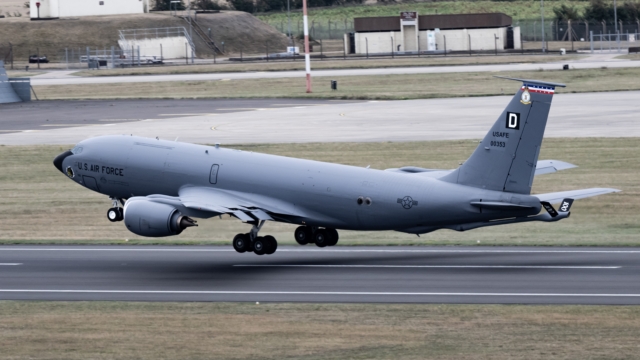
A KC-135R Stratotanker from the USAF's 100th ARW takes off from RAF Mildenhall for a mission on 21 August 2025. Image: USAF/Staff Sgt Kevin Long
USAF relocates KC-135s and CV-22Bs from Mildenhall amid reported Iran threat
The USAF has relocated 12 aircraft from RAF Mildenhall amid heightened security measures and growing concerns over new Iranian threats.
Aerospace Defence Security

10 Nov 2026

Inside the BBC’s ‘Black Sky’ plan to keep the UK informed during a major blackout
close up of hand holding a radio in an emergency situation with a lamp and water bottle
Inside the BBC’s ‘Black Sky’ plan to keep the UK informed during a major blackout
According to a BBC report, around100 staff would operate a specially prepared emergency radio studio.
Security

10 Nov 2026