UK insists military bases are safe as US aircraft leave RAF Mildenhall
The UK government says its military airbases remain safe after more than a dozen US Air Force aircraft left RAF Mildenhall amid reports of a possible Iranian security threat.
The aircraft movements, which began on Monday, 9 November, included KC-135 Stratotanker refuelling aircraft and CV-22 Osprey tiltrotors. They followed the withdrawal of US bombers from RAF Fairford in September after a separate security incident.
Asked whether the government was confident that its military bases were safe, Prime Minister Andy Burnham’s official spokesperson replied: “Yes,” according to Reuters.
The spokesperson said protecting military installations was a priority and that the UK worked closely with the police and its allies to safeguard them. Security arrangements were under constant review, he added.
The latest departures have raised fresh questions about security at installations used by American forces in the UK.
US aircraft moved to other European bases
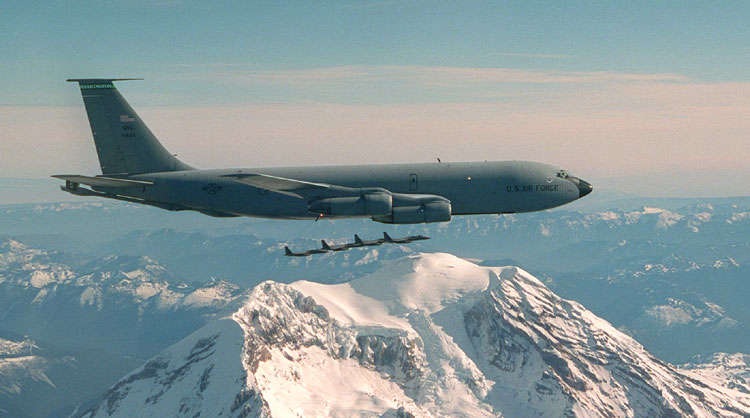
At least 10 KC-135 refuelling aircraft departed RAF Mildenhall in Suffolk on Monday, according to commercial flight-tracking data cited by Reuters.
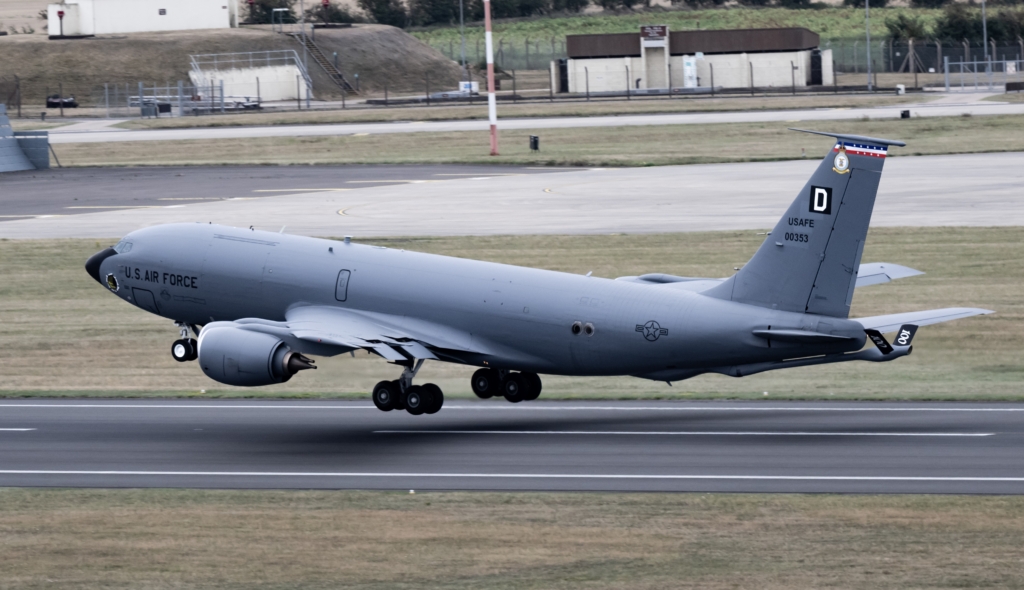
The BBC subsequently reported that more than 12 US military aircraft had left the base, including two additional KC-135 tankers that departed on Tuesday afternoon.
Aircraft were tracked to destinations including Germany, Spain and Prestwick Airport in Scotland. Three CV-22 Ospreys also moved from Mildenhall to nearby RAF Lakenheath.
The Wall Street Journal reported that the movements followed a new threat from Iran. However, the precise nature of the reported threat has not been publicly established, and the BBC said it had not independently verified the claim.
Reuters also reported that the US had raised the security posture at RAF Mildenhall and RAF Lakenheath to Force Protection Condition Charlie, citing the Wall Street Journal’s account of a US official familiar with the matter.
The US European Command declined to discuss specific force-protection arrangements.
A US Air Force spokesperson told the BBC that aircraft routinely moved between installations for training and operational requirements.
“US military aircraft are hosted in accordance with access, basing, and overflight agreements with our allies and partners. Due to operations security, we will not provide further information on movement of assets,” the spokesperson said.
The Ministry of Defence also declined to comment directly on the American aircraft movements.
“We do not routinely comment on the activity of other nations. Aircraft and other assets move regularly according to operational requirements,” an MoD spokesperson told the BBC.
RAF Mildenhall is home to the US Air Force’s 100th Air Refuelling Wing, which operates the KC-135 Stratotanker. The aircraft provide aerial refuelling support to US and allied military operations.
The base also supports American special operations aircraft, including the CV-22 Osprey.
Defence sites told to review security
The aircraft departures came as the Ministry of Defence confirmed that military installations across the UK had been instructed to review and reinforce their security arrangements following recent incidents.
In a written parliamentary answer dated 10 November, Defence Minister Louise Sandher-Jones said the department was maintaining heightened vigilance across its estate.
“We keep the security of military bases under constant review. Defence uses a layered, risk-based approach that combines physical protection, access controls, policing and guarding, surveillance, monitoring and counter-drone capabilities which can identify and facilitate the capture of drones, rather than relying on any single measure,” she said.
Sandher-Jones said additional precautions had been taken at sites considered particularly important to military operations.
“Following recent security incidents, we have maintained enhanced vigilance across the Defence estate and strengthened protective measures where necessary. Sites have been directed to review their security posture and reinforce existing measures, focusing particularly on critical assets, known vulnerabilities and operationally important locations.”
The minister also outlined further investment in protecting military facilities.
“The Defence Investment Plan allocates an additional £470 million over four years to improve site protection through better security technology and infrastructure,” she said.
The plan also provides more than £750 million to strengthen short-range counter-drone protection for the UK and deployed forces.
The MoD is working to extend restricted airspace protections around defence installations, although it has not disclosed which sites may be affected.
Sandher-Jones said the department would continue adjusting its security arrangements as threats developed but would not reveal protective measures or vulnerabilities at individual military installations.
She also warned that attempts to compromise defence sites could result in a police response and the use of available legal powers.
Sign up for our newsletter and get our latest content in your inbox.
Similar Reads



Sign up for our newsletter. Select all sectors relevant to you.
Related