UK sets out licensing guidance for satellite servicing and debris removal missions


The UK Civil Aviation Authority (CAA) has published new licensing guidance that will give companies greater flexibility to service satellites and remove space debris without having to identify all their targets before applying for a licence.
The guidance also confirms that third-party liability and insurance requirements will be waived for qualifying missions launched before 2030, under a government policy applicable to licences issued from 1 December 2026.
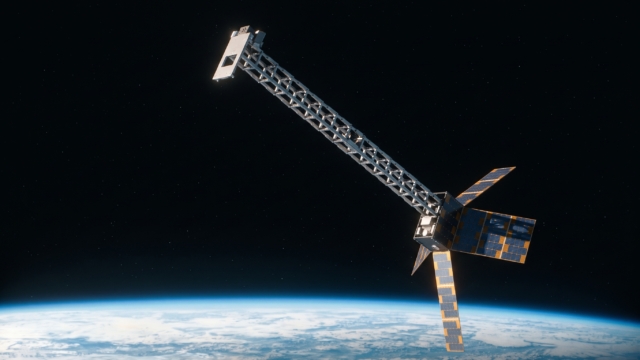
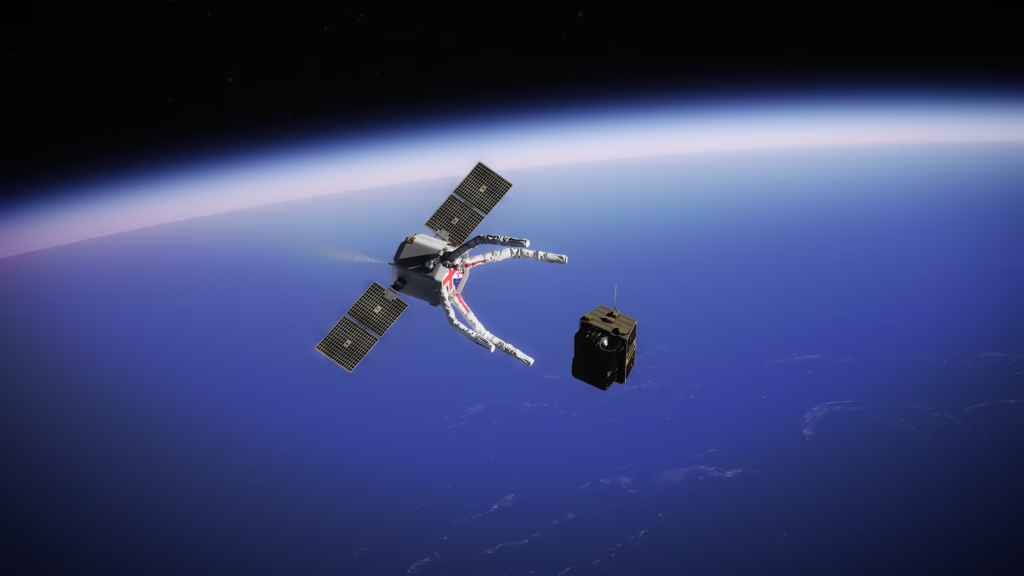
The 48-page document, CAP 3295, sets out how the UK will regulate rendezvous and proximity operations (RPO), during which spacecraft deliberately approach, manoeuvre close to or physically interact with other objects in orbit.
Such operations include extending the operational life of satellites, inspecting spacecraft, correcting their orbits and removing defunct satellites and other debris.
The guidance follows two years of work under the government-sponsored RPO Regulatory Sandbox, involving the CAA, the UK Space Agency, government officials and a consortium comprising Astroscale, ClearSpace Today and D-Orbit UK.
Greater flexibility for satellite servicing companies
Under the guidance, companies conducting RPO activities from the UK will continue to require a space operations licence under the Space Industry Act 2018. No separate licensing category is being introduced.
However, operators can define what the CAA calls a “mission envelope”, setting out the range of activities they intend to undertake throughout a spacecraft’s operational life.

This includes orbital altitudes, approach distances, the types and sizes of satellites that can be serviced, docking and capture mechanisms, levels of spacecraft autonomy and emergency procedures.
The approach allows companies to secure a licence before identifying all their potential customers, rather than seeking a licence variation every time a new satellite servicing opportunity arises.
Operators will still be required to notify the CAA of new clients and obtain written confirmation before proceeding. Activities outside the agreed parameters may require a licence variation.
Liability and insurance waiver
In a measure intended to support the emerging in-orbit servicing industry, qualifying missions will have their orbital liability and indemnity limits set at zero.
Operators will also not be required to hold third-party liability insurance for the orbital phase of these missions.
The policy covers in-orbit servicing, assembly and manufacturing, as well as lunar missions launched before 2030. Existing liability and insurance requirements associated with the launch phase will remain in place.
National security and satellite operator consent
The CAA has also addressed the security implications of spacecraft operating close to satellites belonging to other organisations or countries.
The regulator noted that proximity operations could provide access to information about another spacecraft’s design, capabilities, vulnerabilities and operational status.
National security assessments will therefore consider the technology involved, the purpose of the mission, the nationality and ownership of the customer, and any military affiliation.

Operators will need to demonstrate that consent has been obtained from the relevant parties before undertaking servicing operations.
In cases involving abandoned satellites, discarded rocket stages or other debris where an operator cannot be identified, consent will be required from the state exercising jurisdiction over the object.
Preventing further space debris
The guidance requires applicants to demonstrate how they will minimise collision risks, prevent accidental fragmentation and safely dispose of spacecraft at the end of their missions.
Companies removing debris or altering the orbit of another satellite will also be expected to assess the subsequent collision and atmospheric re-entry risks.
The CAA will agree a reporting plan with each licensee, covering mission progress, spacecraft status and the outcome of individual servicing activities.
The regulator said the guidance reflects its current approach to licensing RPO missions and may be updated as the sector develops.
Sign up for our newsletter and get our latest content in your inbox.
Similar Reads


Sign up for our newsletter. Select all sectors relevant to you.
Related