UK awards Astroscale £15m contract to develop orbital defence capabilities


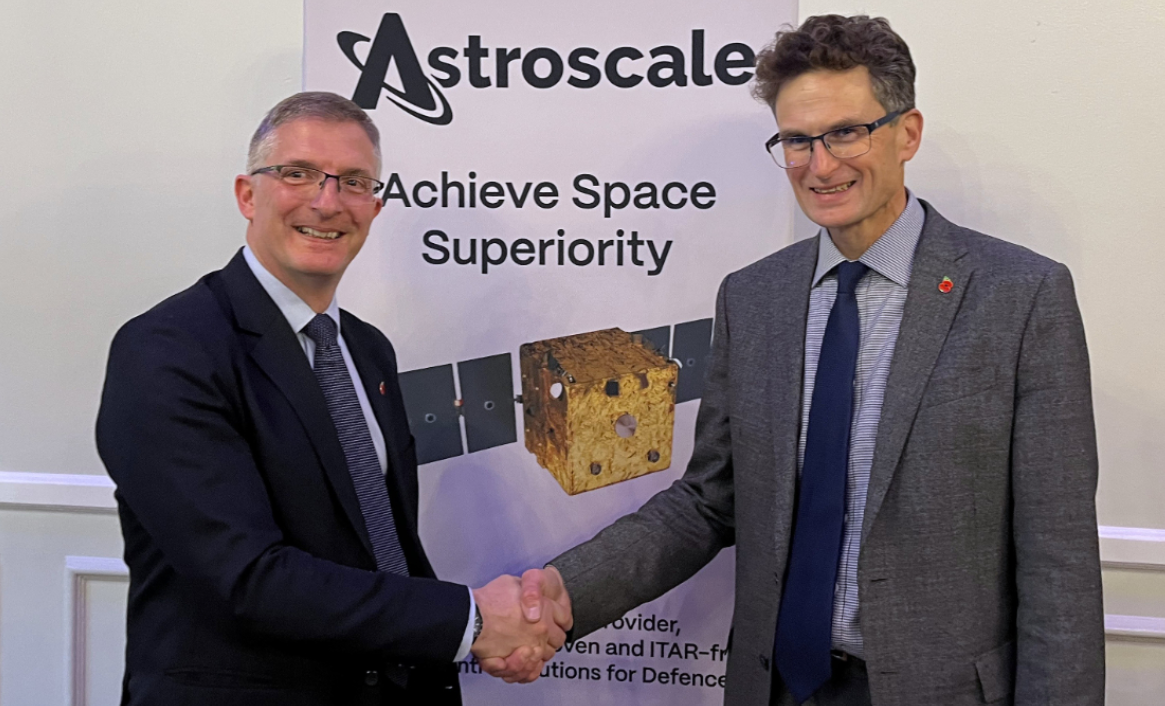
The UK Ministry of Defence has awarded Astroscale UK a £15 million contract to develop and operate spacecraft that will help the military understand and counter potential threats to British satellites, as the government steps up efforts to protect critical infrastructure in orbit.
The contract, announced on 28 October, makes Astroscale the prime contractor for Project LEDA, with BAE Systems and Open Cosmos supporting the programme.
LEDA will involve the manufacture, launch and operation of spacecraft intended to improve the UK’s understanding of orbital warfare and how manoeuvrable satellites could be used to counter threatening activity near military and other important space assets.
The announcement comes as the UK places greater emphasis on protecting satellites that support military communications, navigation, intelligence gathering and civilian services.
Tony Williams, head of space capability at UK Space Command, said the programme would help establish the capabilities needed to defend those assets.
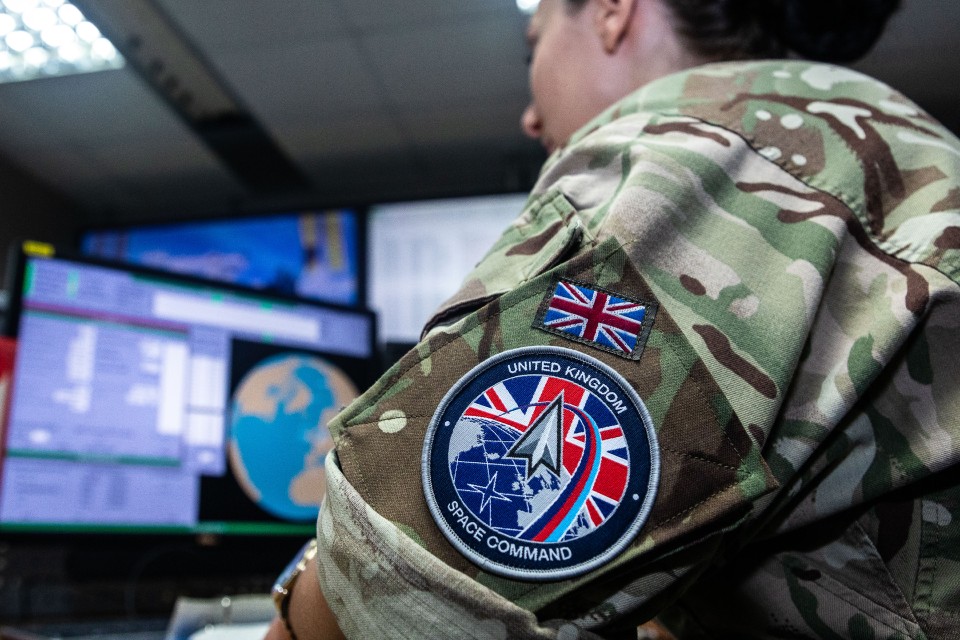
“Control of space is not about seeking conflict in space, it is about demonstrating that we can protect the capabilities upon which our economy, our society, and our armed forces depend,” Williams said.
“Project LEDA, under the manufacture, launch, and operation of Astroscale UK, will form part of the permanent pathway for UK’s understanding of orbital warfare and how such spacecraft operate and how they might be employed to counter RPO threats.
“Collectively, these new capabilities will help defend UK space interests, safeguard critical space services, and generate operational advantage for the integrated force.”
RPO, or rendezvous and proximity operations, refers to spacecraft manoeuvring close to other objects in orbit. Such techniques are used for legitimate activities, including satellite inspection, servicing and debris removal, but can also be employed to approach another country’s spacecraft without its cooperation.
The Ministry of Defence wants to improve its ability to understand these encounters and develop ways of responding when they pose a threat.
UK strengthens its ability to operate in contested space
The contract follows the publication of the UK’s new Space Strategy, which identifies defence and national security as priorities and calls for greater protection of the country’s space infrastructure.
The strategy recognises that satellites have become essential to both military operations and everyday life. Disruption to communications, navigation or intelligence satellites could affect the armed forces as well as businesses and public services.
The government has allocated £3.2 billion for space through 2030 under its Defence Investment Plan, reflecting the growing importance of space capabilities to military operations.
The announcement does not identify an operational deployment date or describe the programme as an order for a fleet of armed satellite bodyguards.
The award also strengthens the role of the UK’s domestic space industry in developing capabilities that have traditionally been associated with larger military space programmes.
Astroscale will lead the work from its UK operations, drawing on experience gained through previous missions involving spacecraft inspection, close approaches and orbital manoeuvring.
Astroscale builds on satellite servicing experience
Astroscale’s selection follows several years of work developing technologies that allow spacecraft to approach and operate safely near other objects in orbit.
Its ELSA-d mission demonstrated rendezvous and magnetic capture of a client spacecraft, while the ADRAS-J mission approached and inspected an abandoned Japanese rocket body in 2024, reaching a distance of less than 15 metres.
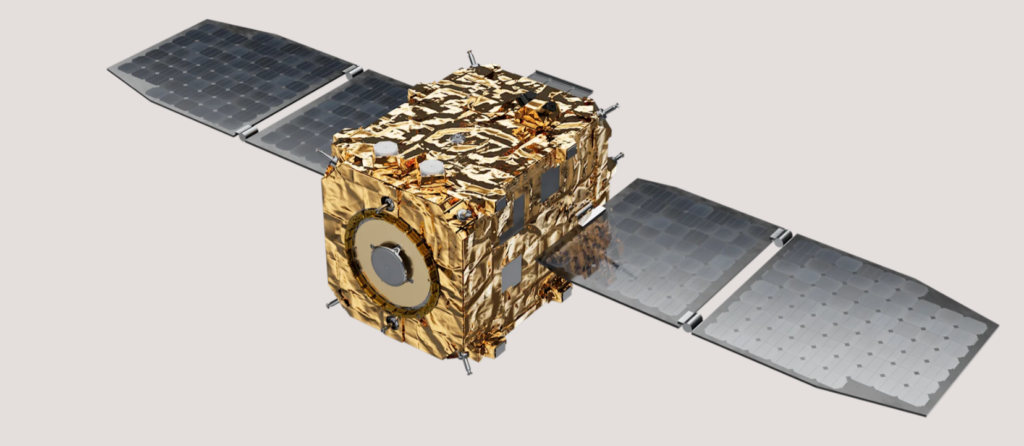
The company’s UK team developed the ground segment for ADRAS-J and led flight dynamics operations, including manoeuvre planning and collision risk monitoring.
Those capabilities are relevant to defence applications because they involve accurately tracking another object, planning a safe approach and maintaining control during close-range operations.
Nick Shave, managing director of Astroscale UK, said protecting satellites had become important far beyond the defence sector.
“Resilience in space matters to everyone. The satellites we depend on support our armed forces, our economy and the services we use every day. Protecting that in-orbit infrastructure requires the ability to understand and operate safely in an increasingly complex environment,” Shave said.
“Our ambition is to be the trusted partner for Space Control. We look forward to delivering LEDA for the Ministry of Defence, supported by BAE Systems and Open Cosmos.”
The company is already involved in another UK defence programme, Orpheus, which is developing two small spacecraft that will fly in close formation to gather data supporting space domain awareness and intelligence, surveillance and reconnaissance.
Astroscale UK completed the mission’s critical design review in April 2026. The £5.15 million project is being delivered for the Defence Science and Technology Laboratory through BAE Systems, with Open Cosmos building the spacecraft.
Orpheus is currently planned for launch in 2027 and is intended to strengthen the UK’s ability to understand conditions and activities in orbit.
The company is also preparing ELSA-M, a mission intended to demonstrate the removal of a commercial satellite from orbit.
Together, these projects give Astroscale experience in the spacecraft operations and mission control technologies that will be required for LEDA.
Contract opens further opportunities for UK space industry
The LEDA award comes as the Ministry of Defence seeks to develop more space capabilities through UK-based companies and industrial partnerships.
BAE Systems and Open Cosmos will support Astroscale on the new programme, although the announcement does not specify their individual work packages.

The contract also offers a potential route for technologies developed for commercial satellite servicing to be adapted for national security applications.
Astroscale said the programme could also create opportunities for UK-developed expertise in orbital operations to support future international customers and export markets.
Sign up for our newsletter and get our latest content in your inbox.
Similar Reads




Sign up for our newsletter. Select all sectors relevant to you.
Related