ADS sectors add £46.8bn to UK economy but industry warns delivery must follow



The UK’s aerospace, defence, security and space sectors added £46.8 billion to the economy in 2025, but ADS has warned that policy announcements must now be turned into delivery if industry is to maintain growth.
Launching the latest ADS Facts and Figures report, alongside new aerospace and defence outlooks, ADS chief executive Kevin Craven said the sectors represented by the trade association had continued to expand despite a difficult economic and geopolitical backdrop.
“Our members are building the capabilities that the armed forces rely upon, developing the technologies that will shape the future of aviation, protect our national security and keep the world connected,” Craven said.
The figures show that ADS sectors generated nearly £110 billion in turnover in 2025, supported 468,500 jobs across the UK and delivered more than £50 billion in exports.
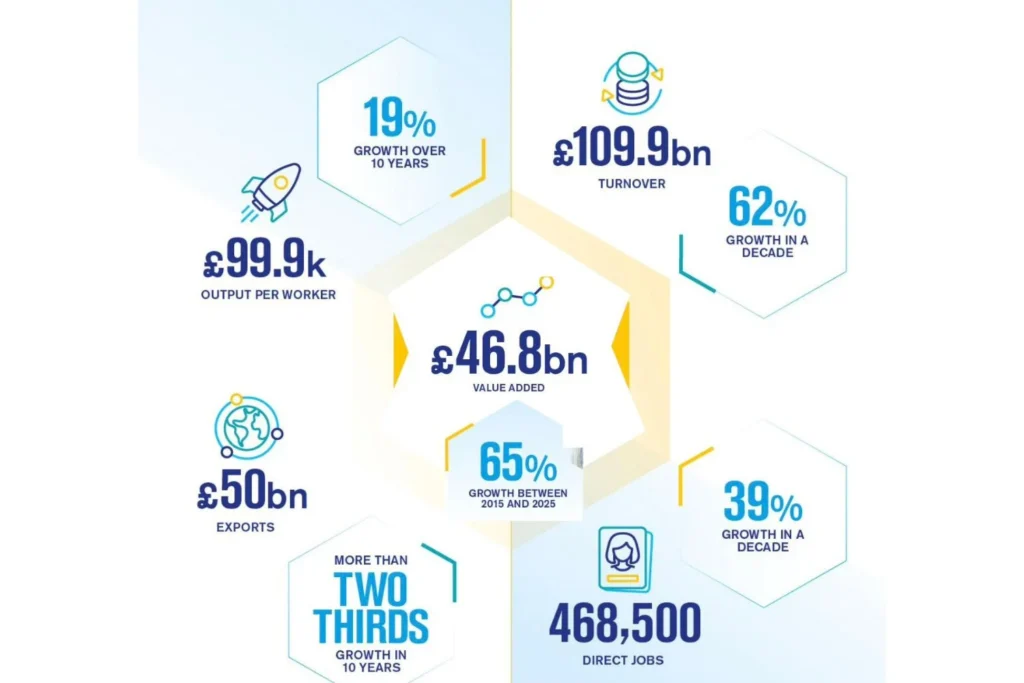
Craven said the data showed “the strength of our industries” and their importance to the UK’s economic future, but warned that success should not be taken for granted.
“We are now at a really important pivotal moment,” he said. “The recent government announcements, including the very long-awaited Defence Investment Plan, are of course welcome. What the industry really needs now is some follow-through.”
ADS economic impact shows strength of UK industrial base
The latest ADS data points to continued growth across the sectors it represents, with aerospace, defence and security all increasing their contribution to the UK economy.
Aimie Stone, chief economist at ADS, said the results were particularly notable because they had been achieved against a weak and uncertain macroeconomic environment.
Her briefing highlighted slower global growth, constrained UK and EU economic performance, persistent inflation uncertainty, pressure on public finances, rising global debt and geopolitical disruption.
Stone said that context mattered because “these numbers are really positive” despite the wider operating environment remaining challenging.

The ADS figures also show the higher-value nature of the sectors. Productivity across aerospace, defence, security and space reached £99,900 per worker, compared with a UK average of around £83,000. Stone said that meant ADS sectors were “significantly above” the national average and were continuing to outperform.
Employment also continues to grow. ADS sectors supported 468,500 jobs in 2025, with more than 17,000 additional people employed than in 2024 and employment up 39% across the decade.
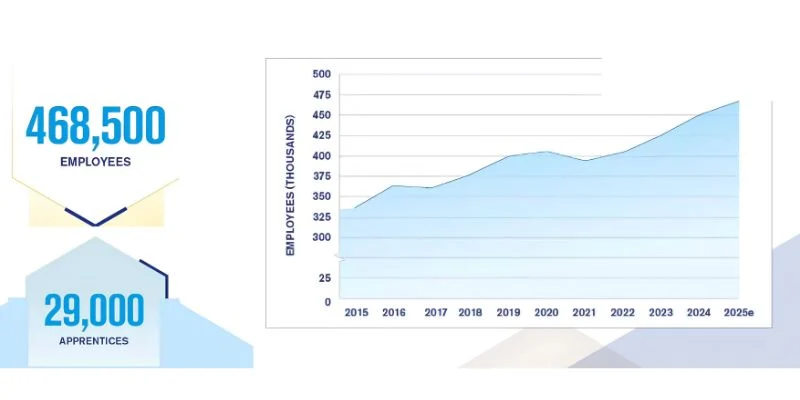
Stone also pointed to 29,000 apprentices across ADS sectors, around 9,000 more than in the previous reporting round, despite what she described as a difficult backdrop created by changes in apprenticeship policy.
The regional picture is also important. Stone said around two-thirds of jobs are located outside London and the South East, with growth particularly visible in the South West, Scotland and the East of England. That gives the sectors a role not only in national growth, but in regional industrial development.
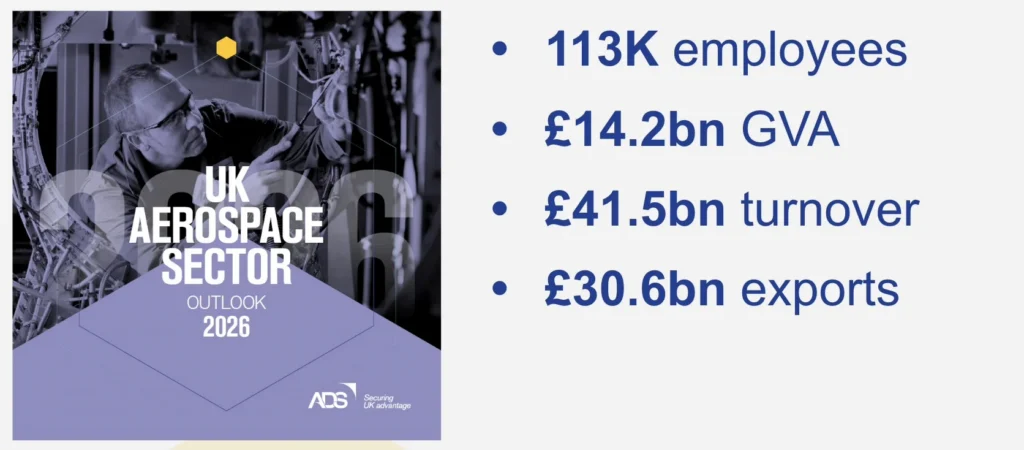
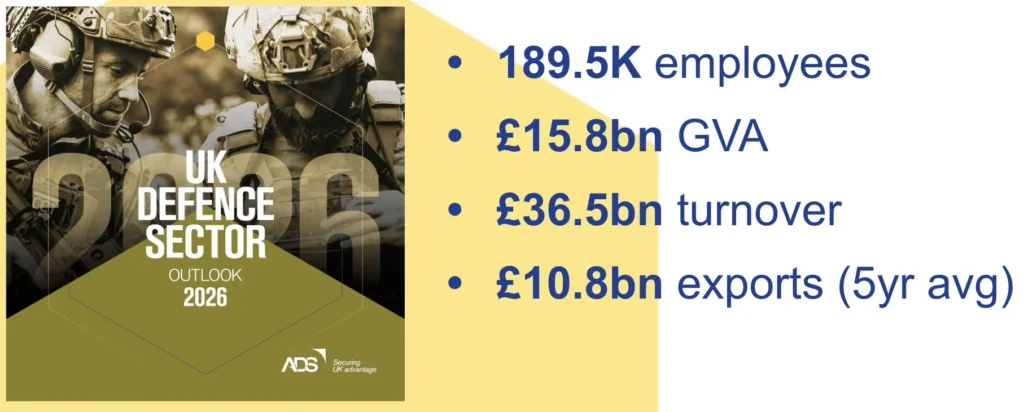
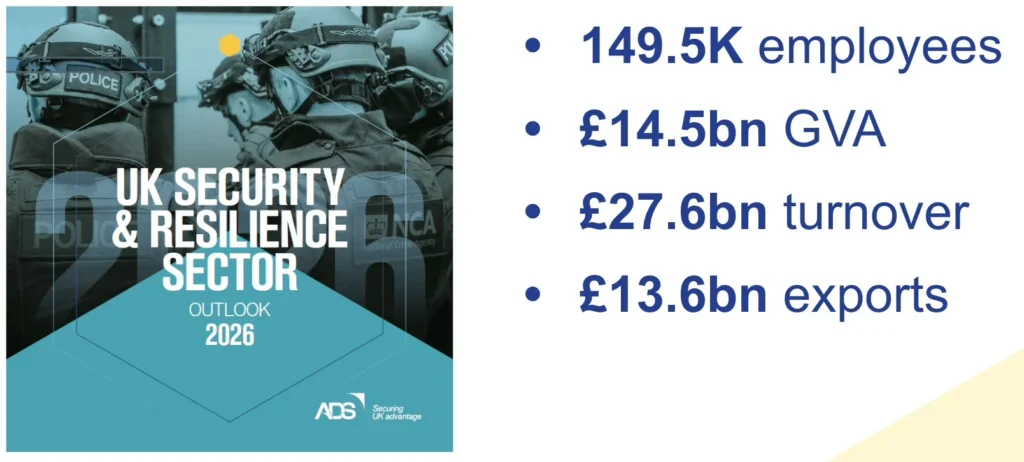
ADS sectors have seen revenue increase by 62% over 10 years, with exports accounting for 45% of the combined turnover. In aerospace, Stone said export performance was particularly significant, underlining the UK’s place in global supply chains and the importance of staying involved in future aircraft programmes.
“We want to make sure that we are on the next generation of aircraft,” she said. “We want to make sure that we are part of that next supply chain decision.”
ADS calls for policy follow-through after Defence Investment Plan
While the economic figures are positive, ADS used the launch to warn that growth will depend on whether government policy now gives industry the confidence to invest.
Craven said businesses across ADS sectors continue to face rising costs, constrained access to finance and ongoing supply chain pressures. Those challenges, he warned, “limit investment, slow growth and ultimately affect our competitiveness”.
Because aerospace, defence, security and space operate in global markets, he said the UK must remain competitive with other countries that are also seeking to grow their industrial base.
“We need an environment that gives businesses the confidence to invest for the long term,” Craven said.
In aerospace, the priority is to support production ramp-up, secure the UK’s place in future aircraft programmes and strengthen international regulatory cooperation. Defence faces a different but related challenge: giving industry the conditions to scale, accelerating sovereign and dual-use capabilities, and creating a more predictable approach to capability delivery.
The security sector’s role is increasingly tied to national resilience, from critical systems and homeland security to policing and economic security. In space, ADS pointed to the need for higher civil and military budgets, investment in people and skills, and deeper international partnerships.
Stone also linked the findings to the need for longer-term industrial policy. She said the data showed “consistent, not just concentrated growth”, but added that one-year funding cycles were not enough to unlock the full potential of the sectors.
“It’s that constant investment, that constant ten-year agreement, that’s what this can bring,” she said. “It’s about long-term commitment, which is why things like stability and policy are so important.”
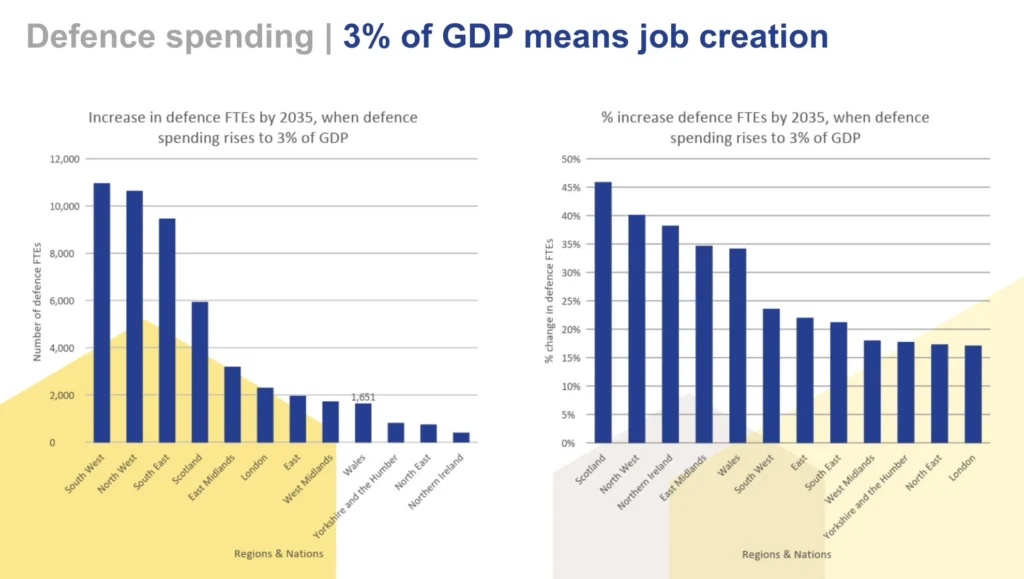
The defence outlook also gives the economic argument added weight. ADS modelling suggests that defence spending at 3% of GDP could support around 50,000 additional defence jobs, while spending at 3.5% could support closer to 85,000.
Stone said it was “quite exciting” to be able to show in the numbers that defence can generate jobs, describing that as a conversation that has not always been easy for industry.
For ADS, the wider message is clear: the UK already has high-productivity, export-led sectors capable of supporting growth, resilience and national security. The task now is to turn policy intent into contracts, finance, investment and delivery.
Craven said the opportunities ahead were significant, but added that realising them would require “ambition matched by action”.
Sign up for our newsletter and get our latest content in your inbox.
Similar Reads




Sign up for our newsletter. Select all sectors relevant to you.
Related