Airbus UK to build Aeolus-2 weather satellite for Europe’s next forecasting leap


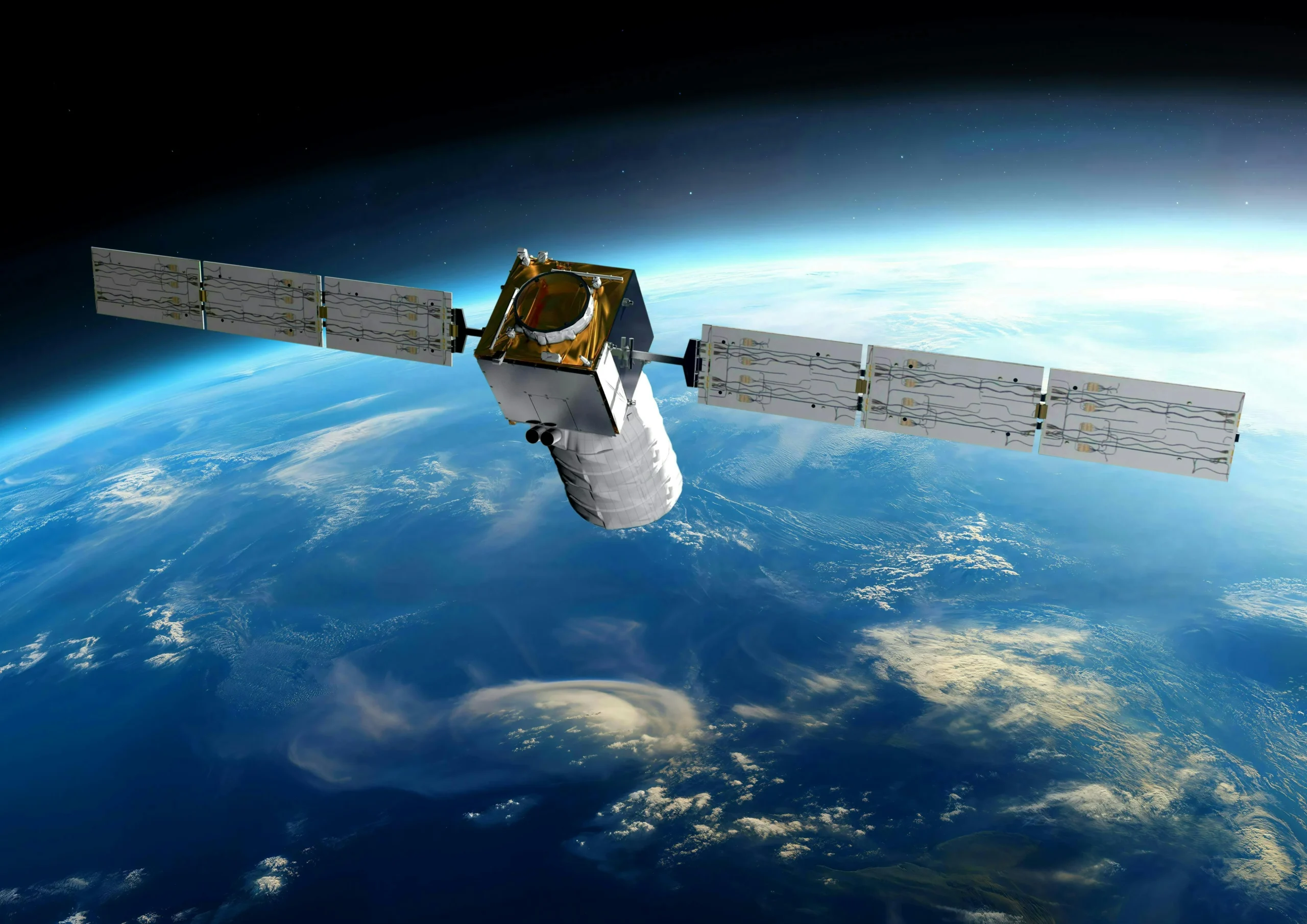
The UK is reinforcing its position at the forefront of European Earth observation after Airbus Defence and Space UK received authorisation to begin building Aeolus-2, a next-generation weather satellite that will provide global wind measurements to improve weather forecasting, aviation operations and climate monitoring.
The programme also underlines Britain’s continuing influence in major European space projects through its investments in the European Space Agency (ESA) and EUMETSAT, despite its departure from the European Union.
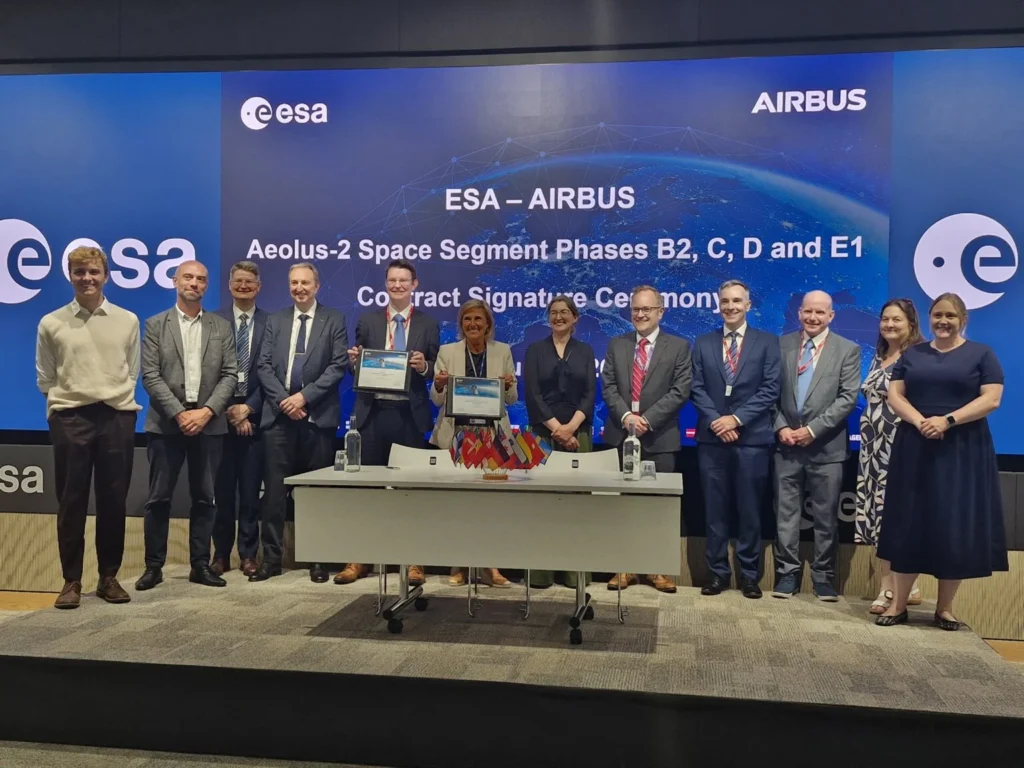
The initial contract for the satellite was signed between ESA and Airbus Defence and Space during a ceremony at ESA’s European Centre for Space Applications and Telecommunications (ECSAT) in Harwell, Oxfordshire.
The mission builds on the success of the original Aeolus satellite, launched in 2018, which became the world’s first spacecraft to directly measure global wind profiles from space and significantly improved weather forecasting worldwide.
Aeolus-2 represents more than a follow-on scientific mission. For the UK, it reinforces the country’s growing role in advanced satellite engineering while supporting highly skilled jobs, strengthening national expertise in Earth observation and ensuring British industry remains central to Europe’s future weather and climate monitoring capabilities.
Airbus UK to lead Aeolus-2 weather satellite build
The UK Space Agency has positioned the programme as evidence that British expertise continues to play a leading role in Europe’s most advanced space missions.
UK Space Minister Liz Lloyd said the country had been at the forefront of satellite weather forecasting since the original Aeolus mission and welcomed Airbus Defence and Space UK’s continued leadership on the follow-on programme.
She said Aeolus-2 would deliver tangible benefits ranging from more accurate weather forecasts that protect lives and communities to sustaining highly skilled jobs generated through Britain’s participation in European space programmes.
She added that continued UK investment in ESA and EUMETSAT ensures British expertise and industry remain at the centre of cutting-edge space science and technology.
The programme also reflects the UK’s broader strategy of maintaining a prominent role in European scientific collaboration through ESA, where Britain remains one of the agency’s largest contributors, enabling domestic companies to compete for major international contracts while strengthening the country’s industrial base.
Aeolus-2 wind data could improve aviation and weather forecasting
While weather prediction remains the mission’s primary objective, Aeolus-2 is expected to provide significant benefits for aviation.
The satellite will carry a next-generation Doppler wind lidar instrument capable of measuring wind speed and direction from ground level to approximately 30 kilometres altitude by analysing how ultraviolet laser light is scattered by particles in the atmosphere.
These observations will fill critical gaps over oceans, polar regions and other remote areas where conventional wind measurements remain limited.
According to the UK Space Agency, improved wind observations will sharpen forecasts of the jet stream at aircraft cruising altitudes, helping airlines optimise flight routes, improve fuel planning, reduce journey times and enhance operational safety.
Better atmospheric data will also contribute to more accurate predictions of severe weather events while improving long-term climate models used by governments and emergency services.
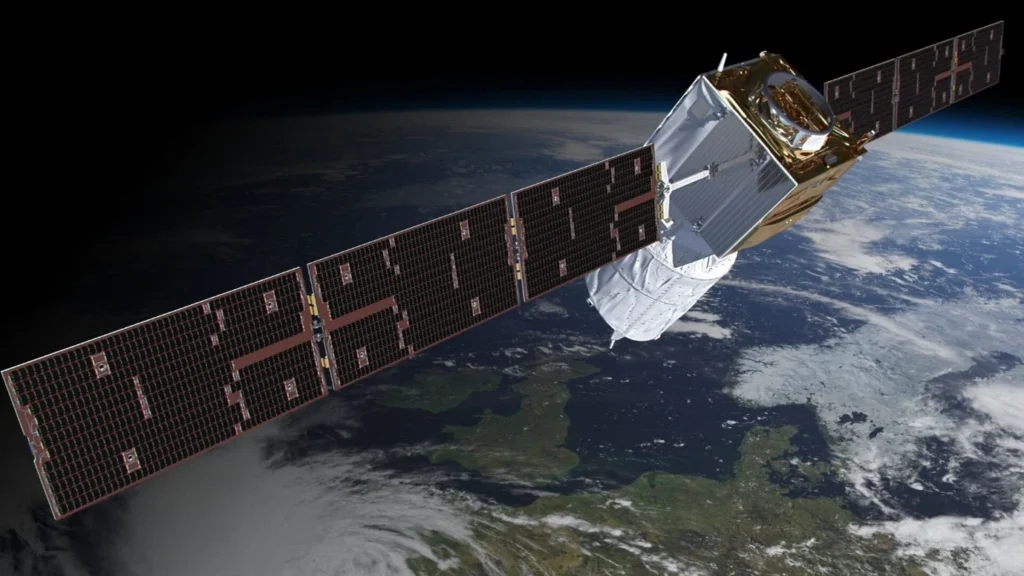
The spacecraft will scan the atmosphere continuously, collecting measurements every 0.01 seconds and covering the entire globe every seven days.
In addition to measuring wind, Aeolus-2 will include a new detector capable of monitoring atmospheric aerosols, providing scientists with more detailed information about dust, smoke and other airborne particles that influence both weather and climate.
“Aeolus exceeded expectations and demonstrated the transformative impact that space-based wind observations can have on weather forecasting,” said Simonetta Cheli, ESA’s Director of Earth Observation Programmes
“Aeolus-2 represents the natural evolution of that achievement – from pioneering research to an operational service that will benefit citizens and businesses worldwide. We are happy to provide the authorisation to proceed, which marks an important milestone in ensuring Europe remains at the forefront of atmospheric observation and meteorological innovation.”
How Aeolus changed global weather prediction
The original Aeolus mission demonstrated that direct wind measurements from space could substantially improve weather forecasting.
Operating until 2023, the satellite delivered the first high-resolution global vertical wind profiles from orbit and reduced forecasting errors by more than four per cent. Its observations improved understanding of hurricanes, atmospheric circulation and the movement of volcanic ash, while providing valuable data over the Arctic, Antarctic and tropical oceans where conventional observations are sparse.
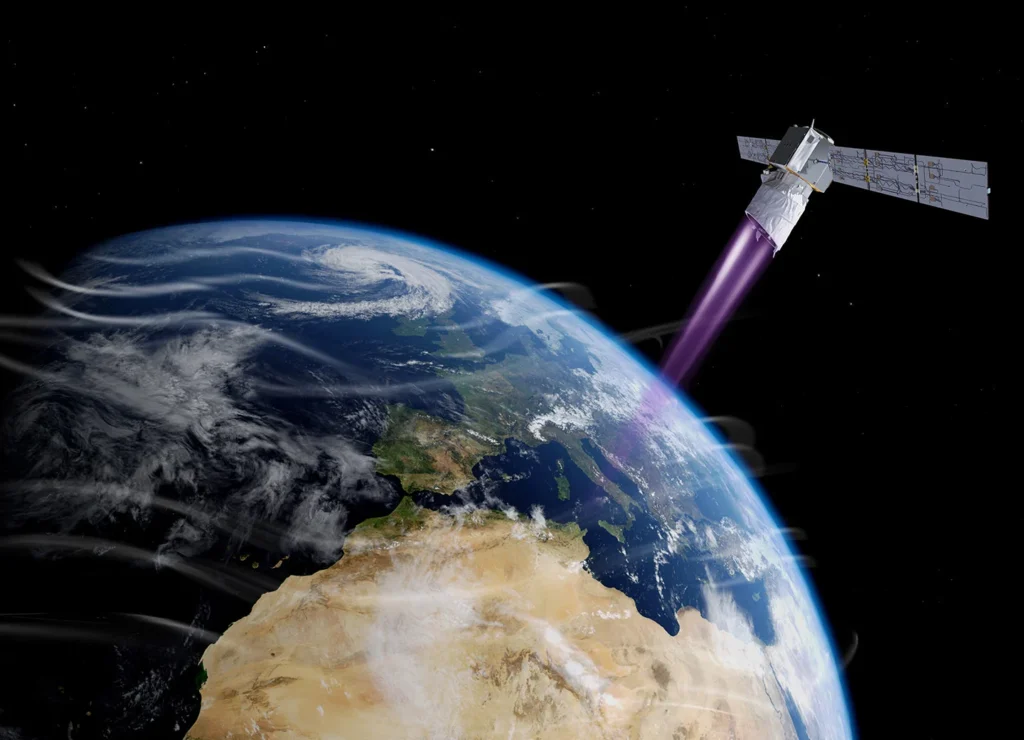
Weather organisations, including the UK Met Office and the European Centre for Medium-Range Weather Forecasts (ECMWF), integrated Aeolus data into their forecasting models, improving forecast accuracy for millions of people across Europe and beyond.
The mission also established a benchmark for responsible satellite operations. In 2023, ESA conducted the world’s first assisted atmospheric re-entry of a satellite in low Earth orbit, using Aeolus’ remaining fuel to guide it safely back into the atmosphere and reducing the risk of creating additional space debris. The approach is now regarded as an important model for future satellite disposal.
Aeolus-2 strengthens UK space engineering and Earth observation
Airbus Defence and Space UK says Aeolus-2 represents a major investment in British engineering talent as well as an opportunity to build on decades of expertise in Earth observation missions.
“Aeolus-2 is more than a scientific mission; it is a major investment in British talent,” said Kata Escott, Managing Director of Airbus Defence and Space in the UK. “This project allows our highly skilled UK teams to apply their unique expertise to enhance weather monitoring and lead the way globally in Earth observation and science.”
The spacecraft will ultimately support weather centres, including the UK Met Office, while contributing to sectors ranging from aviation and agriculture to emergency response, infrastructure planning, energy management and national security.
More reliable forecasts are expected to help governments and businesses better prepare for increasingly frequent extreme weather events linked to climate change.
The mission is being developed jointly by ESA and EUMETSAT, with launch targeted for 2034 following programme approval by member states.
Once operational, Aeolus-2 is expected to move space-based wind observations from a successful research capability to a routine operational service supporting weather agencies worldwide.
Sign up for our newsletter and get our latest content in your inbox.
Similar Reads


Sign up for our newsletter. Select all sectors relevant to you.
Related