Alloyed secures ATI Programme funding to develop ABD-1000AM
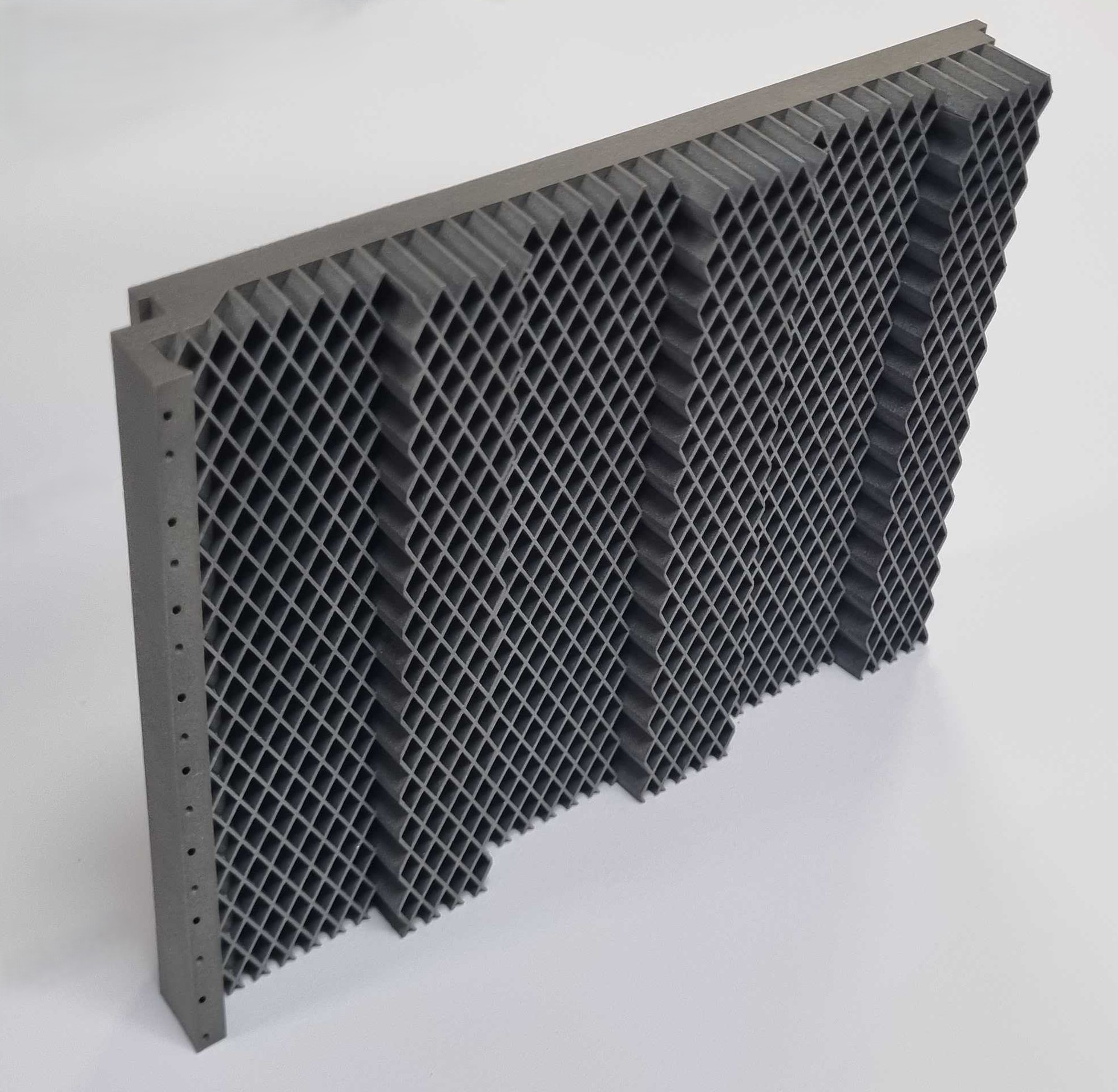
Image courtesy Alloyed
The project, undertaken in collaboration with aircraft engine and component maker ITP Aero and Cranfield University, aims to enhance the capabilities of ABD-1000AM, a material specifically engineered to withstand the laser powder bed fusion printing process without cracking.
The 3D printed ABD-1000AM components will be vital for the ultra-efficient jet engines of the future, which will require parts that can manufactured in intricate geometries from materials capable of surviving the high temperatures and harsh conditions of combustion.

With the support from the ATI Programme, this initiative will drive innovation in the aerospace sector by advancing the adoption of 3D-printed high-performance components.
This project is one of several ongoing collaborations between Alloyed and the ATI Programme, including the development of a high-strength aluminium alloy for aerospace applications and a £14 million initiative focused on a digital qualification platform to streamline the certification process for flight-ready 3D-printed components.
Dr David Crudden, Chief Metallurgist and Head of New Market Development at Alloyed, spoke to the value of the ATI in catalysing innovation in UK Aerospace: “Alloyed have been fortunate to have the opportunity to partner with the ATI in several key technology areas ranging from design of new materials to the development of digital software platforms to support adoption of additive manufacturing in the aerospace industry.
"This project, focused on advancing the manufacturing readiness level of ABD-1000AM, is a great example of where ATI Programme funding helps UK companies to bridge the gap between early research and industry development programs.
"ABD-1000AM is the world’s highest temperature nickel-based superalloy designed for additive manufacture. We have identified huge demand for this material and believe it will be a game changing technology for gas turbines across aerospace propulsion and industrial power generation.”
Alloyed originated from the renowned aerospace materials group at Oxford University and specialises in the computational design and optimisation of metallic materials and the development of advanced additive manufacturing (AM) and post-processing strategies to optimise for performance-cost trade-offs.
Cranfield University is renowned for the study of materials degradation at high temperatures, especially for aerospace applications. The team at the National High Temperature Surface Engineering Centre has decades of experience in researching coatings able to withstand oxidation and high temperatures, which will be applied to the development of a protective coating tailored for the ABD-1000AM.
The ITP Aero UK team brings deep technical knowledge and a strong track record in developing world-leading combustor technology, working alongside key OEMs on Commercial and Defence Aviation.
Chris McDonald, Parliamentary Under-Secretary of State (Minister for Industry), said: “This is a strong example of how government and business can work together to keep the UK at the forefront of innovation in our world-class aerospace sector and I look forward to seeing how Alloyed’s project can contribute to the jet engines of the future.
“We’re bolstering our support for the aerospace industry through our modern Industrial Strategy – giving business the confidence it needs to invest in UK advanced manufacturing and delivering on growth as part of our Plan for Change.”
Rob Mitchell, Director of Engineering for ITP Aero UK, said: “ITP Aero is committed to a wide range of research and development programmes across the regions in which it operates. AMRAM is another good example of how partnering across academia, SMEs and industrial partners can directly shape the future of the aerospace industry.
"We are delighted to support Alloyed and Cranfield University in the pursuit of this enhanced capability for combustor technology. We look forward to working together to discover how this advancement can make a real-life difference to our industry, the technology we are developing today and the future projects we are focused on for the pioneers of tomorrow.”