Babcock supporting one in every 550 jobs in the UK
New independent research by Oxford Economics reveals how defence company Babcock International Group (Babcock) drives growth across the UK economy through jobs, investment in the supply chain, and tax contributions.
The Oxford Economics report published today shows the FTSE 100 company made a total contribution of £4.3 billion to UK GDP in FY2024, a significant increase of £1 billion since FY2022. For every £1 spent with Babcock on UK defence, £3 goes back into the UK economy.
Over the last two years, Babcock has substantially grown the number of UK jobs that it supports to 67,000 across the country, equivalent to one in every 550 jobs in the UK.
Other key findings include:
•Significant impact on the UK’s regional economies, including over 12,000 staff directly employed in the South West of England and 5,400 in Scotland
•1,800 people being trained through Babcock’s graduate and apprenticeship programmes
•An estimated total tax contribution of £1.1 billion to the UK Exchequer, directly and indirectly
•£550 million spent with UK Small & Medium Enterprises (SMEs), supporting more than 3,800 businesses
David Lockwood, Chief Executive of Babcock, said:
“We are proud of the role we play across the country.
“Babcock doesn’t just help protect the UK; we are helping to drive prosperity.
At this critical time for national security, our highly experienced teams play a key role in developing sovereign capabilities to create a safe and secure world, together with our wider industry colleagues and partners.
“We are investing in infrastructure, technology, and skills that we need today to bolster the growth of our business for tomorrow. This commitment to our customers and continuous investment in our people is making us a better business. We are determined to continue supporting the communities we work in whilst delivering the capabilities our armed forces need to keep the country safe.”
Rt Hon Maria Eagle MP, Minister for Defence Procurement and Industry, said:
“Babcock is a fantastic example of how defence is an engine for growth, creating jobs across the nation.
“The company supports thousands of skilled jobs across the South-West and Scotland and invests in British SMEs, building up local communities and developing talent through graduate and apprenticeship programmes.
“Our Defence Industrial Strategy will help direct more defence spending to British-based firms, such as Babcock, boosting defence jobs in every nation and region.”
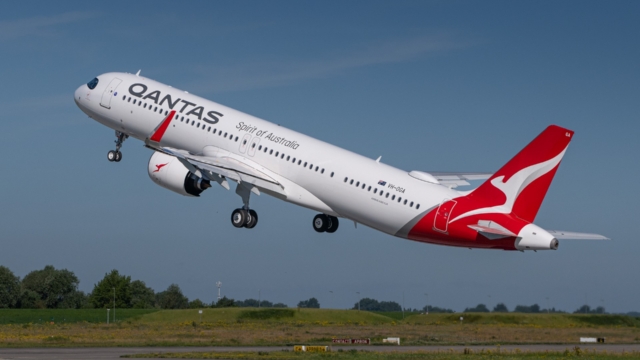
AerFin says the first aircraft are expected to transfer before the end of 2026, with the arrangement allowing Qantas to continue operating its existing 737 fleet while introducing new Airbus A321XLR aircraft.
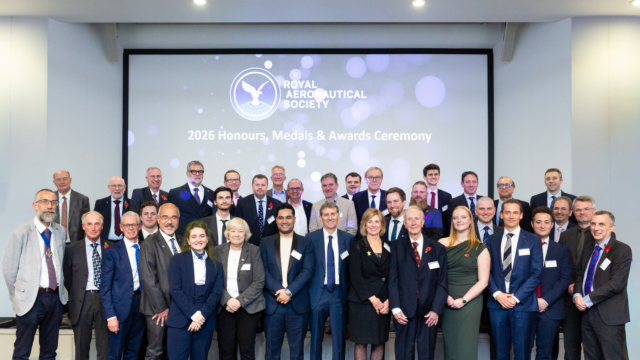
Outstanding contributions to aerospace and space have been recognised at this year's annual Royal Aeronautical Society (RAeS) awards, which have been honouring advances across the global aerospace industry since 1909, when Wilbur and Orville Wright received the Society’s first Gold Medal.
A CAA-backed trial at Cranfield Airport used live air traffic data and a virtual drone to test detect-and-avoid technology and support future UK beyond-visual-line-of-sight operations.
ALL.SPACE has secured a US Navy follow-on order for 59 Hydra MAX 2 Terminals, enhancing the service's resilient access to high-capacity Ka-band LEO constellations and maintaining interoperability with GEO, MEO and HEO networks.
Through strategic investment in modern electronic warfare facilities, BAE Systems has accelerated its production schedule to deliver advanced sensors for Lockheed Martin's Long-Range Anti-Ship Missile (LRASM).
The Royal Navy and its JEF allies will deepen maritime integration, strengthen deterrence and improve collective responses to new and emerging threats in northern Europe as part of a historic new initiative.
It was announced today that Serco's acquisition of QinetiQ’s US business has been agreed, substantially expanding the defence capabilities of Serco, whilst strengthening QinetiQ's balance sheet and enabling it to concentrate its resources on the UK, European, NATO and key allied defence and security markets.
The UK's second ISTARI military satellite, Titania, reaches orbit as trials launch for a three-site sensor network to monitor potential threats to spacecraft.
Following delivery of its education and outreach initiatives across the UK to inspire the next generation of scientists, engineers and space explorers, the National Space Centre's Discovery Team has gained national recognition by winning a prestigious Sir Arthur Clarke Award.
The Metropolitan police and other UK forces have reported problems receiving online crime reports, while government and businesses face ongoing disruption from the global Microsoft 365 outage.
The Royal Navy and its JEF allies will deepen maritime integration, strengthen deterrence and improve collective responses to new and emerging threats in northern Europe as part of a historic new initiative.
The NCSC’s new CyAS scheme aims to strengthen the resilience of the UK’s critical infrastructure through rigorous, realistic cyber adversary simulation testing.